Dust Explosion Tester

Hello,

I'm on a team working on a senior project for mechanical engineering.

I apologize if my wording is clumsy, I've never dealt with a project like this in the past.

We are developing a method for a major sugar supplier to demonstrate the dangers of primary and secondary dust explosions in a manufacturing environment.

To this end we are looking to use an Arduino board to facilitate on/off, set order, and set delay functionality to kick up dust into an ignition source (hot plate, electrical arc, etc).

Ideally we would like to use wireless connectivity for safety reasons. The explosion will occur in a closed volume with a vent.

We are looking at using an Arduino DUE and XBee for wireless and I've been tasked with figuring out how to incorporate the following:

  • 12 relays, 12-24V - including open/close valves
  • Wireless on/off (safety mechanism)
  • Set order - first dust puff, then second
  • Set delay - we do not know what the delay will need to be between puffs at this point

Basically what I'm asking is what needs to be purchased and how would I start to set this up?

I expect to learn about this over the next 8-12 weeks, but it is a steep curve.

My experience is primarily in chemistry and quality engineering and I was working on calculating overpressure, etc prior to this phase of the project. I'm way out of my comfort zone.

Thank you!
That application sounds like it would be simple for an Arduino Uno and I reckon a DUE is overkill.

If you need to save money consider using nRF24L01+ wireless transceivers - they only cost about £2 each.

I would be very cautious about using wireless ON/OFF for any safety system if human injury is possible. Just switch off all the electrical power while a human is at risk.

You should be able to use the millis() function to manage your timing. Have a look at the demo Several Things at a Time. And at Using millis() for timing. A beginners guide if you are completely unfamiliar with the concept.

...R

Thank you, I'll take a look at that.

I see I forgot to include this link in Reply #1 - apologies

Simple nRF24L01+ Tutorial

...R

You need a way of absolutely guaranteeing that the ignition circuit is deenergized while people are within the blast radius.

The only way to do that 100% reliably is by using a power cable that runs from your observation point/bunker to the experiment.

Adding wireless anything to a system makes things more complicated, less reliable and therefore less safe.

We are developing a method for a major sugar supplier to demonstrate the dangers of primary and secondary dust explosions in a manufacturing environment.

Not to belittle your efforts, but I'm sure that they are already aware of the dangers.

Demonstrating how to CONTROL the dangers is a good thing. Demonstrating that they exist is pointless.

PaulS:
but I'm sure that they are already aware of the dangers.

Maybe it is for staff training?

...R

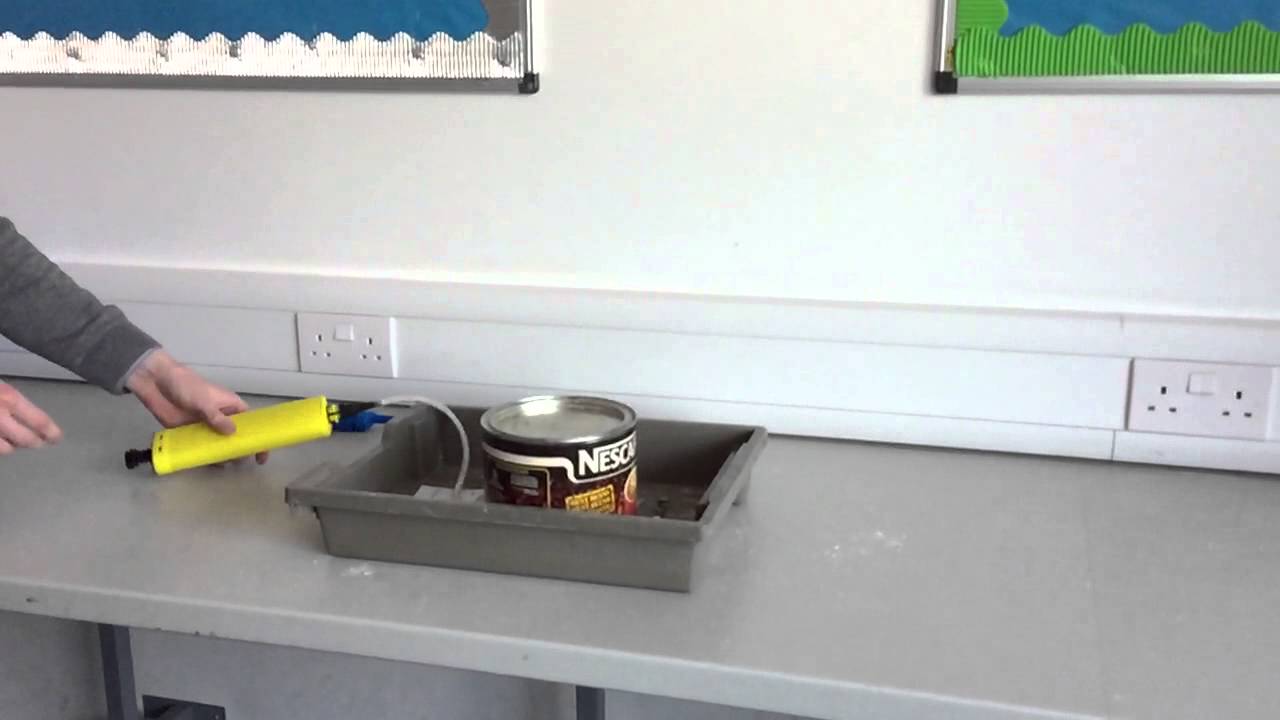
In school we saw dust explosions demonstrated with custard powder, very much like this;
https://www.youtube.com/watch?v=OldfDXxJAVg

The explosion will occur in a closed volume with a vent.

You need to be careful with that. If the vent does not release the pressure fast enough your closed volume might not be closed for long.

Your link got mangled somehow. This is the correct one:

Robin2:
Maybe it is for staff training?

...R

Probably not.

UND_ACS:
Hello,

I'm on a team working on a senior project for mechanical engineering.

...

I'm sure there's still a lot of research to be done in dust explosions. At least 20 years ago when I touched the subject in university they were really poorly understood: how they start, progress, their force, etc. Not an easy subject. The whole field of explosions is an art as much as it is an science, but for dust explosions it's worse.

Safety is a major problem indeed. You don't want those explosions to go off unplanned. Doing it in a closed room (even with a vent) is an added danger - you always have to make sure there's a weak point and that's preferably the roof. That way you at least know exactly what will blow when the explosion is suddenly a lot more powerful than anticipated.

For the project at hand: an Uno will do just fine. Maybe a micro or pro mini is better as it allows you to solder everything securely to the pins, instead of using jumper wires that may come loose. I think you want to be really sure you can event the room after an explosion!

Nevertheless you'll probably need a bunch of them. Explosions tend to do damage.

Relays: nothing special about that I suppose, regular relays, but do use a separate power supply for them, not through the Arduino. They may share a power supply but it's got to be split: one wire to the Arduino, another to the relays.

As you're switching low voltage DC you may look into using MOSFETs as switch. Cheaper/smaller than relays and they don't need an external power supply.

It may be a good idea to wire an exhaust fan (to vent the room afterwards) to the NC of a relay so your Arduino has to actively switch it off, as that way in case your Arduino gets damaged in the explosion (or otherwise just doesn't work) the room will be vented. That's a simple fail safe.

Thank you all for your replies.

UND_ACS:
Thank you all for your replies.

I was hoping you would provide more explanation in response to our various comments.

...R

Robin2:
I was hoping you would provide more explanation in response to our various comments.

...R

I will, I was at work, and to be honest I want to make sure I reply respectfully while at the same time pointing out that many of the comments seem to assume I am a moron =p

So I am going to start with the Arduino Uno and nRF24L01 and a couple lights with a 2 second delay just to keep it simple while I learn the process.

I have already calculated max overpressure based on Gibbs free energy of a sucrose detonation in a known volume with a variety of vent diameters as well as calculating the thickness of a polycarbonate view window using a known support radius and modulus of rupture using a safety factor of 4.

Based on this overpressure we also can approximate the vent pressure and calculate standoff distance.

So with this in mind, we are not going to accidentally turn a puff of powdered sugar into a bomb laced with polymer shrapnel. (At least probably not)

We are also going through series of tests.

The safety comments are taken seriously and will be 100% considered. Wireless detonation was requested by the manufacturer, but this is all part of the process.

I will also mention that this project was requested by a manufacturer and is being sponsored, so they do see some value in the project. At the same time, it is a senior design project, not JPL.

The biggest reason for the project is to visually educate Joe-$15-an-hour-mill-operator that keeping the work area clean (even areas you don't always see) is important, and that smoking can get you vaporized.

As it currently stands two known masses of sugar will be suspended using a pneumatic blast. One chamber with a separator is being used for the primary explosion flowing into a secondary explosion so there will only be a single detonator.

We want to be able to vary the pneumatic pressure, sugar mass, detonator type, and "puff" delay.

It may be necessary to use inerts and flame colorants depending on how the initial tests progress.

EDIT: Also, tests / demonstrations will be held outdoors. I can't imagine trying to do something like this indoors without the reinforced blast spheres that have been used historically...

Thanks for the update.

...R

PS. Morons do penetrate the exclusive walls of this Forum from time to time so you will understand why people are very cautious. IIRC there was a recent case of someone planning to screw mains electric wires to a board.

The nRF24L01 doesn't have built-in encryption and therefore is open to replay attacks, as in someone will monitor your detonation signals then play them back at some later time when you are standing over the equipment.

Is WiFi WPA, Bluetooth or Xbee encryption considered good enough for safety critical systems? I don't know.
If you roll your own encryption system will it be good enough? How will you prove that hackers cannot hijack the system?

mikb55:
The nRF24L01 doesn't have built-in encryption and therefore is open to replay attacks, as in someone will monitor your detonation signals then play them back at some later time when you are standing over the equipment.

That seems to me an extremely unlikely scenario, partly because it would require a lot of expertise on the part of the hacker and partly because there would be little point to it other than a grudge against the company or a specific person.

A completely unintentional interference from some other 2.4GHz device seems far more likely.

And both are easily solved by de-powering the entire receiver system when a person is in the danger zone - as I suggested in Reply #1

...R

If you can de-energise the system whilst outside the danger zone, then you can just as easily trigger it from outside the danger zone, therefore why bother with wireless anything?

If the OP has to use wireless because of a customer requirement then finding something that is "fit for purpose" is more important than using something because it's cheap. That's the difference between the hobby and the professional world where one wrong move can destroy a career.

Maybe look up safety protocols when handling explosives. It probably will include some points where the detonator (i.e. the Arduino with it's peripherals) may never be powered on when there is someone in the danger zone, unless maybe when everything else is in place. Even so, the person switching the detonators on will normally carry the key to the activation device as precaution so no-one else may accidentally activate the detonation.