Hello, good luck to everyone,
I want to keep the data from mpu6050 in Esp32.
The data I want to keep is as follows (X: 0.28, Y: 0.38, Z: 9:75).
Which part of Esp32 should I use?
I want to record data for approximately 5-10 minutes, is there enough space for this?
If it is not enough, what steps should I follow?
How often during the 10 minutes do you want to save the data ?

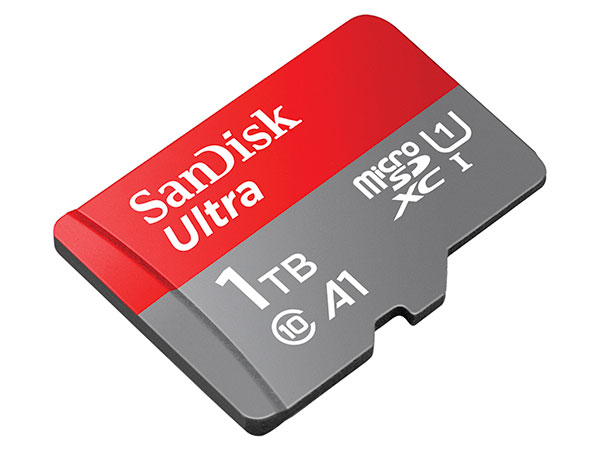
That cannot be accurately answered at this point. I can tell you go fill the orange thing with water, how much do I need. To get an accurate answer you need to supply more information which was asked for by @LarryD @UKHeliBob
Blok alıntı
Actually, I have another question here: I wasn't sure about the data transfer speed(sample rate) range of the mpu6050 (I saw various information on the forums)?
How many data do I need to save per second to save data to esp32 for 5-10 minutes without filling the memory?
What is the maximum number of bytes of data I can save?
@talhaaa
Sorry for saying that, but you do everything so that they stop helping you - you ask vague questions and ignore requests to clarify the task.
Asking questions also requires knowledge. Perhaps in your case it will be easier to describe the final task - what exactly you are trying to do and why you need to save this data.
According to its datasheet:

Depends on the ESP32 you use, how you store the data and if you really store it with the 8Hz sampling frequency cited above or a lower rate.
Let's start from the other end: what are you trying to achieve?
You are right, let me briefly explain what I want to do.
I have a probe in my hand and it will be suspended into a well, but I need to determine whether it is actually suspended into the well.
I am using esp32 and mpu6050 in this. Mpu6050 will be placed inside the probe with the y axis vertical.
I expect to see an increase in the acceleration value on the y axis, at least I expect to read a larger value than the gravitational acceleration.
I do not expect to see acceleration in the X and Z axis (except for accelerations caused by small oscillations while hanging into the well).
My goal is to save the data on the X, Y and Z axis to esp32 while it is being downloaded into the well. Later, when this probe surfaces, sensor data will be transferred to another card via Bluetooth.
Then i will evaluate the acceleration data I received and interpret whether it is actually suspended into the well or not.
Now what I need to decide is how many seconds do I need to print data and will the memory of the esp32c3 allow it?
esp32c3 links that I plan to use

My design is the prop that will be suspended down the well in this way.
@rsmls @LarryD @gilshultz @b707
Hmmm... why?
Could you explain why the acceleration value would increase in that case?
What is the well depth?
I agree
Without knowing that it is impossible to give advice
@UKHeliBob @b707
The depth of the well is estimated to be between 20 meters and 80 meters.
But to decide this, I need to know how much space the esp32c3 memory has.
No you don't
You first need to decide how much data you need to save in the worst case
I don't know exactly, but the answer in anyway a question of hundreds kilobytes. Some links says about 400 kBytes RAM
Saving data as follows needs a 12 bytes:
Therefore, using a 8Hz sample rate you will be able to save the data
400000 Bytes / 8 Hz / 12 bytes = 4166 sec or about 1 hour 8 min@talhaaa
Please answer the question in #9
Could you explain why the acceleration value would increase in the well?
If the probe is hanging in the well, there will be no acceleration on the y-axis if this is the vertical axis. It's hanging steadily, after all. You might be able to record the lateral acceleration as the probe swings horizontally.
There will be a momentary acceleration on Y of the probe drops, but whether you'll be able to record/notice this, depends on how far the probe can drop. If it only drops a very short distance, the sampling rate of the MPU6050 may not be sufficient to record it.
because I keep the y axis perpendicular to the ground, so then I read the acceleration of gravity on the y axis as 9.8 m2/s. and I expect an increase in acceleration on the y-axis when it moves downwards in the vertical.
Am I thinking wrong?
Yes, see above. Something that doesn't move isn't accelerating.
First of all, thank you all for trying to help. In fact, it will not be suspended there, but will be lowered down the well using a pulley system above the well. I'll try to check if it's actually going down from its acc on the y-axis.
@rsmls @UKHeliBob @b707 @LarryD
Depending on the speed at which it's lowered, you may be able to read this descent (or ascent) from the sensor. Since a manual pulley system (which I suspect may be used here) tends to be jerky, I don't doubt you'll read something from the sensor. Making sense of it, however, will be a different matter.
The question still remains what you want to know about the probe exactly. There's a good chance that there are other and perhaps better ways to determine what you need to know.
I don't think there will be much shaking if the pulley system is automatic rather than manual.
I need to save this data into the esp32 during the time it is suspended in the well, because we will be providing power to the esp32 through the battery.
When the probe comes to the surface, we can access the data.
My question is, how often should I collect data so as not to miss the acceleration that occurs when lowering into the well here?
And of course, in a way that esp32's memory can take it
@rsmls @b707 @UKHeliBob
thank you for all your answer.