Hi everyone!
I have a project to do in a professional setting and as part of this project I would need a GPS Tracer. I am a computer scientist but I have some knowledge about embedded systems.
I've done some research on making a GPS tracker with arduino and raspberry and I found a lot of interesting tutorials but I wonder if it is possible to buy a complete tracer already manufactured that I can remotely control (turn on, turn off , set up the frequency of sending localization data, ...) or if I have to make my own GPS tracker.
But as it is for professional use, I need a precise device (10meter accuracy) robust, with a very good autonomy, which can send information by GPRS that I could process through a program on a remote server, and that can support different power voltages (because I would like to be able to load it with a solar panel to take care of it as little as possible)
For a professional application, you will definitely want to use one of the many, many field proven commercial trackers. Consider satellite locators as well, as they don't depend on nearby cell phone services.
henrifoko:
...but I wonder if it is possible to buy a complete tracer already manufactured that I can remotely control (turn on, turn off , set up the frequency of sending localization data, ...)
I have just watched this few hours ago:
TOP 3 GPS Tracker in review. Comparison of the best GPS devices!
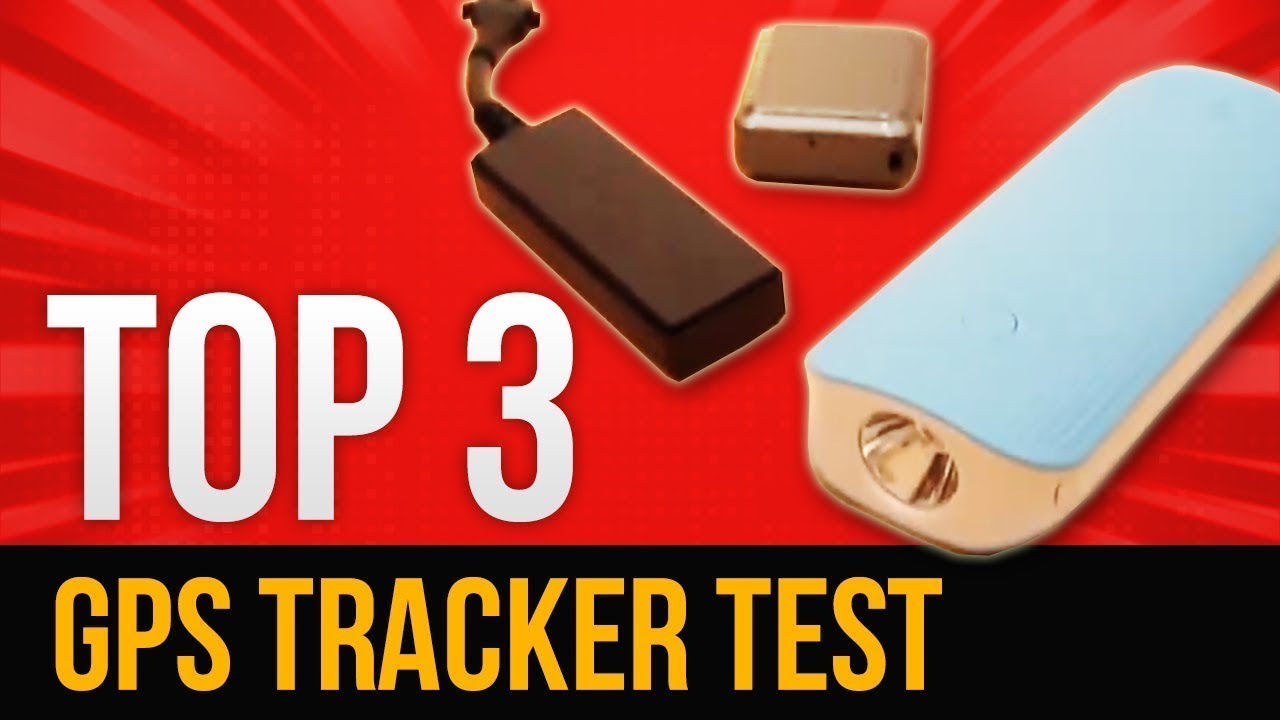
All upper have some advanced features and perhaps some of them have exactly these features you require.
GPS civil band signal is accurate in less than 8m ( during good enough signal) and even cheapest GPS/GPRS modules should have required accuracy.
that can support different power voltages (because I would like to be able to load it with a solar panel to take care of it as little as possible)
no. design your solar sytem to deliver constant regulated 5 VDC to your gizmos. do not expect multiple gizmos to regulate 5 VDC equally well.
jremington:
For a professional application, you will definitely want to use one of the many, many field proven commercial trackers. Consider satellite locators as well, as they don't depend on nearby cell phone services.
Can satellite locators send inforamation to a remote server ?
noob314:
I have just watched this few hours ago:TOP 3 GPS Tracker in review. Comparison of the best GPS devices!
https://www.youtube.com/watch?v=II3YWDANYwIAll upper have some advanced features and perhaps some of them have exactly these features you require.
GPS civil band signal is accurate in less than 8m ( during good enough signal) and even cheapest GPS/GPRS modules should have required accuracy.
I also thought I could use an accelerometer and gyroscope to try to estimate the position from a starting point, and use every 6 hours a GPS sensor to correct this position but since the vehicle will constantly move, I myself asks if at 6am the positioning error will not already be too high. what do you thing about that ?
sorry for my poor English, I'm fracephone and I use a translator (that I correct as much as I can).
OK thk
henrifoko:
I also thought I could use an accelerometer and gyroscope to try to estimate the position from a starting point, and use every 6 hours a GPS sensor to correct this position but since the vehicle will constantly move, I myself asks if at 6am the positioning error will not already be too high. what do you thing about that ?
sorry for my poor English, I'm fracephone and I use a translator (that I correct as much as I can).
It all depends what you expect from the tracker, what is it's main purpose and the target market. You have mentioned this is part of a professional project? In that case asking here where we all made personal and homemade toys around mostly 8-bit MCUs for fun or personal teaching with low price devices, will not be quite productive and useful for industrial scale products.
If we talk about "toys" around Arduino UNO/Nano or similar 8-bit MCUs boards which involve battery source, GPS/GPRS module, then external interrupt is quite logical to have as option, in order to maximally save power. In that case motion sensor can do that. Etc...
It really all depends of your more detailed requirements, there is really far too many combinations and possible solutions. For instance use as anti-thief, truck tracking etc, constant external or battery powered etc.
Can satellite locators send inforamation to a remote server ?
Yes. Take a look at the SPOT Trace, for example.
I also thought I could use an accelerometer and gyroscope to try to estimate the position from a starting point
That won't work at all with consumer grade sensors. The estimated position will drift over a matter of just seconds.
noob314:
It all depends what you expect from the tracker, what is it's main purpose and the target market. You have mentioned this is part of a professional project? In that case asking here where we all made personal and homemade toys around mostly 8-bit MCUs for fun or personal teaching with low price devices, will not be quite productive and useful for industrial scale products.If we talk about "toys" around Arduino UNO/Nano or similar 8-bit MCUs boards which involve battery source, GPS/GPRS module, then external interrupt is quite logical to have as option, in order to maximally save power. In that case motion sensor can do that. Etc...
It really all depends of your more detailed requirements, there is really far too many combinations and possible solutions. For instance use as anti-thief, truck tracking etc, constant external or battery powered etc.
Ok here are the precise specifications for this project. First of all, the equipment to be made will be used in buses. these are university electric-powered buses. we need 3 equipment for 3 buses. Each piece of equipment will have to:
- collect GPS position data from the bus (with less than 10m error)
- data must be collected with a frequency between 0.25 and 2 Hertz
- the data must reach a server within the university campus in as little time as possible (I prefer that the data be transmitted through the HTTPS protocol, this would be ideal server-side)
- the equipment must be able to be completely controllable remotely (via SMS or internet regardless); for example, we must be able to turn it off and turn it on remotely, adjust the frequency of reception, change the format of the data emitted, control the battery level, etc.
- the equipment must be able to operate in total autonomy (use of a small solar panel on the roof of the bus as a source of energy). We are not allowed to use the bus battery.
- some areas where the bus runs are very masked by trees, buildings,... and we may not pick up a GPS signal, it should contains inertial sensors to estimate the position of the bus at these locations.
I don't think I don't need to make a PCB. And also to facilitate maintenance, and replacement in case of problems, I think it's better to use a card already designed rather than a PCB.
after some research, I found the sim808, sim868, sim7001 which are GPS-GSNN/GSM/GPRS modules for Arduino. In my country I would have a hard time finding them, so before ordering them I want to make sure I'm not wrong.
On the side of the bus it's pretty much all. server and information management side I can manage.
So you want a robust and reliable bus tracker, that needs to survive being bounced around a lot, is waterproof, runs off solar power and your going to string all the bits together without a PCB.
How many years of electronics construction and design experience do you have ?
srnet:
So you want a robust and reliable bus tracker, that needs to survive being bounced around a lot, is waterproof, runs off solar power and your going to string all the bits together without a PCB.How many years of electronics construction and design experience do you have ?
I would say that I have 2 years of experience in electronics but not micro controllers, just basic electronics (resistor, capacitors, transistors, operational amplifier and other basic components).
But I've already worked on the IoT as part of an academic project so I have a bit of experience in programming on board equipment.
henrifoko:
I have about 6 months to have a complete prototype.
He means: "How many years of experience you have with embedded systems and generally in electronic?"
This is complex task, with many details and not quite desirable conditions. My suggestion is to start separately testing each one by one, starting with GPS/GPRS modules making full test in exactly these environments.
noob314:
He means: "How many years of experience you have with embedded systems and generally in electronic?"This is complex task, with many details and not quite desirable conditions. My suggestion is to start separately testing each one by one, starting with GPS/GPRS modules making full test in exactly these environments.
Okay, and what tools do you think I could use for testing, I mean which sensors. Because for now I intend to buy SIM868 and SIM808 to begin with.
How many km you have the longest part of the road masked by trees? For reliable position you have at least 3 satellites + one additional to get also altitude. If trees are quite tick, receiver may be not even able to have good signal even on top of the bus. It is very important angle of the clear sky it can see. If you can buy module have GPS and GLONASS, that will drastically increase ability for reliable fix...
Furthermore, GPS antenna need to be out of metal bus construction in order to pick signal clearly, on top of the bus or inside, mounted on windshield. If on top of the bus (at open), all need to be hermetically sealed.
With no direct sunlight, solar panel is useless and device must rely on battery only. It is always unreliable to use solar panel as a main power source, but instead to use it as a battery charger, if forbidden to use bus battery. If there is a constant rain, clouds etc, battery is only thing you have to rely on whole daily route...
How many km and hours bus need to drive daily? Is it need to drive at night?
Which type of battery you planing? Which capacity?
By buildings you refer to up to 10m or multiple floors? Between 10-100?
Is there A-GPS points available?
Etc, etc. And of course maximum predicted cost of the whole device including solar panel (if needed after all) takes main role.
noob314:
How many km you have the longest part of the road masked by trees? For reliable position you have at least 3 satellites + one additional to get also altitude. If trees are quite tick, receiver may be not even able to have good signal even on top of the bus. It is very important angle of the clear sky it can see. If you can buy module have GPS and GLONASS, that will drastically increase ability for reliable fix...Furthermore, GPS antenna need to be out of metal bus construction in order to pick signal clearly, on top of the bus or inside, mounted on windshield. If on top of the bus (at open), all need to be hermetically sealed.
With no direct sunlight, solar panel is useless and device must rely on battery only. It is always unreliable to use solar panel as a main power source, but instead to use it as a battery charger, if forbidden to use bus battery. If there is a constant rain, clouds etc, battery is only thing you have to rely on whole daily route...
How many km and hours bus need to drive daily? Is it need to drive at night?
Which type of battery you planing? Which capacity?
By buildings you refer to up to 10m or multiple floors? Between 10-100?
Is there A-GPS points available?Etc, etc. And of course maximum predicted cost of the whole device including solar panel (if needed after all) takes main role.
For powering the device, the solar panel will only be used to recharge the internal battery on the device. For the battery I intend to use rechargeable 9V 6F22 atteries. it's pretty easy to find and it will facilitate maintenance. At the moment I can't estimate the energy that the device will consume per day and therefore the ability to take I would do it when I have a prototype.
The buildings are not that big, between 10 and 15m and I already try to use the GPS of my phone between these buildings and I still managed to get my position with about 28m error that I blame on the inaccuracy of the GPS of my phone. And for the area covered by trees, these trees are not very large either but there are many. I think that from the roof of the bus, the sky should look clear enough to pick up a GPS signal.
per day the bus runs for about 12 hours (7.30am - 12pm and 1.30pm-9pm).
I doubt pack of 9V 6F22 rechargeable batteries is the right choice. Each battery have very low capacity of around 600mA, depending on what type of the chemistry is. I have bought one in the same package, however NiMH long time ago, which had in that time max capacity of only 200mA and I literally payed it with gold!
Not only that they are expensive, but you will need pack of at least 5 of them in parallel to have at least 3000mA, which will require quite big size container to hold. And you would need to make or buy charger regarding used battery chemistry... This do not look very promising. One smart phone standard tin rechargeable battery have such capacity.
After all, I do not think finished device will be compact and easy to work with. And the cost of build and maintenance will be extremely high. Any modern 200 Euro android based smart phone probably have all necessary features already built in and as well requirement you have mentioned. Then using some existed transport tracking app or perhaps to make yourself one by your requirements. It would be probably much cheaper and easier for maintenance.
Making special device for that seems quite pointless, unless it is some academic community fun project without real life usage.