Guitar Pickup Winding Machine

Would the output on the Arduino board have enough juice to power the 12v DC motor? and the LCD, and (maybe) the small stepper motor?

Was thinking split power, one to the Arduino and the other to the 12v motor with the bigger PSU.

Or best use 2 power supplies?

The Arduino can't power motors, just control them via a driver and external power. An LCD is plausible though.

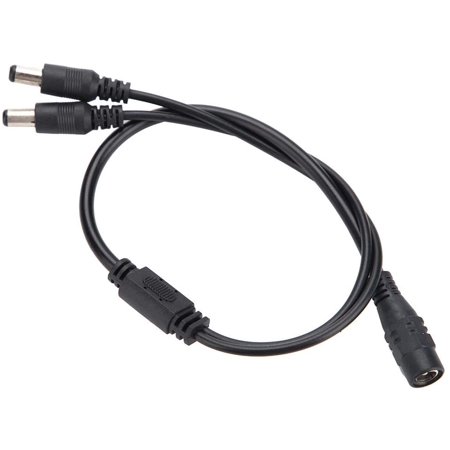
Yeah, I don't want 2+ power cables out the back of this thing so I don't think the AC adapter that comes with it will be the best plan. Maybe if using the supplied adapter, a splitter cable? Though then question is if enough Amps from the adapter to run it all.

Ok guys... made a diagram. List of parts and rough layout.

Some stuff is straight forward. Motor with a pot for speed control and a 3way switch for forward/off/reverse. Hall sensor to detect number of turns.

LCD I took advice from earlier in the thread and put in a rotary encoder. This will be for putting in the number of turns, resetting the screen/counter, and maybe choosing a pattern on the stepper motor, which I had a good idea for that I've not seen done before.

PSU... not sure what to use for that. Not sure if splitting the AC adapter it comes with will have enough Amps to power the Arduino and the motor? or if the adapter is 5v or 12v. Few 12v PSU's on Amazon for LED lighting. 12v5A... some have 2 outputs, or maybe a terminal block?

Someone has this for sale (LRS-350-12) locally used, like new... $30CAD.

Idea I had was that the kit has a small stepper motor. Instead of that big giant Nema17 with rails and lead screws etc... if I mount the mini one with the shaft straight up and put something on it that the wire passes through after pinched with the felt pads (tension control). Then have the stepper rotate back/forth X number of steps. Like 10 left, 20 right, 20 left and back and forth? Don't need a powerful stepper to guide 42AWG wire back and forth 15mm.

If that works, then maybe can program a few patterns, like straight back/forth, or back/forth fast then slow, or maybe a +10, -5, +10, -5 then reverse. Use the LCD and knob to choose pattern A, B or C.

Here's a basic sketch. I didn't draw it with a lot of detail just the basics. I think I got the pins right though. Obviously no idea where pins go. Was learning between analog and digital pins today but no idea yet where stuff goes. I grab my kit later this week.

Don't use LED power supplies for electronics, they don't work very well, regulation is often rather poor. Someone recently posted a link to some low cost mains-DC power supplies in another thread. You can search as well as I, it had to do with 24v supplies.

Good luck writing code for controlling the traverse in sync with the bobbin drive. You will soon realise why a stepper is a good idea for the bobbin I think.

In practice, the traverse is non-critical. There are only two effective traverses - the extremes, concentric and scatter. Although the machines can achieve very precise turns per layer, in the end it makes very little difference in the coil density. Even hand scatter winding isn't significantly different, although there is a lot of folklore around it. So any pattern that is basically close to what you want, will work very well.

Also it is the coil density that mostly affects the coil capacitance, which is the main influence on pickup response and therefore tone (all else equal). That capacitance is swamped out by orders of magnitude by the capacitance in the guitar controls and output cable.

The most significant factor in coil density, is wire winding tension.

@jhaine I'm not overly worried about syncing the traverse with bobbin drive, I think if if I turn the speed to a specific number while the traverse lays down a pattern, I'll be close enough. For example, turn the speed to 4 and wind pattern to A. Use a knob with numbers on it and maybe a pot with detents.

Like @anon57585045 said, only a few patterns that matter, wire tension is important. Sadly, for consistent tension the part you needs gets pricey. That said, most of the big names out there winding pickups are still traversing by hand with talc powder on their fingers. I mainly added that traverse because thought it was a clever idea I've never seen done before. I think the hardest code there is having it return to 0 when done especially if you stop the wind early.

YOUTUBE LINK

It's boring but informative. Kinda funny too... guy rejects a tonne of supplies because of inconsistency, even analyses the magnets with a spectrometer... but... hand winding with fingers and talc powder.

I also came up with a design for a manual traverse. Basically the 2 felt pads idea but on a sliding shaft that I slide back and forth. Bobbin holder I have a design for as well with a skateboard bearing. But neither require programming so didn't put on the diagram.

I should think of adding a kill switch though.

In any case... sketch done... as far as having luck writing code goes to make the traverse work, I think I need luck writing any/all code since last I coded anything was around 1998 for an intro to VC++. :smiley:

But, overall... how's it look? Are there better part #'s I should look at? Few parts come with the kit so should work. Arduino, LCD, mini stepper w/controller. Would this all work on a NANO? Then I can save the UNOR3 for learning. Also... power supply... what can I use to power the Arduino and motor with?

A few how-to's on YouTube seem to use those PSU's like I linked (what people use for LED lights) but if you guys say that's bad, and the adapter it comes with isn't big enough, and don't use a laptop PSU with converter... well... I'm running outta options for powering this. :sweat_smile:

Planning is good. Very good. But I've found that inevitably, what you learn during the project will have you slapping your forehead and getting on the website of your favorite supplier to order what you now know to be more appropriate parts. If you expect to order your components and assemble them without issue into a working device first time, you may be in for some unpleasant surprises :wink: Ask me how I know :frowning_face:

@wildbill Oh I don't doubt it... that's why this thread is SO long. Just trying to avoid (as much as possible) buying parts that won't work or are incompatible. That's why I'm buying my nephew's kit off him, for learning and well, gotta hope the parts are compatible if in a kit. :smiley:

But, I gotta say the hesitation is mainly because of well, the 360 the thread took for the motor. OP I wanted steppers and a cnc shield, which was apparently a dumb idea, then was suggested a tiny geared motor, so I picked one that almost all DIY pickup winder videos have, and it went back to "why not a stepper and cnc shield". :crazy_face:

Power wise... laptop power supply was a no go. Told use the power adapter that comes with the Arduino, but then told not enough to power the Arduino, LCD and motors. I picked an external PSU unit designed for this stuff, and told they're no good either. I am literally stumped at how to power this beyond using 2 power adapters. Computer PSU, has some 5v and 12v rails but, seems like a messy solution.

I do appreciate the help given (minus the "help" from one person) and I think I'm set and ready to order parts.

That all said... I may just scrap the Arduino. If the stepper is a no go, then all the Arduino is good for is auto-stopping when it hits X number of turns. What would the point of that be really. Can get a cheap counter off Amazon and just turn the speed to 0 when the number is hit.

Hey @THRobinson, how has your journey been since your last post? Did you make any progress? I'm at the point of deciding between geared motor w/ encoder vs stepper as well.

After a month, a personal message might have a better chance of reaching the OP.

@anon57585045 ah, he's good... got an email saying new message. :grinning:

@solaraaudio so... I don't know Arduino, especially the programming aspect. THIS GUY has been working on his Arduino/CNC based winder for a year saying he'll release plans for it and literally a week after I ordered my parts he finally released them. Most of my ideas came from his projects, and even though I was told some of it was a bad idea, well, he did it the same way I was thinking and it works. He has a few older revisions using an angled geared motor as an auto traverse that was pretty clever and simple.

That said, I have an Arduino learning kit. The more I looked online however at professional winders (people who do this for a living not the machines) NONE of them used an auto traverse or tensioner, always done by hand and with fingers.

So, I figured for now at least while I learn Arduino more, I'll just make a winder. Ordered the parts and the last part came in from eBay China last week actually.

LCD Digital 0-99999 Counter 5 Digit Plus UP Gauge + Proximity Switch Sensor-SR

  • Accurate for up to 1200rpm, runs off 2xAA batteries.

30/60/600RPM 12V DC Powerful Torque Micro Speed Reduction Gear Box Motor

  • Has a 1200rpm option as well. Smaller than expected but almost all vids I watched, this is what they used, and on Amazon many reviews said used for a pickup winder.

DC 6V-30V Motor Speed Controller Reversible PWM Control Forward / Reverse switch

  • Came with the switch and potentiometer for speed control. Will use a guitar knob with numbers so can record approximate speed settings. Arrived broken though, gotta get the soldering gun out. Was gonna relocate the 5mm LEDs anyways, adding wire and running to the face of the machine.

AC DC5V 12V 9v 24V 1A 2A 3A 0.5A Power Supply Adapter US EU Plug LED Strip light

  • Grabbed the 12v 3A model. I have the female socket for it in a bin of parts I bought for making guitar pedals with.

3/4/5/6/7/8/10mm Rigid Flange Coupling Motor Guide Shaft Coupler Motor,Conn.Z7

  • 4mm flange for the motor shaft. I plan to make 3D Printed bobbin plates with a recess the shape of the bobbin to not only make it easier to center it but also keep it in place better.

Made a 3D model in Fusion. Not quite done. Still debating the best way to make the guide with stuff I have, and way to hold the bobbin in place. Which I have an idea for. I don't want to use tape. With the 3D printed bobbin and a recessed area to place the pickup bobbin in, I might make a sorta L bracket that slides in/out with a wingnut to tighten in place, and at the top use a skateboard bearing and 3D print something that pushes against the bobbin but spins freely.

Figured at least this way I have something and can get started. Parts arrived about 3 weeks earlier than expected. One part was an ETA of near end of November so, wasn't ready. Started ripping the kitchen apart and I have a PS2 laying here in about 20 pieces. That said, this should work no issues, seen very similar setups before.

When done I'll post something. Even if I just keep it this way, I'll still try to learn some Arduino. From what I have learned and seen, I think my initial plan for a CNC shield based stepper motor setup was ideal, like the video I linked at the start. His even has the software and has an app to calculate approximate windings needed etc.

Like I said, there are those that do and those that just talk about it. :wink:

Sorry, but humbug. Most pro custom winders use a simple tensioner made of Velcro strips in a clip. It's hand held not mounted somewhere, if that's what you mean.

Agree to disagree... Fred Stuart, Ron Ellis, Abigail Ybarra, even that Dylan Talks Tone guy, all bare fingers with maybe talc powder.

Mass produced ones like Dimarzio and Seymour Duncan are automated, but the boutique and custom shops are with fingers.

YouTube... Can watch them do it.

Anyway, the result is the same... it's really under manual control either way. Some aspects of custom winding are basically massaging the client's imagination, wound with fingers sounds so much more organic and crafted. :slight_smile:

Blood adds more tone on the high end. :grin:

But ya I was thinking of the felt pads with a wing nut which is on a lot of machines despite what a previous post said. Thought instead of stationary make it able to slide back/forth but scrapped it.

StewMac sells something like you mentioned at a VERY high price for what it is. Basically felt pads, a nut and the tip off a welder I think.

I think I mentioned somewhere back in the thread, the effect of traverse is vastly overstated. I do know someone that wound a series of pickups with different traverse and measured them. He claimed they did show some difference but a lot of stuff "comes out in the wash" when the pickup goes into the guitar control circuit. It tends to flatten differences.

Ya, I see vids of comparisons and not sure if because the audio gets compressed through YouTube, or because two different guitars or what but don't really hear a big difference.

I think the main thing is find a combo you like (magnets, wire guage, number of winds, basic wind pattern) and being consistent with it.

Ellis has a vid for his operation. Goes as far as using a spectrometer to test alloys with and rejects lots of materials. I'm not aiming tha high yet.

Ideally I'd like to get a hold of a few old no longer made pickups and try to match them. Peavey T60's, '70s Hagstrom Swedes, etc. Stuff that costs a lot used but no one makes new.

Trying to eventually start a small business online, making selling new vintage parts. Knobs, pickguards, and a few body shapes that aren't available anymore for restorations or just making new stuff that looks old.

Sure, that is what everyone has been basically doing for 100 years. Also what people try to uncover the recipe for, so those that are out of production can be reconstituted.

The aspect of vintage reproduction introduces another subtle factor, authenticity. It's not enough to just match the sound - for the effort and money, people expect to see an effort made to match all the materials and construction details as well. I really accept and understand that, even though I personally couldn't care less about that stuff. I just play electric guitar and try to sound good. I do have custom pickups though, Cavaliers.