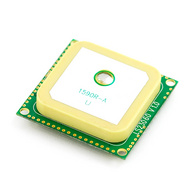
If you really cant get SoftwareSerial to work- Try this >>
Warning- if you already using PIN 0 (RX) on your UNO like Arduino- this will not work.
But if you have the RX pin open, and are willing to wire it, try this.
// GPS_LS20031_TEST_USES_MONITOR

#include <TinyGPS.h> // You will need TinyGPS from Mikal Hart's web page if you don't have it.

/* This sample code demonstrates the normal use of a TinyGPS object.
   It DOES NOT requires the use of SoftwareSerial, and assumes that you have a
   57600-baud serial GPS device hooked up on pins (TX) and PIN 0(RX) of your Arduino.
   If you’re using a MEGA you will have to use the correct RX pin for MEGA.

   IF you are already using PIN 0(RX)on your Arduino for something else
   then this program may not work for you.

   Also you’re going to need to remove the connection between your RX pin on your
   Arduino and the GPS every time you programming the Arduino.
   I forgot this issue a few times.

  The Circuit:
     Pin assignments for the LS20031 GPS:
     • GPS Pin 5 (left-most when viewed from above) : No connection (or ground)
     • GPS Pin 4 : to Arduino ground (GND) pin
     • GPS Pin 3 : to Arduino pin 0
     • GPS Pin 2 : No connection
     • GPS Pin 1 (right-most when viewed from above) : to Arduino 3.3V pin

   Note: you can use your own GPS with this, just make sure it output from the GPS is connected to the RX pin on your Arduino.
*/

TinyGPS gps;
// SoftwareSerial nss( RXPIN, TXPIN); // NOT NEEDED IN THIS EXAMPLE
static void gpsdump(TinyGPS &gps);
static bool feedgps();
static void print_float(float val, float invalid, int len, int prec);
static void print_int(unsigned long val, unsigned long invalid, int len);
static void print_date(TinyGPS &gps);
static void print_str(const char *str, int len);

void setup()
{
  Serial.begin(57600);
  //nss.begin(57600); // -- NOT NEEDED IN THIS EXAMPLE

  Serial.print("Testing TinyGPS library v. "); Serial.println(TinyGPS::library_version());
  Serial.println("by Mikal Hart");
  Serial.println();
  Serial.print("Sizeof(gpsobject) = "); Serial.println(sizeof(TinyGPS));
  Serial.print("Serial Buffer size = ");Serial.println(" ?? ");            //(_SS_MAX_RX_BUFF); I am not sure how to address this- comes
                                                                                               // directly from the RX buffer
  Serial.println();
  Serial.println("Sats HDOP Latitude Longitude Fix  Date       Time       Date Alt     Course Speed Card  Distance Course Card  Chars Sentences Checksum");
  Serial.println("          (deg)    (deg)     Age                        Age  (m)     --- from GPS ----  ---- to London  ----  RX    RX        Fail");
  Serial.println("--------------------------------------------------------------------------------------------------------------------------------------");
}

void loop()
{
  bool newdata = false;
  unsigned long start = millis();

  // Every second we print an update
  while (millis() - start < 1000)
  {
    if (feedgps())
      newdata = true;
  }

  gpsdump(gps);
}

static void gpsdump(TinyGPS &gps)
{
  float flat, flon;
  unsigned long age, date, time, chars = 0;
  unsigned short sentences = 0, failed = 0;
  static const float LONDON_LAT = 51.508131, LONDON_LON = -0.128002;

  print_int(gps.satellites(), TinyGPS::GPS_INVALID_SATELLITES, 5);
  print_int(gps.hdop(), TinyGPS::GPS_INVALID_HDOP, 5);
  gps.f_get_position(&flat, &flon, &age);
  print_float(flat, TinyGPS::GPS_INVALID_F_ANGLE, 9, 5);
  print_float(flon, TinyGPS::GPS_INVALID_F_ANGLE, 10, 5);
  print_int(age, TinyGPS::GPS_INVALID_AGE, 5);

  print_date(gps);

  print_float(gps.f_altitude(), TinyGPS::GPS_INVALID_F_ALTITUDE, 8, 2);
  print_float(gps.f_course(), TinyGPS::GPS_INVALID_F_ANGLE, 7, 2);
  print_float(gps.f_speed_kmph(), TinyGPS::GPS_INVALID_F_SPEED, 6, 2);

  // Ternary operation --> condition ? value_if_true : value_if_false
  print_str(gps.f_course() == TinyGPS::GPS_INVALID_F_ANGLE ? "*** " : TinyGPS::cardinal(gps.f_course()), 6);
  print_int(flat == TinyGPS::GPS_INVALID_F_ANGLE ? 0UL : (unsigned long)TinyGPS::distance_between(flat, flon, LONDON_LAT, LONDON_LON) / 1000, 0xFFFFFFFF, 9);
  print_float(flat == TinyGPS::GPS_INVALID_F_ANGLE ? 0.0 : TinyGPS::course_to(flat, flon, 51.508131, -0.128002), TinyGPS::GPS_INVALID_F_ANGLE, 7, 2);
  print_str(flat == TinyGPS::GPS_INVALID_F_ANGLE ? "*** " : TinyGPS::cardinal(TinyGPS::course_to(flat, flon, LONDON_LAT, LONDON_LON)), 6);

  gps.stats(&chars, &sentences, &failed);
  print_int(chars, 0xFFFFFFFF, 6);
  print_int(sentences, 0xFFFFFFFF, 10);
  print_int(failed, 0xFFFFFFFF, 9);
  Serial.println();
}

static void print_int(unsigned long val, unsigned long invalid, int len)
{
  char sz[32];
  if (val == invalid)
    strcpy(sz, "*******");
  else
    sprintf(sz, "%ld", val);
  sz[len] = 0;
  for (int i=strlen(sz); i<len; ++i)
    sz[i] = ' ';
  if (len > 0)
    sz[len-1] = ' ';
  Serial.print(sz);
  feedgps();
}

static void print_float(float val, float invalid, int len, int prec)
{
  char sz[32];
  if (val == invalid)
  {
    strcpy(sz, "*******");
    sz[len] = 0;
        if (len > 0)
          sz[len-1] = ' ';
    for (int i=7; i<len; ++i)
        sz[i] = ' ';
    Serial.print(sz);
  }
  else
  {
    Serial.print(val, prec);
    int vi = abs((int)val);
    // Ternary operation >>condition ? value_if_true : value_if_false
    int flen = prec + (val < 0.0 ? 2 : 1);
    flen += vi >= 1000 ? 4 : vi >= 100 ? 3 : vi >= 10 ? 2 : 1;
    for (int i=flen; i<len; ++i)
      Serial.print(" ");
  }
  feedgps();
}

static void print_date(TinyGPS &gps)
{
  int year;
  byte month, day, hour, minute, second, hundredths;
  unsigned long age;
  gps.crack_datetime(&year, &month, &day, &hour, &minute, &second, &hundredths, &age);
  if (age == TinyGPS::GPS_INVALID_AGE)
    Serial.print("*******    *******    ");
  else
  {
    char sz[32];
    sprintf(sz, "%02d/%02d/%02d %02d:%02d:%02d   ",
        month, day, year, hour, minute, second);
    Serial.print(sz);
  }
  print_int(age, TinyGPS::GPS_INVALID_AGE, 5);
  feedgps();
}

static void print_str(const char *str, int len)
{
  int slen = strlen(str);
  for (int i=0; i<len; ++i) // Ternary operation --> condition ? value_if_true : value_if_false
    Serial.print(i<slen ? str[i] : ' ');
  feedgps();
}

static bool feedgps()
{
   while (Serial.available())
    {
     if (gps.encode(Serial.read()));
    }
  return false;
}