I am trying to learn how to build an Arduino in full. I have found schematic, list components, etc.. But what I am trying to understand is what each component does, specifically in the components section that goes from the USB plug to the chip. I found few courses and lot of video tutorial between youtube and other website but none of them actually explain what is what, only executing the schematic robotically. I want to understand so when I execute my project I can design my own PCB board accordingly to my project's need. Can anyone help me or know where to find resources to learn how to design an arduino from scratch?
Thank you
Nick Gammon on making duinos, covers many options well!
He says minimal but what speed? Which AVR? There are many, his example is the "Mighty 1284" with 32 IO pins, 16K RAM and 2 serial ports.
He covers options and shows DIY connecting... in pictures and words.
Perhaps check it over to see how it affects your ideas. You can run at 3.3V if you don't mind the at 8MHz for about half the power part.
Make Your UNO Kit (arduino.cc)
Read the documentation that goes with the official kit.
Have fun!
Just to put things in perspective... If you were taking electronics at a university you'd be in your 3rd or 4th year before you could design your own microcontroller board. Even then, you'd be relying on the chip manufacturer's datasheets and they don't always tell you everything about why certain components/connections/configurations are recommended. And the chip manufacturer may have accidentally discovered that certain things make the circuit more reliable so they include that in their recommendations.
I'm not saying it takes that much knowledge & education and you could learn faster if you focus on microprocessors & microcontrollers...
It's so easy. All you need
- An atmega328 chip
- A USB-serial adapter. I prefer the compact CP2102 modules, see below
- A breadboard
- Two or three 0.1uF caps
- A 10K resistor
- A few wires

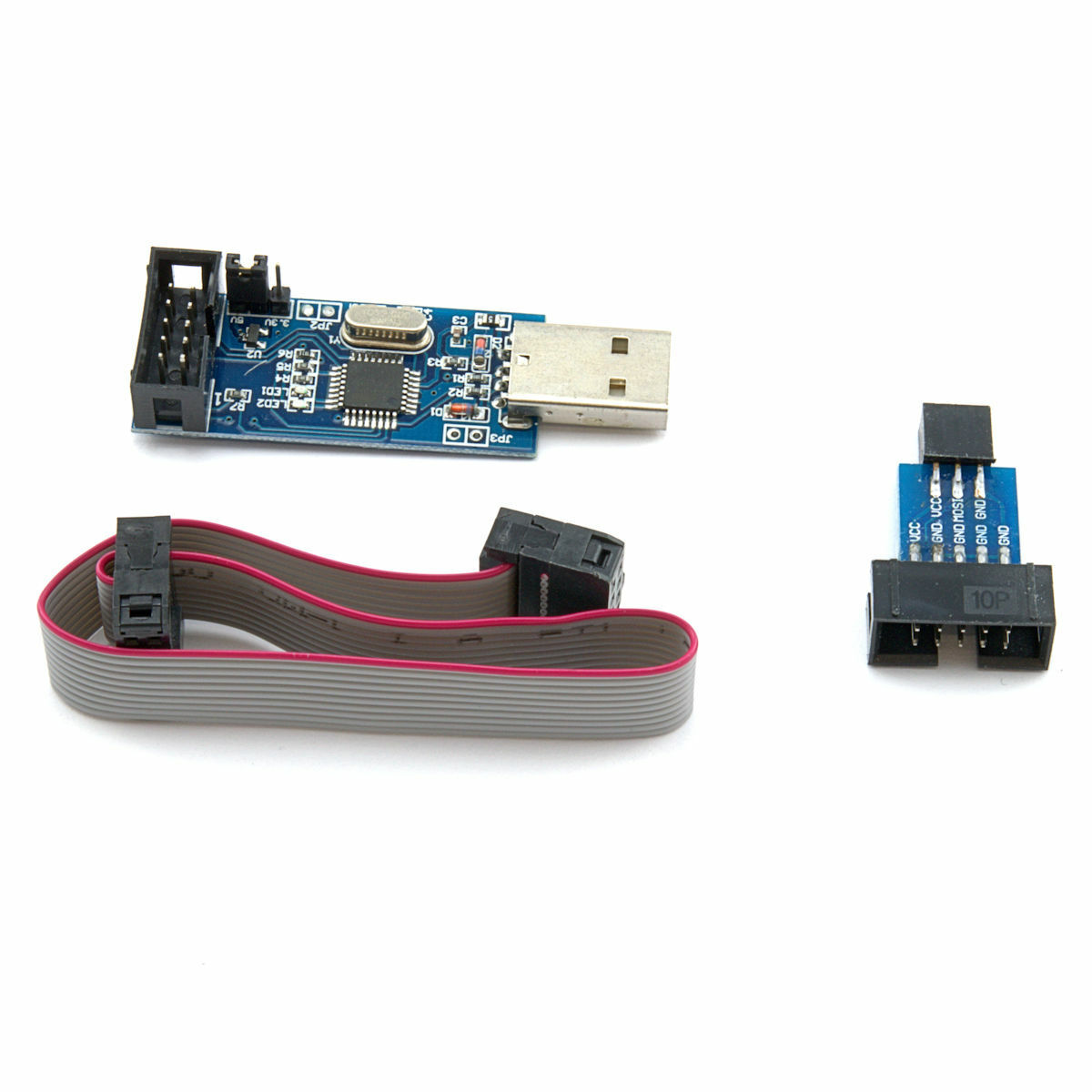
The only other thing you need is a way to burn the bootloader into the atmega328. You can buy them with this already done, but they usually have the Uno bootloader, which means you then need a 16MHz crystal and more caps. So instead, you can buy a completely bare atmega328 and burn an alternative bootloader. It's really easy if you have another Arduino to use as your "ISP programmer" and use the MiniCore boards package. I use a USBasp programmer like this
I'm inclined to agree. There isn't much TO an "Arduino board" - just a microcontroller, a USB/Serial converted, a power supply, and a bunch of connectors. Some of those are more complicated than they need to be on an Uno or other board, but... that's separate.
Perhaps this "partitioned" schematic will help? It's for a pre-Uno board, but the "modules" remain similar...
