Hi,
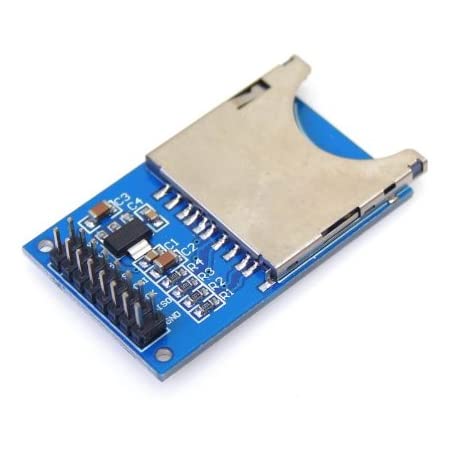
I am trying to include a SD card and nrf24 module in my project (using an Arduino nano old bootloader). I test the SD card module and the nrf24 separately and they work fine. However when I connect both modules at the same time only the SD card module works; the nrf24 doesn't.
Hardware connections:
nrf24:
-CE pin 7
-CSN pin 8
SD module:
-CS pin 10
The rest of the connections are the standard SPI hookup. The wiring is verified by the fact that the modules work when tested individually.
test SD:
#include <SPI.h>
#include <SD.h>

#define sd_chip_select 10

struct Settings
{
  struct Trimmings
  {
    int ch1 = 0;
    int ch2 = 0;
    int ch3 = 0;
    int ch4 = 0;
  } trim;

  struct DualRates
  {
    unsigned ch1 = 100;
    unsigned ch2 = 100;
    unsigned ch3 = 100;
    unsigned ch4 = 100;
  } dualrates;
} settings;

void sd_setup();
void save_dualrates();
void sd_read_duals();

void sd_setup()
{
  SD.begin(sd_chip_select);
}

void save_dualrates()
{
  SD.remove("dual.txt");
  File sd = SD.open("dual.txt", FILE_WRITE);

  if (sd)
  {
    sd.write((unsigned char *)&settings.dualrates, sizeof(settings.dualrates));

    sd.close();
  }
}

void sd_read_duals()
{
  File sd = SD.open("dual.txt", FILE_READ);

  if (sd)
  {
    sd.read((unsigned char *)&settings.dualrates, sizeof(settings.dualrates));

    sd.close();
  }
}

void print_dual()
{
  Serial.print(settings.dualrates.ch1);
  Serial.print("  ");
  Serial.print(settings.dualrates.ch2);
  Serial.print("  ");
  Serial.print(settings.dualrates.ch3);
  Serial.print("  ");
  Serial.println(settings.dualrates.ch4);
}

void setup()
{
  Serial.begin(9600);
  sd_setup();

  //simulate editing dual rates
  settings.dualrates.ch1 = 56;
  settings.dualrates.ch2 = 78;
  settings.dualrates.ch3 = 90;
  settings.dualrates.ch4 = 23;
  print_dual();

  save_dualrates(); //check SD card on PC after this.

  //simulate power down and up again
  settings.dualrates.ch1 = 100;
  settings.dualrates.ch2 = 100;
  settings.dualrates.ch3 = 100;
  settings.dualrates.ch4 = 100;
  print_dual();

  sd_read_duals();
  print_dual();
  //print dualrates
}

void loop() {
  // put your main code here, to run repeatedly:

}
test nrf24 (using the tmrh20 library):
#include <SPI.h>
#include "RF24.h"

#define RECEIVER

RF24 radio(7, 8);

uint8_t address[][6] = {"Node1"};

struct Data
{
  unsigned char ch1;
  unsigned char ch2;
} data;

void setup()
{
  Serial.begin(9600);

  radio.begin();
  radio.setAutoAck(false);
  radio.setRetries(0, 0);
  radio.setPALevel(RF24_PA_MAX);
  radio.setDataRate(RF24_250KBPS);
  radio.setPayloadSize(sizeof(data));
#ifdef RECEIVER
  radio.startListening();
  radio.openReadingPipe(1, address[0]);
#else
  radio.stopListening();
  radio.openWritingPipe(address[0]);
#endif
}

void loop()
{
#ifdef RECEIVER
  if (radio.available())
  {
    radio.read(&data, sizeof(data));

    Serial.print(data.ch1);
    Serial.print(" ");
    Serial.println(data.ch2);
  }
#else
  radio.write(&data, sizeof(data));
  data.ch1 += 1;
  data.ch2 += 2;
  delay(500);
#endif
}
note that for the test nrf24 code there is another Arduino acting as a transmitter (by uploading the same sketch but without defining RECEIVER).
When I upload the test nrf24 sketch with the SD card module connected I get a continuous stream of "0 0" separated by a newline. When I upload the test SD sketch the output is as expected with both the nrf24 connected or disconnected.