not to mention, its all the data that i have.
Yes, I was just a little surprised to see the dogma so pervasive.
lol, i have 8 on hand, and 4 on the way. i plan on making a 6 by 2 clock.
Understood. I'm a fan of the old gas discharge displays so I understand your desire to use some. I even still have a plasma tv that I can't bring myself to get rid of even though it uses as much power as a space heater.
Same here, you cant kill a plasma tv, but they are heavy, and can have screen burn, but if you use them correctly, they will last you a life time!
1 Like
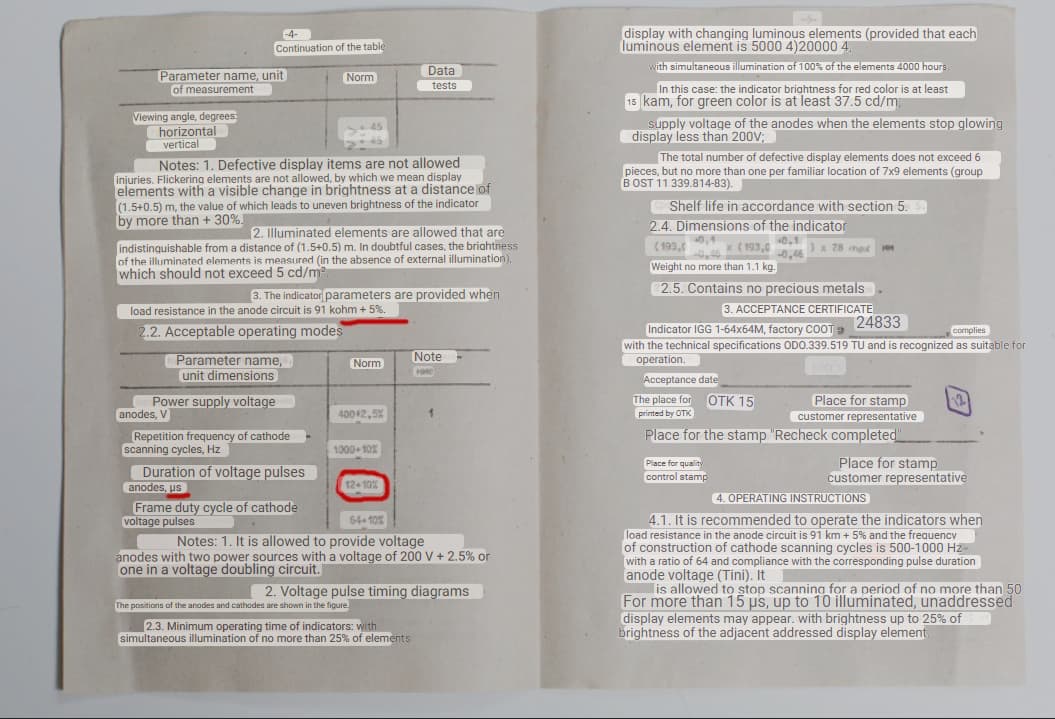
im wanting arduino, only because i can have all 12 communicate with 1 cental computer. where if i have to design a serial driver, id have to find a way to link all 12 with a single or dual channel serial output. im also very accustomed to arduino, and others like raspberry pi are foriegn to me.
And you want to drive each pixel individually?
Does your delivery also have 120.000 high-voltage transistors and 5000 through-hole PCBs?
Do you have 500kg of solder-tin?
All your calculations are overestimated. To figure out how to control of 4096 dots by arduino look at 64x64 RGB dot led matrix. It costs less than $40 and not needs a 240A current as you calculated above 
You can study the general principle of controlling dot panels using the example of how RGB matrices work. They use series of shift registers, allowing you to control tens of thousands of points from one controller compatible with Arduino. But it will not be Arduino Uno or Nano, something more serious - for example, esp32, stm32 and rp2040.
According to shown datasheets, your panels intended to control the same way as nowadays RGB led matrices. However, in case of your panels there is an additional complication - it require high voltage, that is, they cannot be controlled by low-voltage microcircuits. I am afraid that this makes the task too difficult, rather impossible.
Also I should say that updating 12 of 64x64 dot panels is very heavy task for every controller even leaving aside the question of high voltage. I recommend you to start with one panel and try to manage it to work.
Is the using Gazotron panels is a mandatore part of project? You can construct such a clock with new RGB led matrix panels, that light, consume little current and costs less than $20 in Aliexpress. And also last but not least - there are a several Arduino libraries to control them from arduino.
I think there is no politics
I believe this phrase means that these panels are not a finished product and were not intended for sale to the public; accordingly, they require a lot more parts and must be installed by professionals
they dont use as much power as youd think. and they work in a grid array so theres not 1024 wires per module, but only 128. i have also purchased 2 hv power supplies. im going to have the adruino in charge of some mosfets or relays.
the issue is you are working with 350 volts.
has to use the gaztron panels, as i have 12 on hand for this purpose. they are something that is very unique and not many can say they have such a device. budget is 1500
also the current will be 1.2 amps per module. ar about 13 amps total.

Yes, the consuming is less, because it uses dynamic switching with duty 1/16 or 1/32.
The control principle is exactly the same as for DMD Led matrices.
1500 rubles?
usd
was also able to recuce to 1.03 amps at 265 volts
anything below 265, and some pixels dont ignite, or they flicker, or they have dimm green pixels