I am thinking of setting up a simple project and I am looking for some guidance. I really just need a point in the right direction as I have been going round in circles with this and don't know what I need to buy.
I would like to have a bottle that should have say 1L in it at all times. An output pump can be controlled to pump liquid out of the bottle as required. If the volume goes below 700ml then a peristaltic or syringe pump will fill it back up, so there is always enough liquid in the bottle.
I have an arduiono duemilanove and should be able to program it. I just have no idea what components I should buy (motor shields, pumps, sensors etc.) to get started.
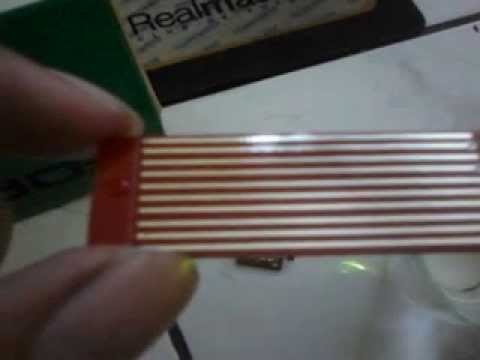
Asuming you dont want to drink the liquid you can control the amount of water into the bottle (or any recipient) by using a water level sensor :
So what you need ?
Basically a recipient with 2 oriffices, one connected to a source of liquid with a pump or elec valve, and another oriffice connected to a pump or elec valve. You control with the arduino or your favorite microcontroller when you want to push liquid from one oriffice or the other with the level sensor :
Valve or pump -----pipe liquid entrance --------- Bottle (fluid tank with level sensor) ------------ pipe liquid out ----------- valve or pump
to measure level, you need to have some sort of sensor.
your post indicates a rather small volume.
for a sump pump or horse trough, we would offer that a floatswitch could work or an ultrasonic sensor to sense level.
An actual level detector could tell you when to fill and when to stop filling.
alternatively, 2 float switches, one low, one high.
you might be able to do other types of switches, we need to know what fluid might so, food quality ? that would limit some materials that could rust or contaminate. things like that.
also, are you saying that the pump-out is all ready in place and all this is to do is to automate filling ?
If you need to check how much liquid is in a container, you can do it by weight. That way the liquid isn't contaminated by the sensors and cannot corrode the sensors. If the liquid is water at room temperature, you'll be weighing the container plus 1 Kg per litre. For other liquids, you'll need to know the specific gravity.
See here: flexiforce
Nothing is in place. It will be an experimental project where I can use the principles learned to help me with something in the future.
I would rather work with a syringe pump or peristaltic pump so that the liquid lines stay isolated. Also a weight sensor or perhaps some sort of light sensor/reflective rather than conductance detection in the liquid would be better
Flow rate does not have to be fast, just enough to top up 300ml or something.
Can anyone recommend any specific components/shields that I can buy? What sort of power or boards do I need to run the motors on the pumps? Will I have enough space to run a feedback loop on the sensors on one board?
charlestondance:
Can anyone recommend any specific components/shields that I can buy? What sort of power or boards do I need to run the motors on the pumps? Will I have enough space to run a feedback loop on the sensors on one board?
Buy the cheapest peristaltic pump and load cell (for the required weight) that you can find on ebay.
There are plenty of circuits online for powering motors and measuring load cells.
(Don't forget the protection diodes when dealing with inductive loads.)
Perhaps the most useful accessory would be a power supply with a variable voltage and current limit. DC motors operate over a wide voltage range, not just the 6v or 12v that you see on the data sheet. They also have "stiction" and a high start-up current that can cause the power supply rail to dip if it hasn't been sized correctly.
Peristaltic pumps have slow flow rates and almost instant start and stop characteristics which makes control loops easy. If you want a harder challenge, use a centrifugal pump such as something that you would use for a garden fountain. These typically use a 12 or 24 vac power supply.
mikb55:
. If you want a harder challenge, use a centrifugal pump such as something that would use for a garden fountain. These typically use a 12 or 24 vac power supply.
At 60 gallons per minute that does sound like a fun challenge to control for a fraction of a litre !
mikb55:
Buy the cheapest peristaltic pump and load cell (for the required weight) that you can find on ebay.
There are plenty of circuits online for powering motors and measuring load cells.
(Don't forget the protection diodes when dealing with inductive loads.)
This is my problem, I have no idea what a load cell is. I just need to get over this first hurdle. Is it the motor shield? I have no doubt I will be able to get something working as long as i have the right parts in hand.