They're selling reliability -- I know marine scientists who work with use gizmos like these to recover current, particle, and water quality sensing underwater tripods around the world with on-site deployments of of 3-24 months. It's sad when we lose a tripod, it's instruments and a season worth of data.
1 Like
It would need to work very reliably as the device probably costs more than every lobster pot in the fleet. If it failed once in a blue moon it would cause more problems than if the commercial pot pirates hired captain Jack Sparrow!
I thought the commercial solution was interesting -- two-way communication to tell if it got the message and tried to release, or if the currents or competing "fishermen" stole your tripod, or maybe it was dragged a mile away. And that you can code the device so that not all releases in an area trigger at the same time, or that competing fishermen can listen and catch your crabs.
We often use two expensive releases on the same tripod, since sometimes the buoy system fails, and if we get at least a response, we can try an ROV.
The interesting thing per the original Q is that you can use a hefty transducer on the ship side, not necessarily the same as the transducer on the remote side.
1 Like
BE SURE the tub is soft plastic so false echos are reduced.
1 Like
These people seem to disagree with you:
Appear to be an award winning project as well.
Feel free to web search "rope-less lobster trap" for more examples of this idea applied.
Looks to me like what excites you is putting down others to make yourself feel smart.
Now If you have nothing constructive to add, I kindly ask that you leave me be.
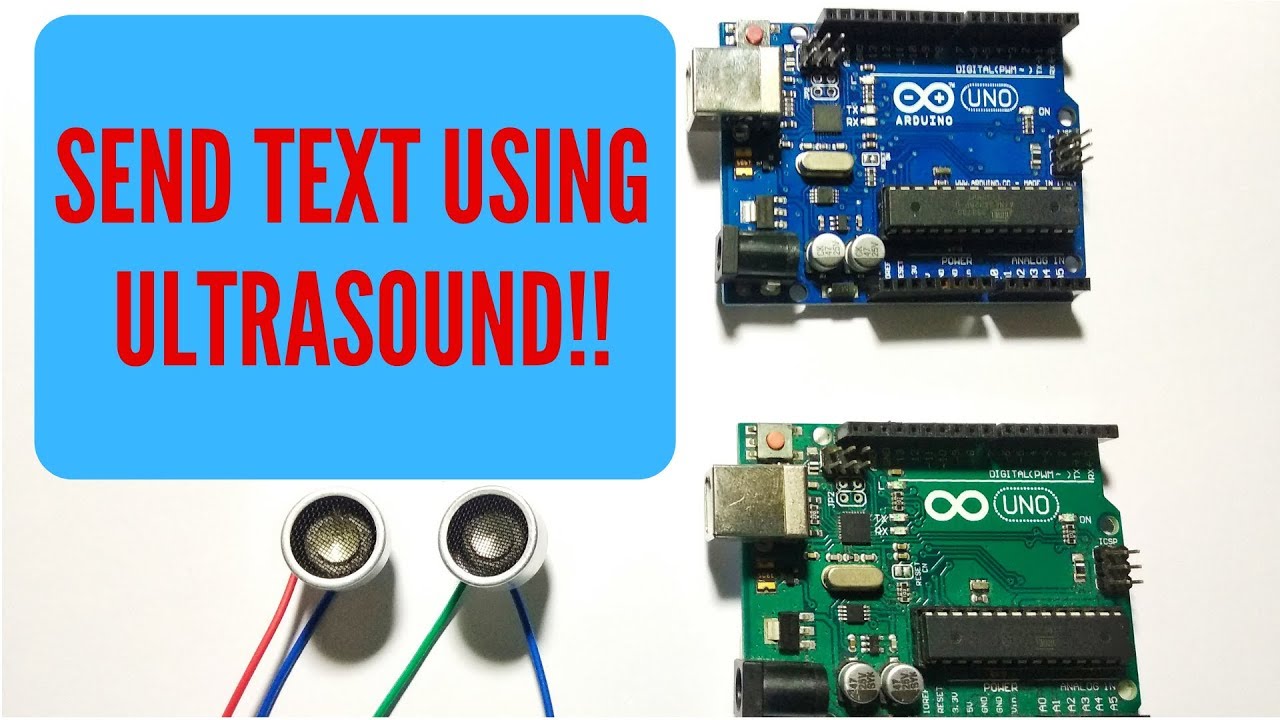
He credits the same author in the description (Eduardo Zola).
Thank you for your help DaveX
That actually reminds me of an guide to make a DIY hydrophone:
Thanks. So really no different than the first one.
Yea, just gives me hope that I can replicate it.
Please keep us posted on your progress!
1 Like
Short Progress Update:
Can't seem to get JSN SR-04T to work as demonstrated in the previous video.
However I did Manage to get the One way communication going and plan on amending the code to work with the "luckyfishfinder" transducer. Just waiting on shipping.
Thanks for the update.
Do you mean you replicated the Hackaday example in your first post, using two ultrasonic transducers desoldered from an HC-SR04?
Which video are you referring to? Unless I missed something, none of them use that sensor.
Hi,
Apologies for not being clear, yes that's the one. At first it was difficult as I couldn't access the original website (zolalabs), however a wiring diagram (as well as code in the comments section) can be found in Akram's video (post #46)
I was referring to the video in post #18, it led me to believe that the sensor could possibly work at depths greater than 1.2m (as the blind spot increases with the speed of sound). Took it out to the pier and had no reliable readings unfortunately.
1 Like
The Instructable linked in post #47 is one of rather few respectable ones. It demonstrates a valid approach to a DIY, cost effective underwater sonar transducer.
However, I wish the author had sensibly characterized and reported the frequency response of the transducer. The cylindrical shape will have undesirable resonances.
Edit: the NOAA construction paper is quite useful, but characterizes the frequency response to only 40 kHz.
Anyway, EDO, the company that made them, seems to have gone out of business.
My thoughts too
It's not new. Scientific American published a "build your own hydrophone" back the 1960's.
You might consider asking this person about their transducer and project:
While I am coming in late on this it may help others down the line. I think you are barking up the wrong tree as sound is a tough sell when it comes to transmission underwater, why not investigate using an optical modem that broadcasts light in the UV range as I know for sure blue and violet wave lengths propagate far in water and solve your issue of creating an interface to the water. A light is significantly easier to modulate and would provide a high bandwidth and power efficiency not capable using ultrasonics especially since you are not trying to do bidirectional communications and the remote device will be in a listen only mode, so the higher power draw is on the transmitter side.
UV light won't have useful communication range under water. Liquid water has an absorbance minimum at 500 nm (green), and absorbance goes up very rapidly on either side of that. For optical communications through water, 500 nm green light is the obvious choice.

That is not what I found to be the case when reading a research paper on the subject, here is the graphic from it laying out the absorption coefficient of liquid water. There is also a commercial product using UV light to avoid the issues with interaction between visible light and the sensor/emitter with a depth transmission of 75 meters called Blucom 200 UV. BlueComm 200 - Sonardyne.
