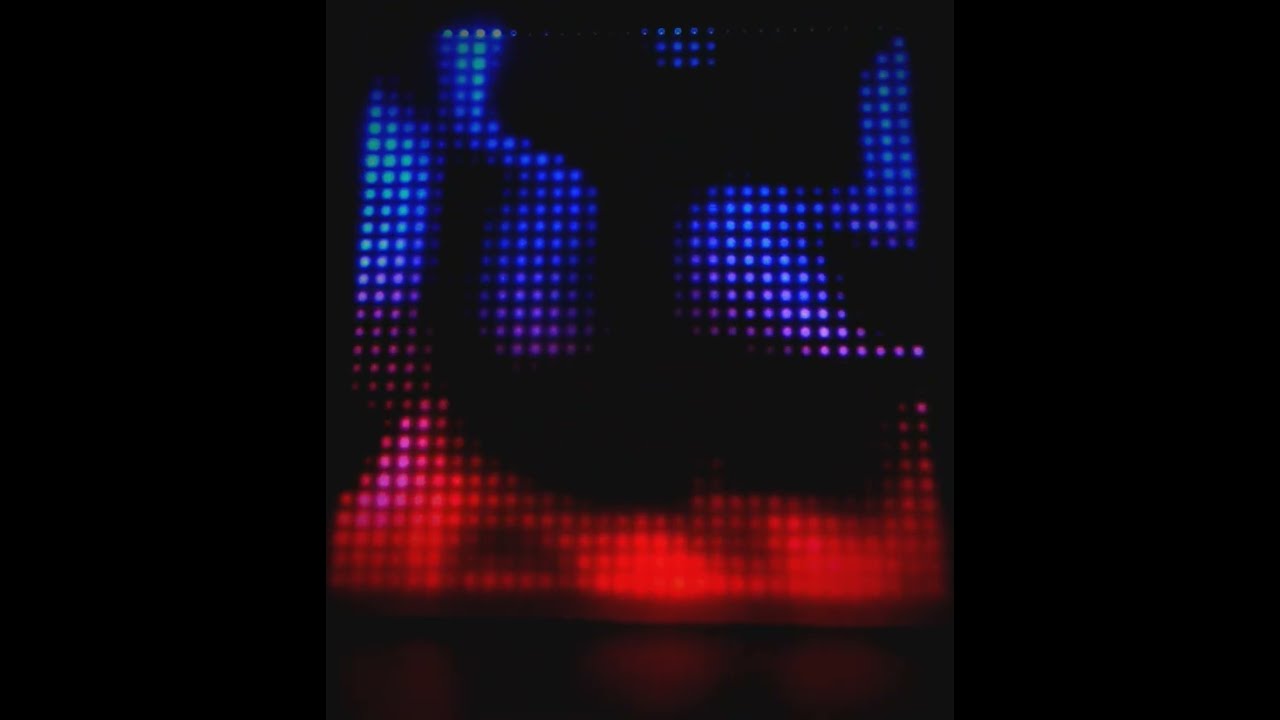
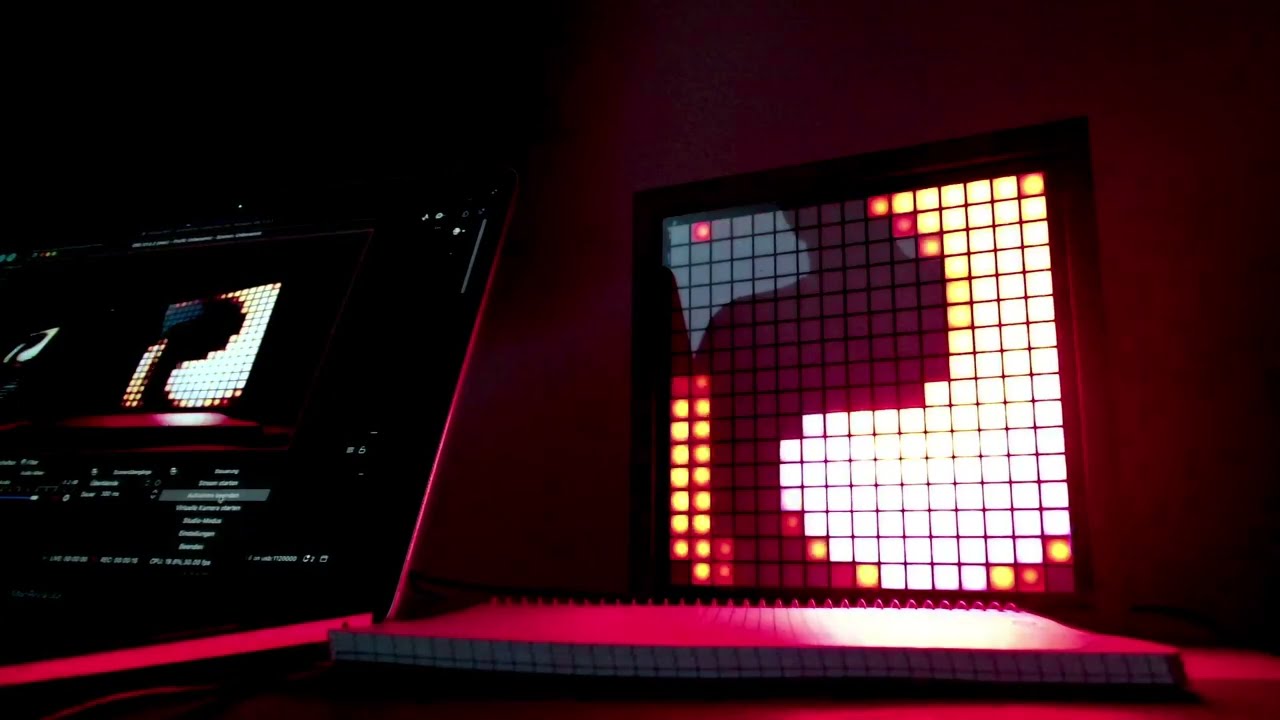
Hi, I'm currently working on an animation synthesizer for LED animations on two-dimensional LED setups.
It is a Shader and 5D Coordinate Mapper made for realtime rendering of generative animations & artistic dynamic visuals. This is also a modular animation synthesizer with waveform generators, oscillators, filters, modulators, noise generators, compressors... and much more.
This software / code enables high framerate FPU rendering and up to 32 bit color depth per RGB chanel for outstanding visual quality and dynamic range. (It's mainly designed for Teensy 4.0 or ESP32 S3 or any other fast 32 bit processor which has a hardware floating point unit available)
For a first impression here are some demos which will later be part of the release (soft goal: in on month).
I will support all different kinds of programmable LED protocols (same as FastLED) and also multiplexed HUB75-style LED panels.
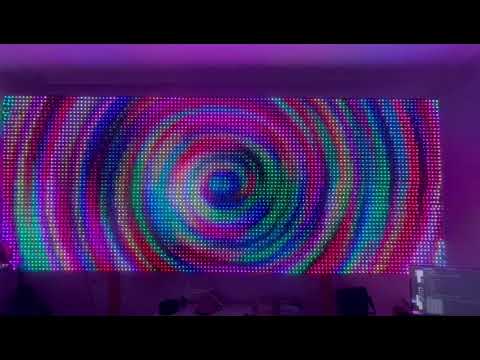
An ESP32 is a bit too weak for a 12k LEDs multi-layer animation, but on a Teensy this should fly as well:
Beta-tester mjconver running AnimARTrix on his instrument.
It looks beautiful!
How much of it could I approximate on an Attiny85?
Just asking, because I have 40 of those guys here, but none of the modern ones.
Are those displays available in a form factor with less big led's and especially less distance between them? I was searching for them and the smallest was 8x8 cm for 8x8 LED, but maybe my google-fu was not kind to me today. My feeling is that I should have double or triple the number at that size for every direction.
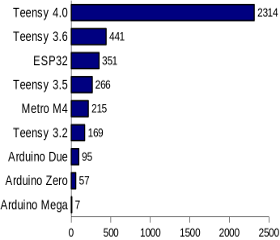
Please note that my code is designed for the presence of a 32 bit hardware floating point unit. Without it the float functions are emulated in software which takes forever to execute. An 8 bit Attiny or Arduino Uno without FPU are approximately 2 orders of magnitude (!) too slow regarding computational power. Even for a small 8x8 matrix I'd recommend at least an Arduino Due for a decent framerate. Have a look at this benchmark to get an idea how massive the difference is:
Regarding LEDs: I currently support 2 different interfaces - one for all kind of programmable LEDs (everything that is supported by the FastLED library).
And another one for multiplexed panels with an HUB75-style interface. Those panels are quite cheap and exist afaik in 5 and 3 mm LED versions with differents pitches and resolutions. Including high density ones. As driver I use the SmartMatrix library.