Hi all,
What I want to do is have a remote radio controlled variable resistor. I want to rotate a variable resistor say 20% and then have a remote variable resistor rotate to the same 20%, rotate to 30% and have the remote variable resistor move to 30%, etc. I put a drawing together, If you could, tell me if the concept is feasible, if I have the right hardware, tell me what is wrong in my drawing and any other ideas you might have. I'm thinking overshoot or hunting can be handled in software, but I'm a novice. Thanks for your help. Douger

That is what SERVOS are designed to do!
I have watched videos showing, move the joystick a small amount and the servo moves a small amount. Do the servos have an encoder? How does it know what position it should be in? I'm seeing how this might work. Is there a work around for the reset to the default setting if the transmitter is shut off? I want the servo to stay in position when the transmitter is shut off.
I can look at that, it may be cheaper and more reliable, the problem might be I want 0Ω to 2kΩ. I want fine resolution, I don't how it will act with a parallel resistor across it. Also how do digipots act at RF, small signal but still wonder if it will act like a normal resistor.
There are other devices, Opto Isolators and Vactrols. that could be controlled.
Thanks, Douger
Actually it is only receive power of a radio signal, not much power.
Douger
yes it is quite possible.
What is the expected distance between the receiver and transmitter?
Looks like 175 ft. But it is from in the house to 175 ft away, one maybe two walls. Although I have been know to connect coax and get signals outside.
Douger
No encoder. Your program TELLS the servo the position to go to by changing the repetition rate of pulses.on the signal line. The program controlling the servo can make it do what ever you want.
Do You mean the number of pulses or the rep rate?
Douger
Incorrect. in servos, the pulse width varies, not the pulse rate; that's generally fixed.
The control signal tells the servo where to go. If you stop telling it to go anywhere, and there is no force applied externally, a servo stays where you left it.
motorized potentiometer
if you want to spend less time on the mechanical part. You will either find them to be cheap or spendy, it's all relative and depends on what kind of fun you want to have and how much your time is worth.
I would worry first about what kind of resolution you want to attain. With any proposed soluti9n.
a7
Alto, I have an electronics background, so I can understand how this works, I just need to figure it out. I found a video, it says that servo motors have a pot inside that feeds back the amount of rotation of the output shaft, "that tidbit helps". The video says pulses are spaced 20ms apart and vary from 0.5ms for 0 degrees to 2.5ms for 180 degrees, that does vary with the manufacturer.
I don't yet understand how a DC voltage from the pot wiper is compared to a pulse width to find the proper rotation. I'm guessing the short pulse over a 20ms time is dc averaged and and that is compared to the dc out of the pot. A long pulse when dc averaged over 20ms is a higher dc average so to the pot must be turned more to get that higher voltage. I ordered a cheap RC transmitter/receiver and a servo to experiment with.
https://www.aliexpress.us/item/3256805031486514.html?spm=a2g0o.order_detail.order_detail_item.3.2666f19c1CEjRJ&gatewayAdapt=glo2usa
This video does a good explanation of the many options in the transmitter.
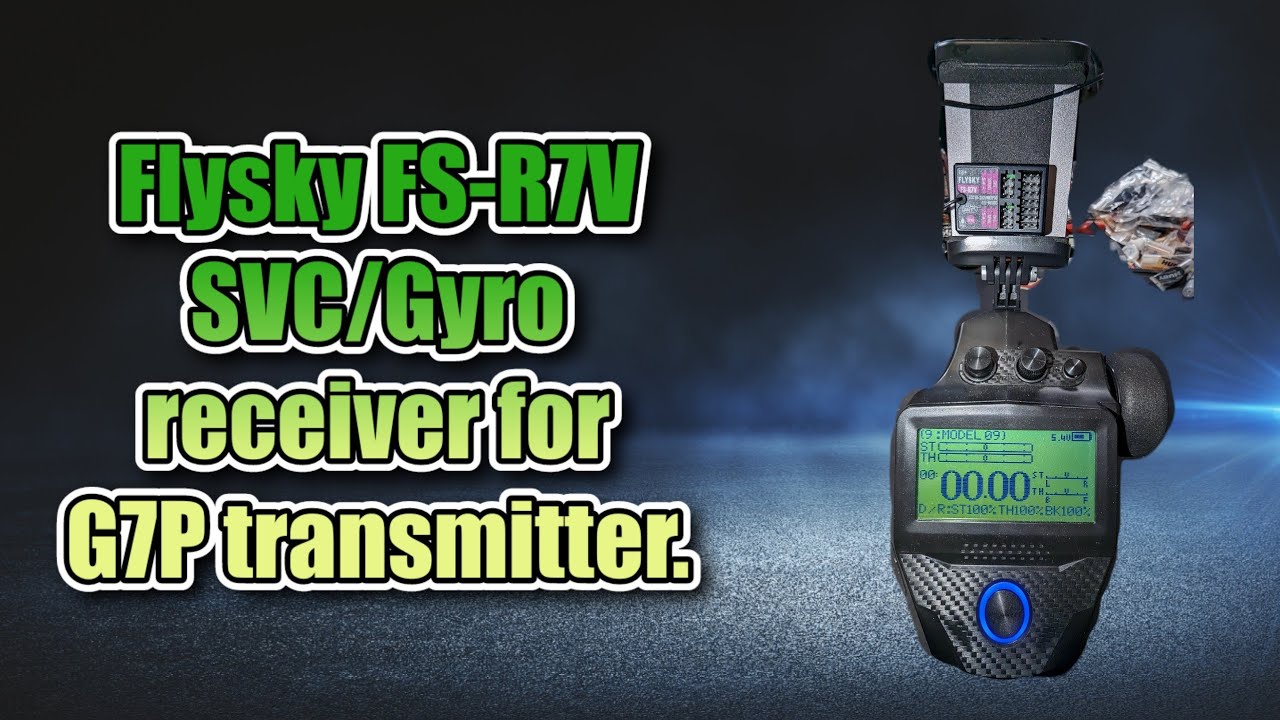
If it works it will be easier and cheaper than what my first proposal was.
Here's the servo explanation video. https://www.youtube.com/watch?v=LXURLvga8bQ
Thanks, Douger
The DC voltage or resistance of the servo feedback pot is used to generate a pulse width that is compared to the incoming control pulse. Any difference in the widths drives the servo arm one way or another.
That too would vary from type to type. @jremington describes one way, an analog method. Digital servos use the pot value and the control signal as inputs to a more sophisticated control loop, which shows up as benefits for small movements.
Nothing you need to worry about unless learning things like that is fun. I will say I like to understand down to the very bottom of everything, on the other hand life is short. :-|
But please see Digital v. Analog Servo Electronics
The pulse width is usually described as going between 1 and 2 milliseconds; the servo library allows setting the endpoints so 0 to 180 can cover whatever servo you have on hand.
You can also use servo calls that don't take an integer angle 0 to 180 and instead use the numnber of microseconds like 1000 to 2000.
Whether a given servo will make use of that extra implied resolution is another question and probably is proportional to the cost and quality.
a7