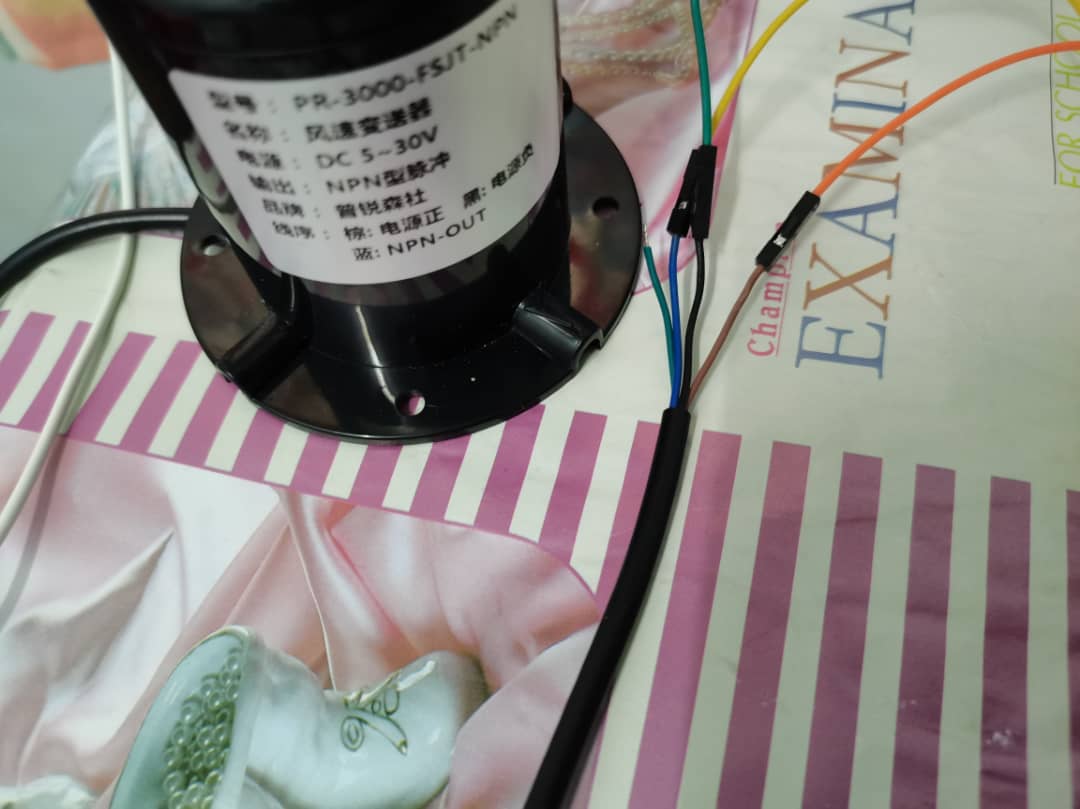
Oi! That you asked. I do have a suggestion. Use the ESP32's PCNT API to count pulses.
And here is some code that uses the ESP32's API and an anamometer to count pulses.
docs.espressif.com
/*
   Chappie Weather upgrade/addition
   process wind speed direction and rain fall.
*/
#include "esp32/ulp.h"
//#include "ulptool.h"
#include "driver/rtc_io.h"
#include <WiFi.h>
#include <PubSubClient.h>
#include "certs.h"
#include "sdkconfig.h"
#include "esp_system.h"
#include "freertos/FreeRTOS.h"
#include "freertos/task.h"
#include "freertos/timers.h"
#include "freertos/event_groups.h"
#include "driver/pcnt.h"
#include <driver/adc.h>
#include <SimpleKalmanFilter.h>
#include <ESP32Time.h>
////
ESP32Time rtc;
WiFiClient wifiClient;
PubSubClient MQTTclient(mqtt_server, mqtt_port, wifiClient);
////
float CalculatedVoltage = 0.0f;
float kph = 0.0f;
float rain  = 0.0f;
/*
   PCNT PCNT_UNIT_0, PCNT_CHANNEL_0 GPIO_NUM_15 = pulse input pin
   PCNT PCNT_UNIT_1, PCNT_CHANNEL_0 GPIO_NUM_4 = pulse input pin
*/
pcnt_unit_t pcnt_unit00 = PCNT_UNIT_0; //pcnt unit 0 channel 0
pcnt_unit_t pcnt_unit10 = PCNT_UNIT_1; //pcnt unit 1 channel 0
//
//
hw_timer_t * timer = NULL;
//
#define evtAnemometer  ( 1 << 0 )
#define evtRainFall    ( 1 << 1 )
#define evtParseMQTT   ( 1 << 2 )
EventGroupHandle_t eg;
#define OneMinuteGroup ( evtAnemometer | evtRainFall )
////
QueueHandle_t xQ_Message; // payload and topic queue of MQTT payload and topic
const int payloadSize = 100;
struct stu_message
{
  char payload [payloadSize] = {'\0'};
  String topic ;
} x_message;
////
SemaphoreHandle_t sema_MQTT_KeepAlive; // used to stop all other MQTT thing do's
SemaphoreHandle_t sema_mqttOK; // protect the mqttOK variable.
SemaphoreHandle_t sema_CalculatedVoltage; // protects the CalculatedVoltage variable.
////
int mqttOK = 0; // stores a count value that is used to cause an esp reset
volatile bool TimeSet = false;
////
/*
   Topic topicOK has been subscribed to, the mqtt broker sends out "OK" messages if the client receives an OK message the mqttOK value is set back to zero.
   If the mqttOK count reaches a set point the ESP32 will reset.
*/
////
void IRAM_ATTR mqttCallback(char* topic, byte * payload, unsigned int length)
{
  memset( x_message.payload, '\0', payloadSize ); // clear payload char buffer
  x_message.topic = ""; //clear topic string buffer
  x_message.topic = topic; //store new topic
  int i = 0; // extract payload
  for ( i; i < length; i++)
  {
    x_message.payload[i] = (char)payload[i];
  }
  x_message.payload[i] = '\0';
  xQueueOverwrite( xQ_Message, (void *) &x_message );// send data to queue
} // void mqttCallback(char* topic, byte* payload, unsigned int length)
////
// interrupt service routine for WiFi events put into IRAM
void IRAM_ATTR WiFiEvent(WiFiEvent_t event)
{
  switch (event) {
    case SYSTEM_EVENT_STA_CONNECTED:
      break;
    case SYSTEM_EVENT_STA_DISCONNECTED:
      log_i("Disconnected from WiFi access point");
      break;
    case SYSTEM_EVENT_AP_STADISCONNECTED:
      log_i("WiFi client disconnected");
      break;
    default: break;
  }
} // void IRAM_ATTR WiFiEvent(WiFiEvent_t event)
////
void IRAM_ATTR onTimer()
{
  BaseType_t xHigherPriorityTaskWoken;
  xEventGroupSetBitsFromISR(eg, OneMinuteGroup, &xHigherPriorityTaskWoken);
} // void IRAM_ATTR onTimer()
////
void setup()
{
  eg = xEventGroupCreate(); // get an event group handle
  x_message.topic.reserve(100);
  adc1_config_width(ADC_WIDTH_12Bit);
  adc1_config_channel_atten(ADC1_CHANNEL_6, ADC_ATTEN_DB_11);// using GPIO 34 wind direction
  adc1_config_channel_atten(ADC1_CHANNEL_3, ADC_ATTEN_DB_11);// using GPIO 39 current
  adc1_config_channel_atten(ADC1_CHANNEL_0, ADC_ATTEN_DB_11);// using GPIO 36 battery volts

  // hardware timer 4 set for one minute alarm
  timer = timerBegin( 3, 80, true );
  timerAttachInterrupt( timer, &onTimer, true );
  timerAlarmWrite(timer, 60000000, true);
  timerAlarmEnable(timer);
  /* Initialize PCNT's counter */
  int PCNT_H_LIM_VAL         = 3000;
  int PCNT_L_LIM_VAL         = -10;
  // 1st PCNT counter
  pcnt_config_t pcnt_config  = {};
  pcnt_config.pulse_gpio_num = GPIO_NUM_15;// Set PCNT input signal and control GPIOs
  pcnt_config.ctrl_gpio_num  = PCNT_PIN_NOT_USED;
  pcnt_config.channel        = PCNT_CHANNEL_0;
  pcnt_config.unit           = PCNT_UNIT_0;
  // What to do on the positive / negative edge of pulse input?
  pcnt_config.pos_mode       = PCNT_COUNT_INC;   // Count up on the positive edge
  pcnt_config.neg_mode       = PCNT_COUNT_DIS;   // Count down disable
  // What to do when control input is low or high?
  pcnt_config.lctrl_mode     = PCNT_MODE_KEEP; // Keep the primary counter mode if low
  pcnt_config.hctrl_mode     = PCNT_MODE_KEEP;    // Keep the primary counter mode if high
  // Set the maximum and minimum limit values to watch
  pcnt_config.counter_h_lim  = PCNT_H_LIM_VAL;
  pcnt_config.counter_l_lim  = PCNT_L_LIM_VAL;
  pcnt_unit_config(&pcnt_config); // Initialize PCNT unit
  pcnt_set_filter_value( PCNT_UNIT_0, 1); //Configure and enable the input filter
  pcnt_filter_enable( PCNT_UNIT_0 );
  pcnt_counter_pause( PCNT_UNIT_0 );
  pcnt_counter_clear( PCNT_UNIT_0 );
  pcnt_counter_resume( PCNT_UNIT_0); // start the show
  // setup 2nd PCNT
  pcnt_config = {};
  pcnt_config.pulse_gpio_num = GPIO_NUM_4;
  pcnt_config.ctrl_gpio_num  = PCNT_PIN_NOT_USED;
  pcnt_config.channel        = PCNT_CHANNEL_0;
  pcnt_config.unit           = PCNT_UNIT_1;
  pcnt_config.pos_mode       = PCNT_COUNT_INC;
  pcnt_config.neg_mode       = PCNT_COUNT_DIS;
  pcnt_config.lctrl_mode     = PCNT_MODE_KEEP;
  pcnt_config.hctrl_mode     = PCNT_MODE_KEEP;
  pcnt_config.counter_h_lim  = PCNT_H_LIM_VAL;
  pcnt_config.counter_l_lim  = PCNT_L_LIM_VAL;
  pcnt_unit_config(&pcnt_config);
  //pcnt_set_filter_value( PCNT_UNIT_1, 1 );
  //pcnt_filter_enable  ( PCNT_UNIT_1 );
  pcnt_counter_pause  ( PCNT_UNIT_1 );
  pcnt_counter_clear  ( PCNT_UNIT_1 );
  pcnt_counter_resume ( PCNT_UNIT_1 );
  //
  xQ_Message = xQueueCreate( 1, sizeof(stu_message) );
  //
  sema_CalculatedVoltage = xSemaphoreCreateBinary();
  xSemaphoreGive( sema_CalculatedVoltage );
  sema_mqttOK = xSemaphoreCreateBinary();
  xSemaphoreGive( sema_mqttOK );
  sema_MQTT_KeepAlive = xSemaphoreCreateBinary();
  ///
  xTaskCreatePinnedToCore( MQTTkeepalive, "MQTTkeepalive", 15000, NULL, 5, NULL, 1 );
  xTaskCreatePinnedToCore( fparseMQTT, "fparseMQTT", 10000, NULL, 5, NULL, 1 ); // assign all to core 1, WiFi in use.
  xTaskCreatePinnedToCore( fReadBattery, "fReadBattery", 4000, NULL, 3, NULL, 1 );
  xTaskCreatePinnedToCore( fReadCurrent, "fReadCurrent", 4000, NULL, 3, NULL, 1 );
  xTaskCreatePinnedToCore( fWindDirection, "fWindDirection", 10000, NULL, 4, NULL, 1 );
  xTaskCreatePinnedToCore( fAnemometer, "fAnemometer", 10000, NULL, 4, NULL, 1 );
  xTaskCreatePinnedToCore( fRainFall, "fRainFall", 10000, NULL, 4, NULL, 1 );
  xTaskCreatePinnedToCore( fmqttWatchDog, "fmqttWatchDog", 3000, NULL, 3, NULL, 1 ); // assign all to core 1
} //void setup()
static void init_ulp_program()
{
// not sharing this code.
}
////
void fWindDirection( void *pvParameters )
// read the wind direction sensor, return heading in degrees
{
  float adcValue = 0.0f;
  uint64_t TimePastKalman  = esp_timer_get_time();
  SimpleKalmanFilter KF_ADC( 1.0f, 1.0f, .01f );
  float high = 0.0f;
  float low = 2000.0f;
  float ADscale = 3.3f / 4096.0f;
  TickType_t xLastWakeTime = xTaskGetTickCount();
  const TickType_t xFrequency = 100; //delay for mS
  int count = 0;
  String windDirection;
  windDirection.reserve(20);
  String MQTTinfo = "";
  MQTTinfo.reserve( 150 );
  while ( !MQTTclient.connected() )
  {
    vTaskDelay( 250 );
  }
  for (;;)
  {
    windDirection = "";
    adcValue = float( adc1_get_raw(ADC1_CHANNEL_6) ); //take a raw ADC reading
    KF_ADC.setProcessNoise( (esp_timer_get_time() - TimePastKalman) / 1000000.0f ); //get time, in microsecods, since last readings
    adcValue = KF_ADC.updateEstimate( adcValue ); // apply simple Kalman filter
    TimePastKalman = esp_timer_get_time(); // time of update complete
    adcValue = adcValue * ADscale;
    if ( (adcValue >= 0.0f) & (adcValue <= .25f )  )
    {
      // log_i( " n" );
      windDirection.concat( "N" );
    }
    if ( (adcValue > .25f) & (adcValue <= .6f ) )
    {
      //  log_i( " e" );
      windDirection.concat( "E" );
    }
    if ( (adcValue > 2.0f) & ( adcValue < 3.3f) )
    {
      //   log_i( " s" );
      windDirection.concat( "S");
    }
    if ( (adcValue >= 1.7f) & (adcValue < 2.0f ) )
    {
      // log_i( " w" );
      windDirection.concat( "W" );
    }
    if ( count >= 30 )
    {
      MQTTinfo.concat( String(kph, 2) );
      MQTTinfo.concat( ",");
      MQTTinfo.concat( windDirection );
      MQTTinfo.concat( ",");
      MQTTinfo.concat( String(rain, 2) );
      xSemaphoreTake( sema_MQTT_KeepAlive, portMAX_DELAY );
      MQTTclient.publish( topicWSWDRF, MQTTinfo.c_str() );
      xSemaphoreGive( sema_MQTT_KeepAlive );
      count = 0;
    }
    count++;
    MQTTinfo = "";
    xLastWakeTime = xTaskGetTickCount();
    vTaskDelayUntil( &xLastWakeTime, xFrequency );
  }
  vTaskDelete ( NULL );
}
// read rainfall
void fRainFall( void *pvParemeters )
{
  int16_t click = 0; //count tipping bucket clicks
  pcnt_counter_pause( PCNT_UNIT_1 );
  pcnt_counter_clear( PCNT_UNIT_1 );
  pcnt_counter_resume( PCNT_UNIT_1 );
  for  (;;)
  {
    xEventGroupWaitBits (eg, evtRainFall, pdTRUE, pdTRUE, portMAX_DELAY);
    if ( (rtc.getHour(true) == 23) && (rtc.getMinute() == 59) )
    {
      pcnt_counter_pause( PCNT_UNIT_1 );
      rain = 0.0f;
      pcnt_counter_clear( PCNT_UNIT_1 );
      pcnt_counter_resume( PCNT_UNIT_1 );
    } else {
      pcnt_counter_pause( PCNT_UNIT_1 );
      pcnt_get_counter_value( PCNT_UNIT_1, &click );
      if ( click != 0 )
      {
        rain = rain + (0.2794f * (float)click);// 0.2794mm of rain per click
        pcnt_counter_clear( PCNT_UNIT_1 );
        //log_i( "count %d, rain rain = %f mm", click, rain );
      }
      pcnt_counter_resume( PCNT_UNIT_1 );
      click = 0;
    }
  }
  vTaskDelete ( NULL );
}
////
void fAnemometer( void *pvParameters )
{
  int16_t count = 0;
  pcnt_counter_clear(PCNT_UNIT_0);
  pcnt_counter_resume(PCNT_UNIT_0);
  for (;;)
  {
    xEventGroupWaitBits (eg, evtAnemometer, pdTRUE, pdTRUE, portMAX_DELAY);
    pcnt_counter_pause( PCNT_UNIT_0 );
    pcnt_get_counter_value( PCNT_UNIT_0, &count);
    kph = 2.4f * ((float)count / 60.0f);// A wind speed of 2.4km/h causes the switch to close once per second
    pcnt_counter_clear( PCNT_UNIT_0 );
    pcnt_counter_resume( PCNT_UNIT_0 );
  }
  vTaskDelete ( NULL );
}
//////
void fmqttWatchDog( void * paramater )
{
  int UpdateImeTrigger = 86400; //seconds in a day
  int UpdateTimeInterval = 86300; // 1st time update in 100 counts
  int maxNonMQTTresponse = 60;
  for (;;)
  {
    vTaskDelay( 1000 );
    if ( mqttOK >= maxNonMQTTresponse )
    {
      ESP.restart();
    }
    xSemaphoreTake( sema_mqttOK, portMAX_DELAY );
    mqttOK++;
    xSemaphoreGive( sema_mqttOK );
    UpdateTimeInterval++; // trigger new time get
    if ( UpdateTimeInterval >= UpdateImeTrigger )
    {
      TimeSet = false; // sets doneTime to false to get an updated time after a days count of seconds
      UpdateTimeInterval = 0;
    }
  }
  vTaskDelete( NULL );
}
//////
void fparseMQTT( void *pvParameters )
{
  struct stu_message px_message;
  for (;;)
  {
    if ( xQueueReceive(xQ_Message, &px_message, portMAX_DELAY) == pdTRUE )
    {
      // parse the time from the OK message and update MCU time
      if ( String(px_message.topic) == topicOK )
      {
        if ( !TimeSet)
        {
          String temp = "";
          temp =  px_message.payload[0];
          temp += px_message.payload[1];
          temp += px_message.payload[2];
          temp += px_message.payload[3];
          int year =  temp.toInt();
          temp = "";
          temp =  px_message.payload[5];
          temp += px_message.payload[6];
          int month =  temp.toInt();
          temp =  "";
          temp =  px_message.payload[8];
          temp += px_message.payload[9];
          int day =  temp.toInt();
          temp = "";
          temp = px_message.payload[11];
          temp += px_message.payload[12];
          int hour =  temp.toInt();
          temp = "";
          temp = px_message.payload[14];
          temp += px_message.payload[15];
          int min =  temp.toInt();
          rtc.setTime( 0, min, hour, day, month, year );
          log_i( "rtc  %s ", rtc.getTime() );
          TimeSet = true;
        }
      }
      //
    } //if ( xQueueReceive(xQ_Message, &px_message, portMAX_DELAY) == pdTRUE )
    xSemaphoreTake( sema_mqttOK, portMAX_DELAY );
    mqttOK = 0;
    xSemaphoreGive( sema_mqttOK );
  }
} // void fparseMQTT( void *pvParameters )#include <ESP32Time.h>
//////
void fReadCurrent( void * parameter )
{
  const TickType_t xFrequency = 1000; //delay for mS
  const float mVperAmp        = 185.0f;
  float    ADbits             = 4096.0f;
  float    ref_voltage        = 3.3f;
  float    mA                 = 0.0f;
  float    adcValue           = 0.0f;
  float    Voltage            = 0.0f;
  float    Power              = 0.0f;
  float    offSET             = 0.0f;
  int      printCount         = 0;
  uint64_t TimePastKalman     = esp_timer_get_time(); // used by the Kalman filter UpdateProcessNoise, time since last kalman calculation
  SimpleKalmanFilter KF_I( 1.0f, 1.0f, .01f );
  /*
     185mv/A = 5 AMP MODULE
     100mv/A = 20 amp module
     66mv/A = 30 amp module
  */
  String powerInfo = "";
  powerInfo.reserve( 150 );
  while ( !MQTTclient.connected() )
  {
    vTaskDelay( 250 );
  }
  TickType_t xLastWakeTime = xTaskGetTickCount();
  for (;;)
  {
    adc1_get_raw(ADC1_CHANNEL_3); // read once discard reading
    adcValue = ( (float)adc1_get_raw(ADC1_CHANNEL_3) );
    //log_i( "adcValue I = %f", adcValue );
    Voltage = ( (adcValue * ref_voltage) / ADbits ) + offSET; // Gets you mV
    mA = Voltage / mVperAmp; // get amps
    KF_I.setProcessNoise( (esp_timer_get_time() - TimePastKalman) / 1000000.0f ); //get time, in microsecods, since last readings
    mA = KF_I.updateEstimate( mA ); // apply simple Kalman filter
    TimePastKalman = esp_timer_get_time(); // time of update complete
    printCount++;
    if ( printCount == 60 )
    {
      xSemaphoreTake( sema_CalculatedVoltage, portMAX_DELAY);
      Power = CalculatedVoltage * mA;
      //log_i( "Voltage=%f mA=%f Power=%f", CalculatedVoltage, mA, Power );
      printCount = 0;
      powerInfo.concat( String(CalculatedVoltage, 2) );
      xSemaphoreGive( sema_CalculatedVoltage );
      powerInfo.concat( ",");
      powerInfo.concat( String(mA, 4) );
      powerInfo.concat( ",");
      powerInfo.concat( String(Power, 4) );
      xSemaphoreTake( sema_MQTT_KeepAlive, portMAX_DELAY );
      MQTTclient.publish( topicPower, powerInfo.c_str() );
      xSemaphoreGive( sema_MQTT_KeepAlive );
      powerInfo = "";
    }
    xLastWakeTime = xTaskGetTickCount();
    vTaskDelayUntil( &xLastWakeTime, xFrequency );
  }
  vTaskDelete( NULL );
} //void fReadCurrent( void * parameter )
////
void fReadBattery( void * parameter )
{
  float adcValue = 0.0f;
  const float r1 = 50500.0f; // R1 in ohm, 50K
  const float r2 = 10000.0f; // R2 in ohm, 10k potentiometer
  float Vbatt = 0.0f;
  int printCount = 0;
  float vRefScale = (3.3f / 4096.0f) * ((r1 + r2) / r2);
  uint64_t TimePastKalman  = esp_timer_get_time(); // used by the Kalman filter UpdateProcessNoise, time since last kalman calculation
  SimpleKalmanFilter KF_ADC_b( 1.0f, 1.0f, .01f );
  TickType_t xLastWakeTime = xTaskGetTickCount();
  const TickType_t xFrequency = 1000; //delay for mS
  for (;;)
  {
    adc1_get_raw(ADC1_CHANNEL_0); //read and discard
    adcValue = float( adc1_get_raw(ADC1_CHANNEL_0) ); //take a raw ADC reading
    KF_ADC_b.setProcessNoise( (esp_timer_get_time() - TimePastKalman) / 1000000.0f ); //get time, in microsecods, since last readings
    adcValue = KF_ADC_b.updateEstimate( adcValue ); // apply simple Kalman filter
    Vbatt = adcValue * vRefScale;
    xSemaphoreTake( sema_CalculatedVoltage, portMAX_DELAY );
    CalculatedVoltage = Vbatt;
    xSemaphoreGive( sema_CalculatedVoltage );

      printCount++;
      if ( printCount == 3 )
      {
      log_i( "Vbatt %f", Vbatt );
      printCount = 0;
      }

    TimePastKalman = esp_timer_get_time(); // time of update complete
    xLastWakeTime = xTaskGetTickCount();
    vTaskDelayUntil( &xLastWakeTime, xFrequency );
    //log_i( "fReadBattery %d",  uxTaskGetStackHighWaterMark( NULL ) );
  }
  vTaskDelete( NULL );
}
////
void MQTTkeepalive( void *pvParameters )
{
  sema_MQTT_KeepAlive   = xSemaphoreCreateBinary();
  xSemaphoreGive( sema_MQTT_KeepAlive ); // found keep alive can mess with a publish, stop keep alive during publish
  // setting must be set before a mqtt connection is made
  MQTTclient.setKeepAlive( 90 ); // setting keep alive to 90 seconds makes for a very reliable connection, must be set before the 1st connection is made.
  for (;;)
  {
    //check for a is-connected and if the WiFi 'thinks' its connected, found checking on both is more realible than just a single check
    if ( (wifiClient.connected()) && (WiFi.status() == WL_CONNECTED) )
    {
      xSemaphoreTake( sema_MQTT_KeepAlive, portMAX_DELAY ); // whiles MQTTlient.loop() is running no other mqtt operations should be in process
      MQTTclient.loop();
      xSemaphoreGive( sema_MQTT_KeepAlive );
    }
    else {
      log_i( "MQTT keep alive found MQTT status %s WiFi status %s", String(wifiClient.connected()), String(WiFi.status()) );
      if ( !(wifiClient.connected()) || !(WiFi.status() == WL_CONNECTED) )
      {
        connectToWiFi();
      }
      connectToMQTT();
    }
    vTaskDelay( 250 ); //task runs approx every 250 mS
  }
  vTaskDelete ( NULL );
}
////
void connectToWiFi()
{
  int TryCount = 0;
  while ( WiFi.status() != WL_CONNECTED )
  {
    TryCount++;
    WiFi.disconnect();
    WiFi.begin( SSID, PASSWORD );
    vTaskDelay( 4000 );
    if ( TryCount == 10 )
    {
      ESP.restart();
    }
  }
  WiFi.onEvent( WiFiEvent );
} // void connectToWiFi()
////
void connectToMQTT()
{
  MQTTclient.setKeepAlive( 90 ); // needs be made before connecting
  byte mac[5];
  WiFi.macAddress(mac);
  String clientID = String(mac[0]) + String(mac[4]) ; // use mac address to create clientID
  while ( !MQTTclient.connected() )
  {
    // boolean connect(const char* id, const char* user, const char* pass, const char* willTopic, uint8_t willQos, boolean willRetain, const char* willMessage);
    MQTTclient.connect( clientID.c_str(), mqtt_username, mqtt_password, NULL , 1, true, NULL );
    vTaskDelay( 250 );
  }
  MQTTclient.setCallback( mqttCallback );
  MQTTclient.subscribe( topicOK );
} // void connectToMQTT()
////
void loop() {}