I basically need some matches, some wires and two 9v batteries (or just one depending on the tutorial).
I did the same as in the video that is linked but nothing happens.
Wenn I close the circuit, instead of lighting the match, the voltage drops immediately to 0v, and nothing happens. I've tried with 1x 9v, 2x 9v, 6x1.5v and with 2 6x1.5v batteries in parallel. It doesn't even spark, just goes to 0 volt.
As for the wire, I'm using one strand of a arduino jumper wire (those sold with the arduino).
What can I do to make it work ?
Should I use a different wire ? If so what type of wire ?
How do I prevent the voltage of dropping to 0 ? Adding th capacitors ? Something else ?
Is there a better way altogether ? (I need it to be as light as possible as I might use it as a parachute deployement in a rocket)
The wire used in igniters is resistor wire. Using regular wire (very little resistance) just causes a dead short and will not heat up unless a lot more current is supplied.
I'm pretty sure regular igniters don't use a copper wire and they are NOT a short circuit (~ zero ohms). With a "short circuit" the current is determined by the battery capability and the heat is determined by the current and the actual resistance. With truly zero resistance there is no heat generated. That's why a light bulb or toaster gets hot while the (nearly) zero resistance wire in the walls stays cool.
With no (nearly) resistance, of course you are shorting-out the battery and killing the voltage. Your wire may be heavier gauge than what's in the video. He doesn't specify.
But, your car battery CAN put-out hundreds of amps and it WILL blow the copper wire and probably ignite the match!.
... I saw an amateur rock show many years ago and they had some pyro triggered with a similar shorted copper wire powered by 120VAC! NOT RECOMMENDED (and certainly not legal in a public performance). There was no match, just gunpowder in a little ceramic container.
A capacitor across your little batteries will help too but I don't know how much capacitance you need. I'd start with 1000uF.
Here are some specs I found - 1 Ohm and 1 Amp recommended. Per Ohm's Law, that's 1V (minimum). I'm not sure how much voltage drop you'll get with 1 Ohm and a 9V battery, but you will get a voltage drop and of course you are draining the battery every time you pull current from it.
get some stranded wire. VERY fine strands.
get a D cell battery and some wires and alagator clips.
the single strand of wire should not be more than half an inch.
short out the battery and see if it glows red.
Strands of fine steel wool (used for cleaning, preparing wood or metal for treatment etc.) also burn nicely with a low voltage applied from, say, a dry cell (flashlight battery). You’d have to experiment a bit.
TheMemberFormerlyKnownAsAWOL:
Fluffed-up Brillo pads, and a 12V model railway transformer.
A "Brillo" pad is impregnated with soap.
That is going to get in the way (poor conductor ).
I repeat, a single strand from non-soaped steel wool is extremely inexpensive, readily available, and should do the job perfectly having a reasonable resistance. Can be connected by spinning the ends around the bare connecting wire, possibly soldered.
Thanks to all your ideas is got it to work with a stand of steel wool and a 9v batterie. First try. It didn’t even burn out complety, I’ve been able to use it to light 3 matches in a row.
I might use a 9v battery in the final project or a 2s lipo.
I used a relay (one of those blue one) in my test, how could I replace it to have something smaller and lighter?
The advantage of nichrome wire is that it has a known resistance (Ohms per foot, etc.) so you can have a known load on the battery and repeatable performance. You'd probably need to make a small coil to get enough resistance and to concentrate the heat. Electric heaters use nichrome or something similar.
It sort-of depends on what kind of reliability you need and if you need predictable battery life.
Copper & steel also have "known" resistance but it's too low for reliable performance in this kind of application.
a 2s lipo
LiPo batteries are not supposed to be shorted-out and you could end-up igniting the battery!
This is not a useful power source for any Arduino project. It appears to be part of Fritzing as a convenient depiction of a generalised power source. Do not expect this to be useful for a pyrotechnics igniter. Use a pack of (alkaline) "AA" batteries - four for 6 V should be OK, or four NiMH rechargeables would conveniently provide 5 V to operate an Arduino as well.
You still need a relay or Logic Level FET to actually control the igniter.

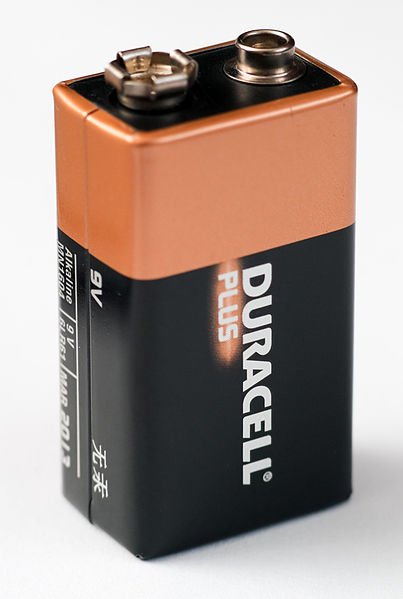
 ).
).
