Hallo! I currently have this problem that my soil sensor does not detect Phosphorus and Potassium.
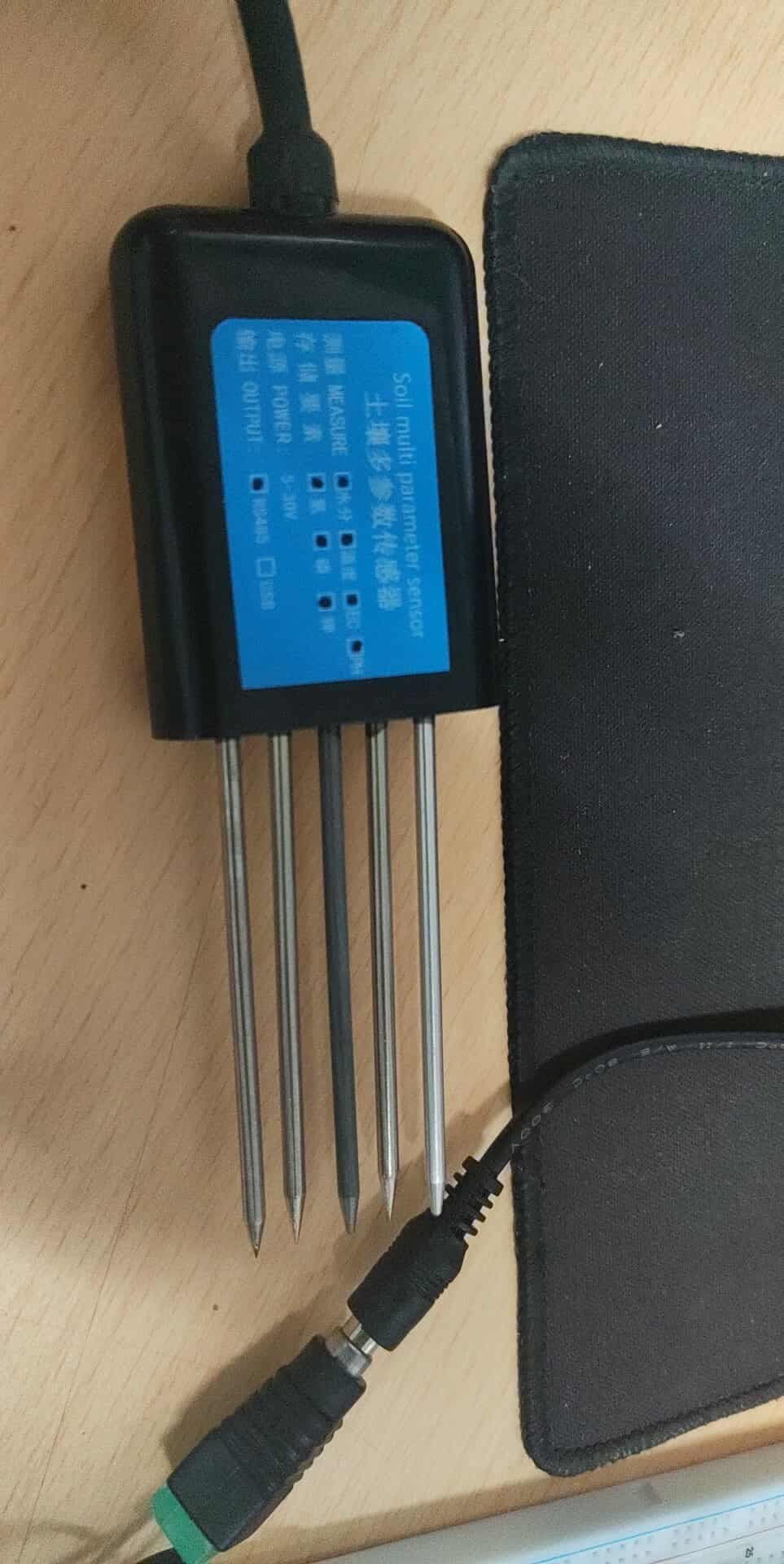
the soil sensor that im using.
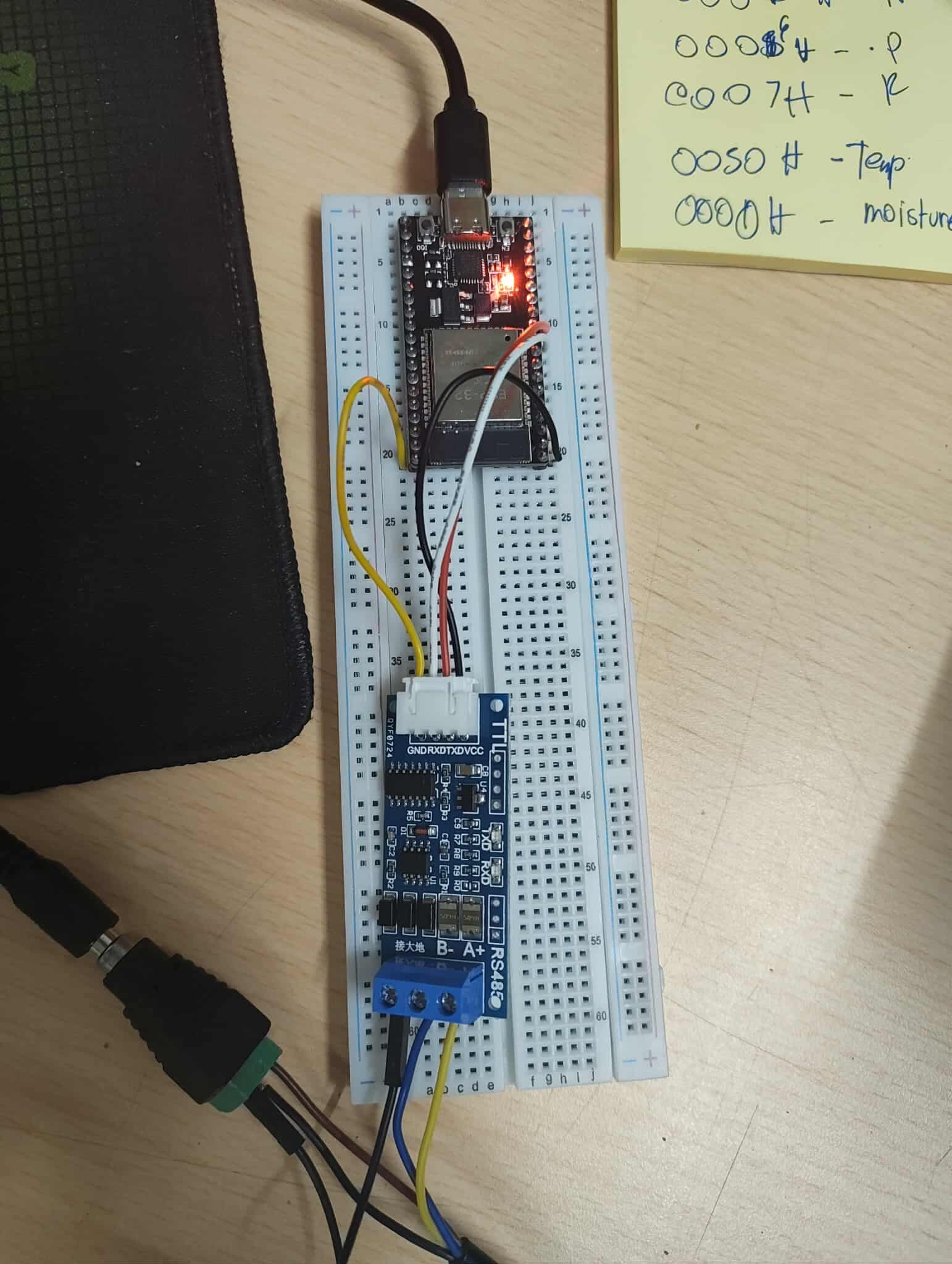
the circuit setup
Here is my code,
#include <ModbusMaster.h>
ModbusMaster node;

// Soil sensor Modbus address (often 1 by default)
#define SENSOR_ID 1

// RS485 control pin (RE/DE)
#define MAX485_RE_DE  4

void preTransmission() {
  digitalWrite(MAX485_RE_DE, 1);
}

void postTransmission() {
  digitalWrite(MAX485_RE_DE, 0);
}

void setup() {
  Serial.begin(115200);  // USB Serial Monitor (set Serial Monitor to 115200)
  Serial.println("7-in-1 Soil Sensor Test");

  // Set RS485 RE/DE pin as output
  pinMode(MAX485_RE_DE, OUTPUT);
  digitalWrite(MAX485_RE_DE, 0);

  // Init Modbus
  node.begin(SENSOR_ID, Serial2);
  node.preTransmission(preTransmission);
  node.postTransmission(postTransmission);

  // IMPORTANT: Sensor default = 4800 baud
  Serial2.begin(4800, SERIAL_8N1, 26, 27);  }

void loop() {
  uint8_t result;
  uint16_t data;

  // Moisture (0000H)
  result = node.readHoldingRegisters(0x0000, 1);
  if (result == node.ku8MBSuccess) {
    data = node.getResponseBuffer(0);
    Serial.print("Moisture: ");
    Serial.print(data);
    Serial.println(" %");
  }

  // EC (0002H)
  result = node.readHoldingRegisters(0x0002, 1);
  if (result == node.ku8MBSuccess) {
    data = node.getResponseBuffer(0);
    Serial.print("EC: ");
    Serial.print(data);
    Serial.println(" uS/cm");
  }

  // pH (0004H)
  result = node.readHoldingRegisters(0x0003, 1);
  if (result == node.ku8MBSuccess) {
    data = node.getResponseBuffer(0);
    Serial.print("pH: ");
    Serial.println(data / 10.0); // usually scaled by 10
  }

  // Nitrogen (001EH)
  result = node.readHoldingRegisters(0x001E, 1);
  if (result == node.ku8MBSuccess) {
    data = node.getResponseBuffer(0);
    Serial.print("Nitrogen: ");
    Serial.print(data);
    Serial.println(" mg/kg");
  }

  // Phosphorus (001FH)
  result = node.readHoldingRegisters(0x001F, 1);
  if (result == node.ku8MBSuccess) {
    data = node.getResponseBuffer(0);
    Serial.print("Phosphorus: ");
    Serial.print(data);
    Serial.println(" mg/kg");
  }

  // Potassium (0020H)
  result = node.readHoldingRegisters(0x0020, 1);
  if (result == node.ku8MBSuccess) {
    data = node.getResponseBuffer(0);
    Serial.print("Potassium: ");
    Serial.print(data);
    Serial.println(" mg/kg");
  }

  // Temperature (0001H)
  result = node.readHoldingRegisters(0x0001, 1);
  if (result == node.ku8MBSuccess) {
    data = node.getResponseBuffer(0);
    Serial.print("Temperature: ");
    Serial.print(data / 10.0); // usually scaled by 10
    Serial.println(" °C");
  }

  Serial.println("----------------------");
  delay(2000);  // Wait 2s before next read
}
Here is the sample output, the EC sometimes has value and i think the nitrogen has inflated value. I tested that it works because when i remove it from the soil the temperature increase then moisture go down but the nitrogen still remains on 4035 to 4045 range.
Moisture: 264 %
EC: 0 uS/cm
pH: 7.50
Nitrogen: 4038 mg/kg
Phosphorus: 0 mg/kg
Potassium: 0 mg/kg
Temperature: 25.80 °C
any insights are much welcome. Thank you!
 , i was late to discover that it was a scam