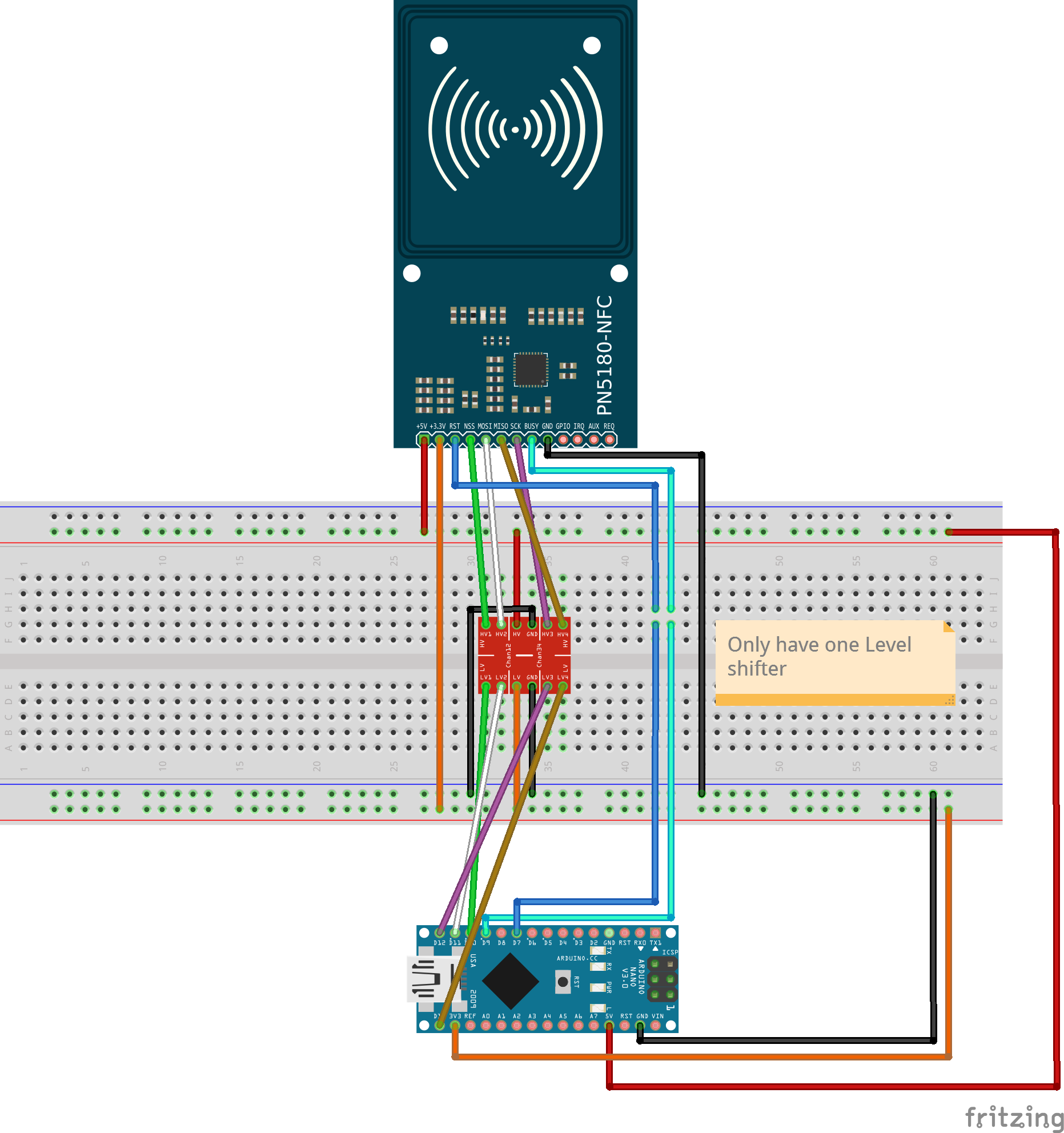
I am using a PN5180 rfid reader, that's wired correctly. When I run my code it uploads and stops running on line nfc.reset(); and I'm not getting any errors. Any thoughts?
#include <PN5180.h>
#include <PN5180ISO15693.h>

#define PN5180_NSS  10
#define PN5180_BUSY 9
#define PN5180_RST  7


PN5180ISO15693 nfc(PN5180_NSS, PN5180_BUSY, PN5180_RST);

void setup() {
  Serial.begin(115200);
  Serial.println(F("=================================="));
  Serial.println(F("Uploaded: " __DATE__ " " __TIME__));
  Serial.println(F("PN5180 ISO15693 Demo Sketch"));

  nfc.begin();

  Serial.println(F("----------------------------------"));
  Serial.println(F("PN5180 Hard-Reset..."));
  nfc.reset();

  Serial.println(F("----------------------------------"));
  Serial.println(F("Reading product version..."));
  uint8_t productVersion[2];
  nfc.readEEprom(PRODUCT_VERSION, productVersion, sizeof(productVersion));
  Serial.print(F("Product version="));
  Serial.print(productVersion[1]);
  Serial.print(".");
  Serial.println(productVersion[0]);

  if (0xff == productVersion[1]) { // if product version 255, the initialization failed
    Serial.println(F("Initialization failed!?"));
    Serial.println(F("Press reset to restart..."));
    Serial.flush();
    exit(-1); // halt
  }

  Serial.println(F("----------------------------------"));
  Serial.println(F("Reading firmware version..."));
  uint8_t firmwareVersion[2];
  nfc.readEEprom(FIRMWARE_VERSION, firmwareVersion, sizeof(firmwareVersion));
  Serial.print(F("Firmware version="));
  Serial.print(firmwareVersion[1]);
  Serial.print(".");
  Serial.println(firmwareVersion[0]);

  Serial.println(F("----------------------------------"));
  Serial.println(F("Reading EEPROM version..."));
  uint8_t eepromVersion[2];
  nfc.readEEprom(EEPROM_VERSION, eepromVersion, sizeof(eepromVersion));
  Serial.print(F("EEPROM version="));
  Serial.print(eepromVersion[1]);
  Serial.print(".");
  Serial.println(eepromVersion[0]);

  /*
  Serial.println(F("----------------------------------"));
  Serial.println(F("Reading IRQ pin config..."));
  uint8_t irqConfig;
  nfc.readEEprom(IRQ_PIN_CONFIG, &irqConfig, 1));
  Serial.print(F("IRQ_PIN_CONFIG=0x"));
  Serial.println(irqConfig, HEX);

  Serial.println(F("----------------------------------"));
  Serial.println(F("Reading IRQ_ENABLE register..."));
  uint32_t irqEnable;
  nfc.readRegister(IRQ_ENABLE, &irqEnable));
  Serial.print(F("IRQ_ENABLE=0x"));
  Serial.println(irqConfig, HEX);
  */

  Serial.println(F("----------------------------------"));
  Serial.println(F("Enable RF field..."));
  nfc.setupRF();
}

uint32_t loopCnt = 0;
bool errorFlag = false;

//SLIX2 Passwords, first is manufacture standard
uint8_t standardpassword[] = {0x0F, 0x0F, 0x0F, 0x0F};
//New Password
uint8_t password[] = {0x12, 0x34, 0x56, 0x78};

void loop() {
  if (errorFlag) {
    uint32_t irqStatus = nfc.getIRQStatus();
    showIRQStatus(irqStatus);

    if (0 == (RX_SOF_DET_IRQ_STAT & irqStatus)) { // no card detected
      Serial.println(F("*** No card detected!"));
    }

    nfc.reset();
    nfc.setupRF();

    errorFlag = false;
  }

  Serial.println(F("----------------------------------"));
  Serial.print(F("Loop #"));
  Serial.println(loopCnt++);

/*
  // code for unlocking an ICODE SLIX2 protected tag
  ISO15693ErrorCode myrc = nfc.unlockICODESLIX2(password);
  if (ISO15693_EC_OK == myrc) {
    Serial.println("unlockICODESLIX2 successful");
  }
*/

/*
  // code for set a new SLIX2 privacy password
  nfc.getInventory(uid);
  Serial.println("set new password");

  ISO15693ErrorCode myrc2 = nfc.newpasswordICODESLIX2(password, standardpassword, uid);
  if (ISO15693_EC_OK == myrc2) {
   Serial.println("sucess! new password set");
  }else{
   Serial.println("fail! no new password set: ");
   Serial.println(nfc.strerror(myrc2));
   Serial.println(" ");
  }
 */

  uint8_t uid[8];
  ISO15693ErrorCode rc = nfc.getInventory(uid);
  if (ISO15693_EC_OK != rc) {
    Serial.print(F("Error in getInventory: "));
    Serial.println(nfc.strerror(rc));
    errorFlag = true;
    return;
  }
  Serial.print(F("Inventory successful, UID="));
  for (int i=0; i<8; i++) {
    Serial.print(uid[7-i], HEX); // LSB is first
    if (i < 2) Serial.print(":");
  }
  Serial.println();

  Serial.println(F("----------------------------------"));
  uint8_t blockSize, numBlocks;
  rc = nfc.getSystemInfo(uid, &blockSize, &numBlocks);
  if (ISO15693_EC_OK != rc) {
    Serial.print(F("Error in getSystemInfo: "));
    Serial.println(nfc.strerror(rc));
    errorFlag = true;
    return;
  }
  Serial.print(F("System Info retrieved: blockSize="));
  Serial.print(blockSize);
  Serial.print(F(", numBlocks="));
  Serial.println(numBlocks);

  Serial.println(F("----------------------------------"));
  uint8_t readBuffer[blockSize];
  for (int no=0; no<numBlocks; no++) {
    rc = nfc.readSingleBlock(uid, no, readBuffer, blockSize);
    if (ISO15693_EC_OK != rc) {
      Serial.print(F("Error in readSingleBlock #"));
      Serial.print(no);
      Serial.print(": ");
      Serial.println(nfc.strerror(rc));
      errorFlag = true;
      return;
    }
    Serial.print(F("Read block #"));
    Serial.print(no);
    Serial.print(": ");
    for (int i=0; i<blockSize; i++) {
      if (readBuffer[i] < 16) Serial.print("0");
      Serial.print(readBuffer[i], HEX);
      Serial.print(" ");
    }
    Serial.print(" ");
    for (int i=0; i<blockSize; i++) {
      if (isprint(readBuffer[i])) {
        Serial.print((char)readBuffer[i]);
      }
      else Serial.print(".");
    }
    Serial.println();
  }

#ifdef WRITE_ENABLED
  Serial.println(F("----------------------------------"));
  uint8_t *writeBuffer = malloc(blockSize);
  for (int i=0; i<blockSize; i++) {
    writeBuffer[i] = 0x80 + i;
  }
  for (int no=0; no<numBlocks; no++) {
    rc = nfc.writeSingleBlock(uid, no, writeBuffer, blockSize);
    if (ISO15693_EC_OK == rc) {
      Serial.print(F("Wrote block #"));
      Serial.println(no);
    }
    else {
      Serial.print(F("Error in writeSingleBlock #"));
      Serial.print(no);
      Serial.print(": ");
      Serial.println(nfc.strerror(rc));
      errorFlag = true;
      return;
    }
  }
#endif /* WRITE_ENABLED */

/*
  // code for locking an ICODE SLIX2 protected tag
  ISO15693ErrorCode myrc = nfc.lockICODESLIX2(password);
  if (ISO15693_EC_OK == myrc) {
    Serial.println("lockICODESLIX2 successful");
    delay(5000);
*/
  delay(1000);
}

void showIRQStatus(uint32_t irqStatus) {
  Serial.print(F("IRQ-Status 0x"));
  Serial.print(irqStatus, HEX);
  Serial.print(": [ ");
  if (irqStatus & (1<< 0)) Serial.print(F("RQ "));
  if (irqStatus & (1<< 1)) Serial.print(F("TX "));
  if (irqStatus & (1<< 2)) Serial.print(F("IDLE "));
  if (irqStatus & (1<< 3)) Serial.print(F("MODE_DETECTED "));
  if (irqStatus & (1<< 4)) Serial.print(F("CARD_ACTIVATED "));
  if (irqStatus & (1<< 5)) Serial.print(F("STATE_CHANGE "));
  if (irqStatus & (1<< 6)) Serial.print(F("RFOFF_DET "));
  if (irqStatus & (1<< 7)) Serial.print(F("RFON_DET "));
  if (irqStatus & (1<< 8)) Serial.print(F("TX_RFOFF "));
  if (irqStatus & (1<< 9)) Serial.print(F("TX_RFON "));
  if (irqStatus & (1<<10)) Serial.print(F("RF_ACTIVE_ERROR "));
  if (irqStatus & (1<<11)) Serial.print(F("TIMER0 "));
  if (irqStatus & (1<<12)) Serial.print(F("TIMER1 "));
  if (irqStatus & (1<<13)) Serial.print(F("TIMER2 "));
  if (irqStatus & (1<<14)) Serial.print(F("RX_SOF_DET "));
  if (irqStatus & (1<<15)) Serial.print(F("RX_SC_DET "));
  if (irqStatus & (1<<16)) Serial.print(F("TEMPSENS_ERROR "));
  if (irqStatus & (1<<17)) Serial.print(F("GENERAL_ERROR "));
  if (irqStatus & (1<<18)) Serial.print(F("HV_ERROR "));
  if (irqStatus & (1<<19)) Serial.print(F("LPCD "));
  Serial.println("]");
}