Hi,
I'm using an arduino on a project and really need to watch the mass of the whole project and it needs to be portable for about 6 hours and working in very low temperatures.
So because of the last two parameters I opted for CR2032 lithium coin cells,200 mAh.
3 of them in a series to get a 9 V voltage and the question arises, is 200 mAh enough for 6 hours of some hardcore code(microSD shield, 3 analog sensors with a 1 Hz sampling rate, should I lower the transfer rate maybe?) or should I add another row of 3 for 400 mAh ?
It's critical for the whole mass to be the lowest possible.
200mAH probably not enough, SD card can draw higher current than that when it starts up.
Arduino then draws ~50mA when doing stuff. Got power LED sucking current, USB/Serial adapter sucking current, autovoltage select sucking power, 5V to 3.3V level translator sucking power, voltage regulator just wasting power.
Go with a 3.3V 8 MHz promini, or wire up a bare minimum chip & parts, use a 3.3V powered SD shield, run from a 1000mAH battery with a normal diode between battery & the rest to knock the battery 4.1V or 4.2V down to 3.4 or 3.5V.

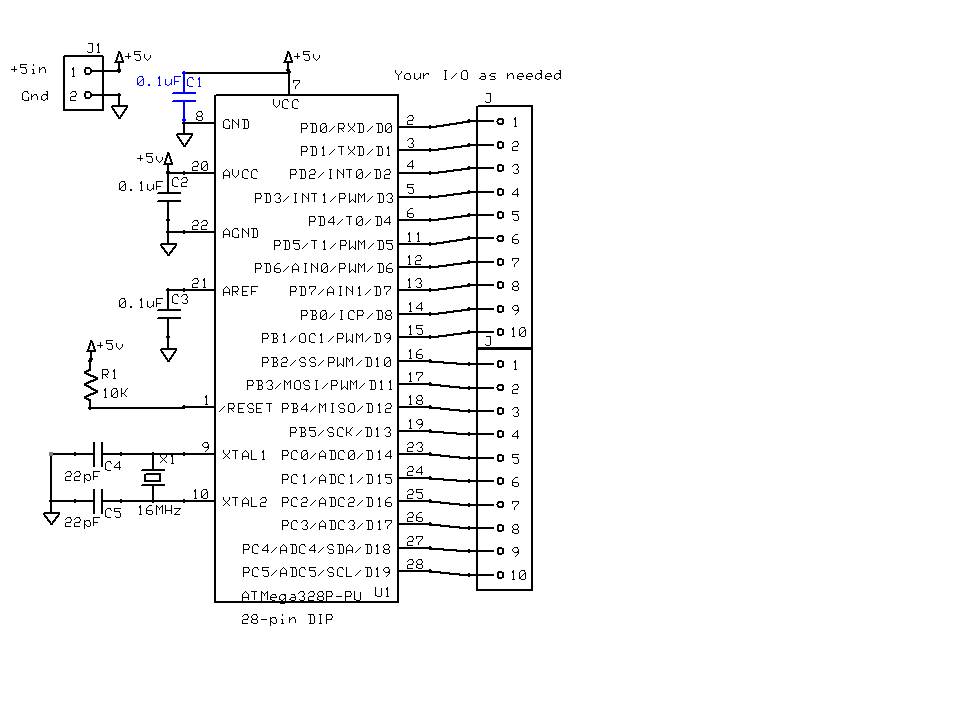
Or maybe a slightly smaller LiPo if 1000mAH is too big.
You will be disappointed with coin cells unless they are like the big CR2032s - in which case I think the LiPo will be smaller, and definitely higher power density.
Matetus:
Hi,
I'm using an arduino on a project and really need to watch the mass of the whole project and it needs to be portable for about 6 hours and working in very low temperatures.
So because of the last two parameters I opted for CR2032 lithium coin cells,200 mAh.
3 of them in a series to get a 9 V voltage and the question arises, is 200 mAh enough for 6 hours of some hardcore code(microSD shield, 3 analog sensors with a 1 Hz sampling rate, should I lower the transfer rate maybe?) or should I add another row of 3 for 400 mAh ?
It's critical for the whole mass to be the lowest possible.
Lithium coin cells are rated for about 2mA normal use, no way can you power an SDcard
which are very power hungry.
Alkaline button cells might be possible - a stack of 3 gives 4.5V...
Even a tiny LiPo will have oodles of current to spare.