I am currently working on a project. The goal of this project is to count the number of objects that are falling through a tube with a diameter of 12 cm. I have tried to use the HC-SR04 Ultrasone sensor and I've tried it with an HW-201 infrared sensor. The problem with these sensors is that they don't detect small objects, about 0.5 cm big. I can't find any sensor that detects these small objects. Any suggestions for other sensors I can use or is this not possible to do this using a distance sensor?
Not that I can think of, you need a beam of 12cm wide. Ultra sonic will just detect the tube.
What is the density of falling objects? Is it likely that two objects will be confused as one objects?
I think the best you can try is a video camera and some image processing on a Raspberry Pi processor like this, less than serious, project of mine.
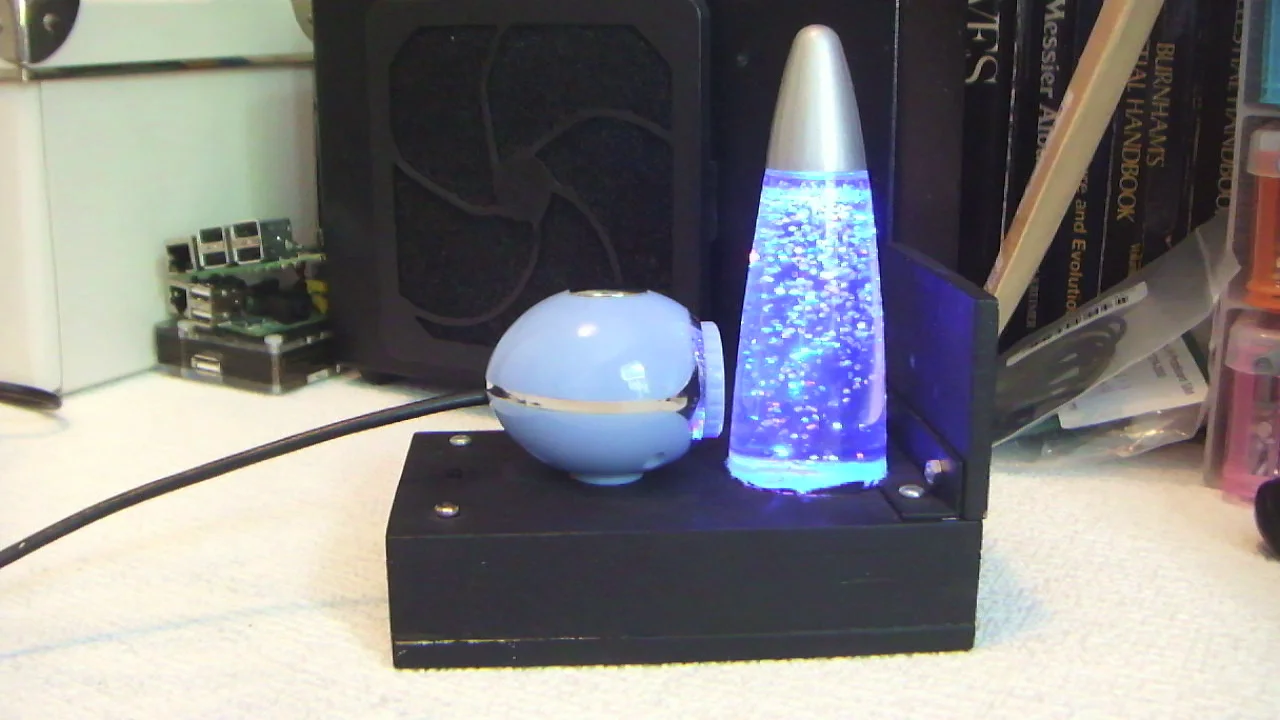
1 Like
Thank you for your answer. The sensor can be built under the tube, so that it still detects the falling objects, but doesn't see the tube. The objects are falling one by one, so two objects will not be confused as one object. Image processing is a great idea, but eventually, I want to run about 20 detectors simultaneously, and you only have one port for a camera on the Raspberry Pi.
And you only have enough processing power to do one sensor as well. So the answer would be multiple Raspberry Pis. They are not that expensive considering what you want to do.
You are still going to have to track any lateral movement, and what happens when these objects build up on the bottom blocking any view of new objects?
1 Like
The tube the objects fall through is 2 meters long in the direction of gravity, so the lateral movement is not a problem. The objects are removed immediately after they are detected, so they are not blocking the view of new objects.
Because my budget is limited I don't like the prospect of multiple Raspberry Pis. Do you think that it is possible to use color sensors instead of Ultrasone sensors. Then you can place it in the tube, make the background black, and see every change in the RGB value as an object. Or do you think that I better upgrade my budget?
1 Like
How about a laser pointer beam and a collection of mirrors to form a cross cross pattern within the column, to be received finally by a photodetector some kind?
So dense that no object would get past the beam in every segment you produce in this manner.
One emitter, mirrors, one detector.
Might be a bit fussy mechanically, so you'd want to have a solid setup and alignment of this device.
a7
1 Like
Is it falling through a liquid or just air?
With a 12cm tube and a 0.5cm objects that is at least 24 beams across the tube. Practical?
Yes, make one first then you have a case to argue for an increased budget.
1 Like
it's falling through the air
It's an interesting idea, but as you said it's mechanically more complicated. I will try to make it work. If this doesn't work I will try it with the image processing.
Thank you guys for the great advice you gave me
Yeah no, prolly not.
Maybe multiple detectors and look for not a digital signal but any kind of variation in light level from any of them.
There are vacuum cleaner dust detectors that work that way. Like you need to know when to stop vacuuming…
I think they key off reflections from the dust. Time to google that. 
a7
1 Like
Perfectly. 
That is why you use a laser. Just one wide mirror on each side of the tube, the beam traverses a zig-zag pattern.
The concept of cross illumination does also sound worthwhile - a light source passing across in one direction to a black background and a sensor monitoring reflectance (assuming the objects are not dark) from 90°.
1 Like
that is a great idea, but does absorption not extinguish the laser beam if you reflect it too often?
Only if the surfaces are dirty.
1 Like
Time to get empirical. It might still be a signal after, say 25 reflections.
Or use 2 to double the number.
a7
1 Like
Maybe a concept like this:
1 Like
Too cool. File for when money is more handy than time…
a7
1 Like
Hi,
this is a detection system can be used in your project.
The rotating mirror is the same used in laser printers.

1 Like
Are the objects removed before they strike the bottom? Depending on the weight of the objects, a sensitive piezo vibration sensor, a load cell, or maybe even an accelerometer module tied to a base plate might work.
1 Like
Google arduino seed counter for some other ideas.
A commercial seed-counting device uses...
Light emitting diodes (LEDs) create a thin field of light across the interior of the seed tube. A photo detector on the opposite side of the tube continuously monitors the intensity of the light. Any seed that disrupts the sensing zone’s light source is detected by the photo detector cell and the corresponding seed pulse is communicated to the monitor.
1 Like
Try using a square tube.
Round tube may not reflect the ultrasonic the way you think it does.
Look into how these ultrasonic devices actually work.
1 Like
Replace yellow wire by capacitor capacitor so Arduino will react only to light intensity changes


or PIR sensor

1 Like