[SOLVED] Negative result using dtostrf()

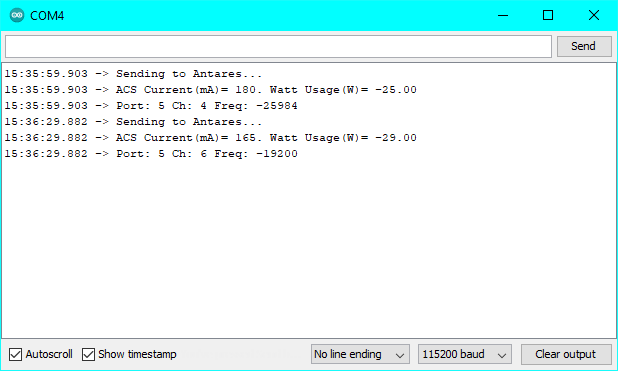
Im having problems on why is my float result are Negative. Here is my code along with the screenshoot of the problem.

  int mA = ACS.mA_AC(); //ACS712 Current
  float Watt = (220*mA)/1000;
  char daya[6];

  dtostrf(Watt, 4, 2, daya);
  sprintf(myStr, "ACS Current(mA)= %d. Watt Usage(W)= %s", mA, daya);
  Serial.println("Sending to Antares... ");
  Serial.println(myStr);    
  lora.sendUplink(myStr, strlen(myStr), mA);

image

Thank you in advance.

Integer arithmetic overflowing - try

1 Like

are you sure your current isn't negative (swap the probes

ACS Current(mA)= 100. Watt Usage(W)= 22.00
ACS Current(mA)= -150. Watt Usage(W)= -33.00
void
pr (
    float mA )
{
    char myStr [80];
    char daya  [6];
    float Watt = (220*mA)/1000;

    dtostrf(Watt, 4, 2, daya);
    sprintf(myStr, "ACS Current(mA)= %d. Watt Usage(W)= %s", int(mA), daya);
    Serial.println (myStr);
}

void setup ()
{
    Serial.begin (9600);

    pr (100.);
    pr (-150.);
}

void loop ()
{
}

The values are consistent with sixteen bit signed integer arithmetic overflow.

right, thanks

It works. Thank you so much!

1. Have you realized why did you get -25.00 in post #1 and why are you getting expected result using the following floating point arithmetic of Step-2:

2.

3. If you don't want fractional part of the result, you can use the following integer arithmetic:

int mA = 180;//ACS.mA_AC(); //ACS712 Current
unsigned long Watt = (220ul * mA) / 1000ul;  //ul for unsigned long (32-bit)
Serial.println(Watt);
This topic was automatically closed 180 days after the last reply. New replies are no longer allowed.