Hi,
I am just getting into using my new Arduino and am developing a project that will be permanent. I understand the Arduino is likely overkill but what I would like to know is can I develop the project using the Arduino, then buy an Atmel chip and somehow use the Arduino to load a bootloader and my program to it to run within a project box? I know that my first problem is that I got the SMD edition, so I cant pull the chip from my current unit, so I am looking for other options. Other questions:
If I bought a chip from say SParkfun, what inputs would it need other than power and inputs from my circuit?
If I manage to get something, load the Arduino bootloader and my program on it, would I just power it up and use the same inputs/outputs? Or are there any other external requirements (eg crystal?)
All the designs are on the individual pages for each board type. Go here and pick the relevant board and then download the spec.
You can then use this schematic to add in your custom arduino controlled components and integrate into a permanent project by using a custom PCB or whatever permanent solution you're final product will use.
If you have several permanent projects you could buy 5 RBBB's for $60 http://shop.moderndevice.com/products/rbbb-kit
You just have to solder it together, power cords can be bought on ebay for 3.50 apiece
Simpler than building an Arduino is the option of using a Sparkfun Arduino Pro which are under $20. I have transferred a couple of projects onto those for more permanent things.
The ATmega has an internal clock, which for some types of project (no critical timing and no async serial) may be enough. In this instance you can simply pull the chip out of a socketed Arduino and plug it into your production circuit. The most convenient programmer would be an Arduino, so I would recommend getting one with a socketed chip. This is going to be a good source of info: Arduino Playground - AtmegaStandalone
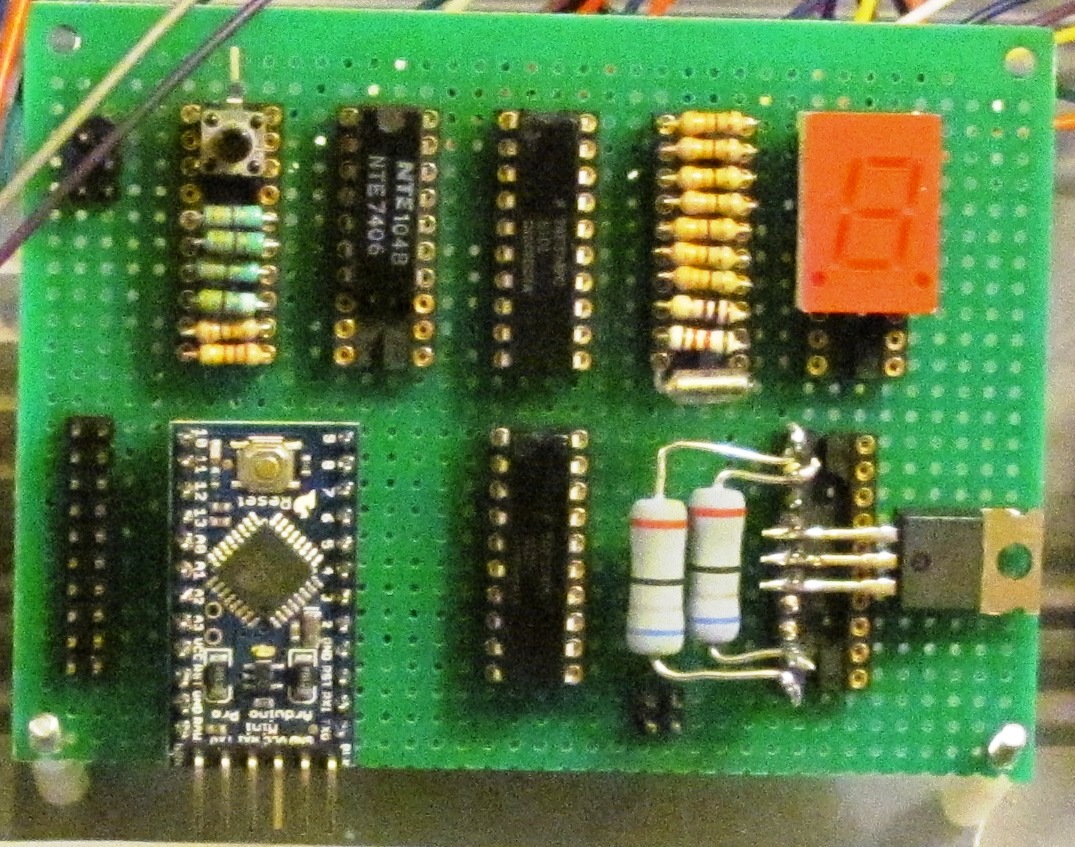
I have built Prominis into a lot of boxes. Soldered on female headers from pololu.com. Assembled terminated wires into crimp connector housings, plugged other end onto my circuit (in this case 2 boards loaded up with LEDs and transistors to drive them). Wired up to a DB9 connecter to bring in power, ground, and serial data that the promini pulls bits out of the turn the LEDs on/off.
Have 10 of these boxes installed at my fencing club now. Here's one in process. The loose leads are about to be soldered onto the DB9 connector.
I have just been hot glueing the promini in place after that.
We've gotten a lot of use out of the pololu terminated wired, headers, and connector housings.
I also have some of these boxes where I made a more complex control board with a promini and some other parts. It drives the same LED boards but has its own circuit for determining when they go on. It also talks to one of the simpler boxes to tell it when to turn the LEDs on.
And drive a speaker with a MOSFET amplifier.
Here's a 'compatible' board that may be a good choice:
It's called the ATMega Lite. Tiny footprint like the RBBB, Boarduino, Anarduino, Ardweenie etc. One nice feature is the included ISP 6 pin plug so you can burn the bootloader to a new virgin IC.
It's only $6.75 but does not come with an MCU. Compatible with ATmegaxx8.
Like you I am working on a project that really just needs an MCU not a full on Arduino. My project only needs three pins off the MCU other than power so I've settled on simply integrating an ATmegaxx8 into the design with minimal components or I may simply go with an ATtiny85.