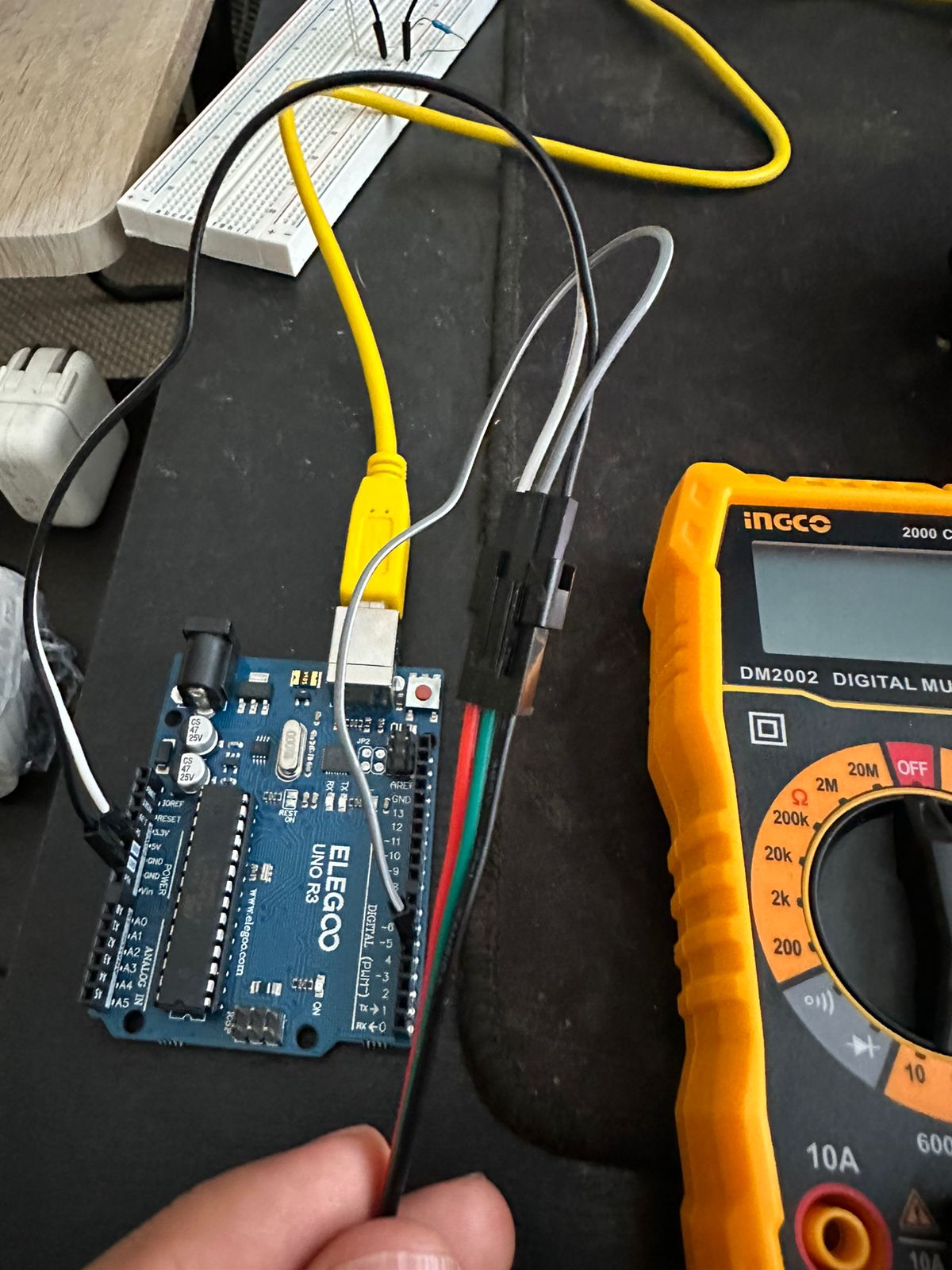
Just so you know... Each LED has data-in and data-out and it's "buffered" (or "boosted") so the signal doesn't get weak over a long run.
The data is "clocked through" one LED to the next in series... The data to the last LED in line has to get clocked-through all of the other LEDs and the last data written ends-up in the 1st LED (until it's updated again).
Tte buffer doesn't work backwards and the data can't be shifted backwards. ;)
Read Adafruit's "how to power neopixel" page... briefly:
Externally power the Neopixel string, do not use your Arduino as a power supply.
(you can power both Arduino and Neopixel string with the same power supply)
1000uf capacitor bridging the Vcc and GND legs of the Neopixel string
300 ohm resistor on the DATAIN leg of the Neopixel string.
5v is a little (1/5th) over half of 9v, so the second drop will be about 1/5th over the size of the first drop. (If input was 10v and output was 5v, both drops would be the same). Too much resistance on the power will make the LEDs dimmer, but safe. If 20k/25k is too dim, try smaller multiples with the same ratio, maybe 10k/12k and so on.
I use a power supply (like the power supply mentioned in your #1 post) that is right sized or an adjustable buck converter for an extra 500 centime. My 300 100 neopixel (at half-bright) strings might want about 2A 5A.
Led Qty: 60pcs per meter, 300pcs in total
Working Voltage: DC 5V
Max Current: 2.4A per meter, 12A in total
Power: 0.2W per LED, 12W per meter, 60W in total
Just an observation. From the LED supplier's info, it would seem that 5 LEDs will draw 1/12 of 2.4A, or 200 mA. That's pretty borderline for powering from the 5V rail of the Arduino, and also a pretty hefty load for your battery(and utterly beyond the 9V's capability).
Hi b707 sorry im new to this but why do you think its crazy? From my reading I thought that was the point of the resistor? To send the correct voltage to a circuit? If I am wrong please let me know I would love to know the reason and what to use.
Also I was reading that using the 5v from the arduino to light up 60 LEDs was too much and I could burn up the arduino
Start with a 5V wall-wart style power supply. Look for something with 5V regulated output, capable of about 1 1/2 times the current requirements of your final design. For example, if your final design needs 4 Amps of current, try to find a 6A supply.
If you're intent on powering this all with a battery, others will have to offer up solutions.
Resistor is not a current or voltage regulator. The voltage drop on the resistor is not constant, it depends on current, consumed by led strip. This current varies quite a lot, depending on the color and brightness of the leds. The lower the current consumed by the strip, the less voltage is dropped on the resistor and the more of the input voltage reaches the LEDs. In the extreme case, when all the diodes are switched off, the current will be almost zero and the voltage drop across the resistor will also be minimal.
Virtually all your 9v will go directly to the strip and you can burn your diodes.
Hi, I also have a problem and I don't know how to solve it. I have an RGB led module that is powered at 12V and the led strip is 5V. This is the led putty! Now my problem is different. I want to light another led strip, but this time a 12V one. How can I connect the 12v led strip to the 5v module? Both LED strips have RGB (4 wires), only one lights up at 5V and the other at 12V. I want to make a separate power supply circuit for the 12V led strip, but I want it to be connected with the 5V one. When I change the color of the 5v module and change the color of the 5v led strip, the 12v one will automatically change as well, the same with the light intensity, when I lower the brightness of the 5v strip, it will also decrease on the 12v one. Can I use a module like the arduino one? Only that instead of the signal from the arduino, I give 5V from the RGB module.