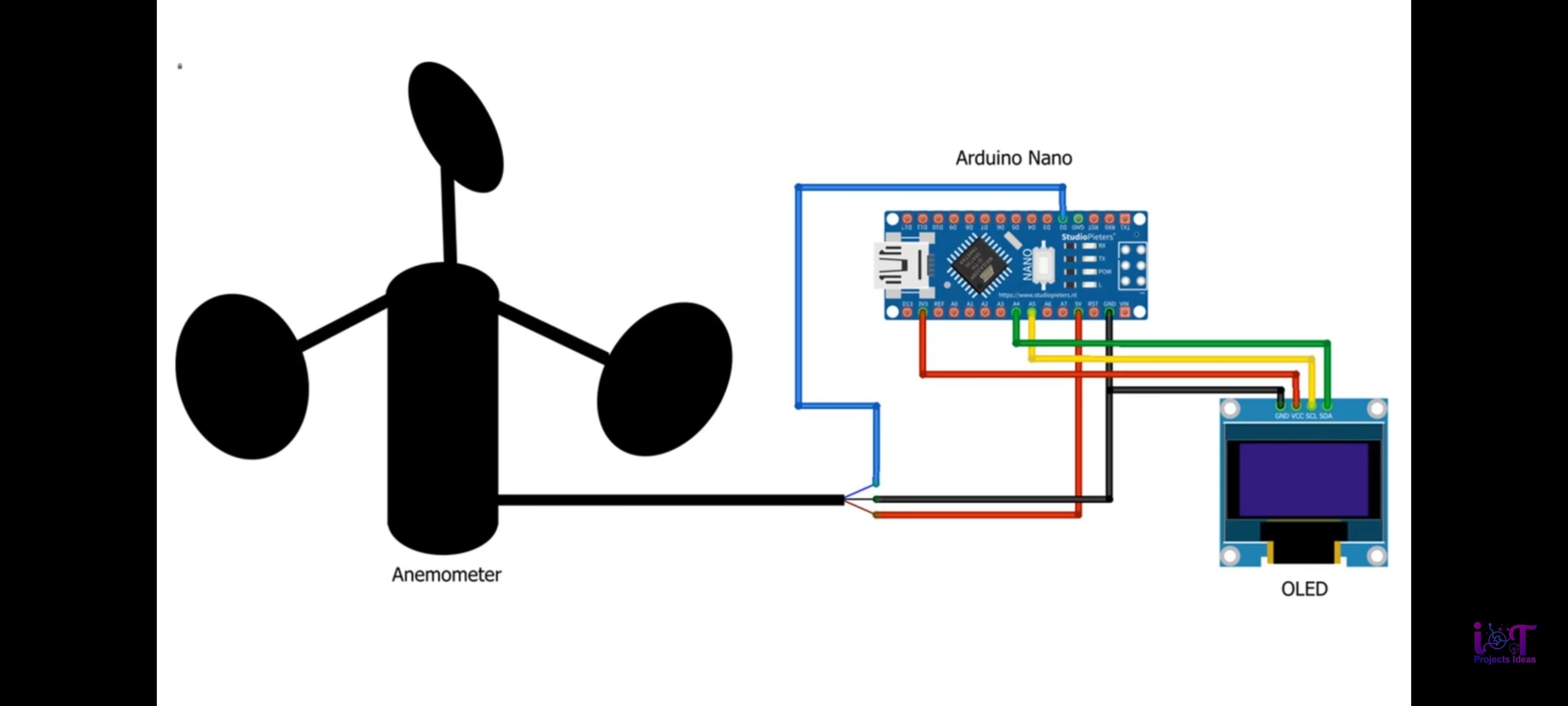
Hi. Today, instead of build anemometer sensor from beginning is easier to just buy a ready to go sensor and exist many tutorials with ready codes.
I want to run to minimal battery cells what I can, because of space. I have a lot of 18650 and AAA batteries.
And I want to use a small NANO board.
I found that more on the market sensors have input voltage 10-30v. But I found some videos where I can buy 5V input sensor and connect LCD/OLED and Arduino to 5v, that will be like 2x18650 enough?
Also, not sure is the 5-30v input sensors rare on Ali (hard to find), or it is mistake in manual, maybe they mean output 5v, not input :-/ But
in this video you can see in hands 5-30v label on device.
In one video says that the default sensor 10-30v tested on Arduino 5v and it works.. that means maybe all of them can?
2S would give you 7.4V nominal voltage, good for arduino VIN.
Also, why would you power the sensor from arduino 5V, since you can power it directly from battery at higher voltage?
Does your sensor have analog or pulse output?
Unfortunately they are much more costly now than when I last purchased one, almost 8 times higher price, and I don't think the quality justifies that price.
If I were to buy a new anemometer now, I might choose one like this:
It's not clear from the seller's description, but I think this type generates a voltage proportional to the wind speed, and so draws no power from the battery.
It is not my final sketch. It is SS from video... I can power ot from battery, yes.
Didn't bough sensor yet. I think it will be "Pulse".
Yes on Ali white are cheaper and I like color, but in descriptions I found it says it working only to our weather station and not guaranty that will work on others...
Then I am for the black color, with silver label in the middle. Many videos exist.
No manufacturer will claim that their sensor works with a weather station that you are designing, building and coding yourself. That would be crazy.
They want to avoid customers trying to use their sensors with weather stations produced by other sellers, with which they might not be compatible. You are designing your own weather station. You can design it to work with any sensor you want, provided you can understand how the sensor actually works.
Don't be shallow. The exterior colour of a sensor tells you nothing about how it works internally. That is what is important.
Sure it will work. But it will not work at very low wind speed. Since it is a motor/generator, It cannot turn at very low speeds. A unit using a reed switch will indicate very close to zero wind speed. Beware of hail storms. One of the arms broke off of my plastic rotor. Repaired with a steel pin and supper glue.
The instructions should also include methods to calibrate to device.
By the way @danyCro , how is your IR-illuminator case going? After 300+ posts and hours of time people here helping you, you could update the topic perhaps?
Analog outputs a voltage according to wing speed which you read by ADC (analog input).
NPN gives a tiny digital pulse that you read with digital input counting the time between pulses to get the speed.
Than'ks for your brief update on that topic.
Be aware we are not AI bots here. Many of us gave several hours of full intention to try to help you, just for good will....
Don't know, still we don't know would be measure pulses or what. Didn't download code yet.
Mine two anemos which I'm looking have
Accuracy 0.3m/s, and second have 0.m/s.
On video, I noticed that one have Wind speed: 1.75m/s=20 pulses per second
Pulses per rotation: 20. That characteristics don't see on Ali anemo devices. It seems that is different for each device.
No, I use ABS, but if and when the sun destroy it, print another one.