Hi everyone,
I'm seeing a bizarre electrical behavior and would love your input.
Setup
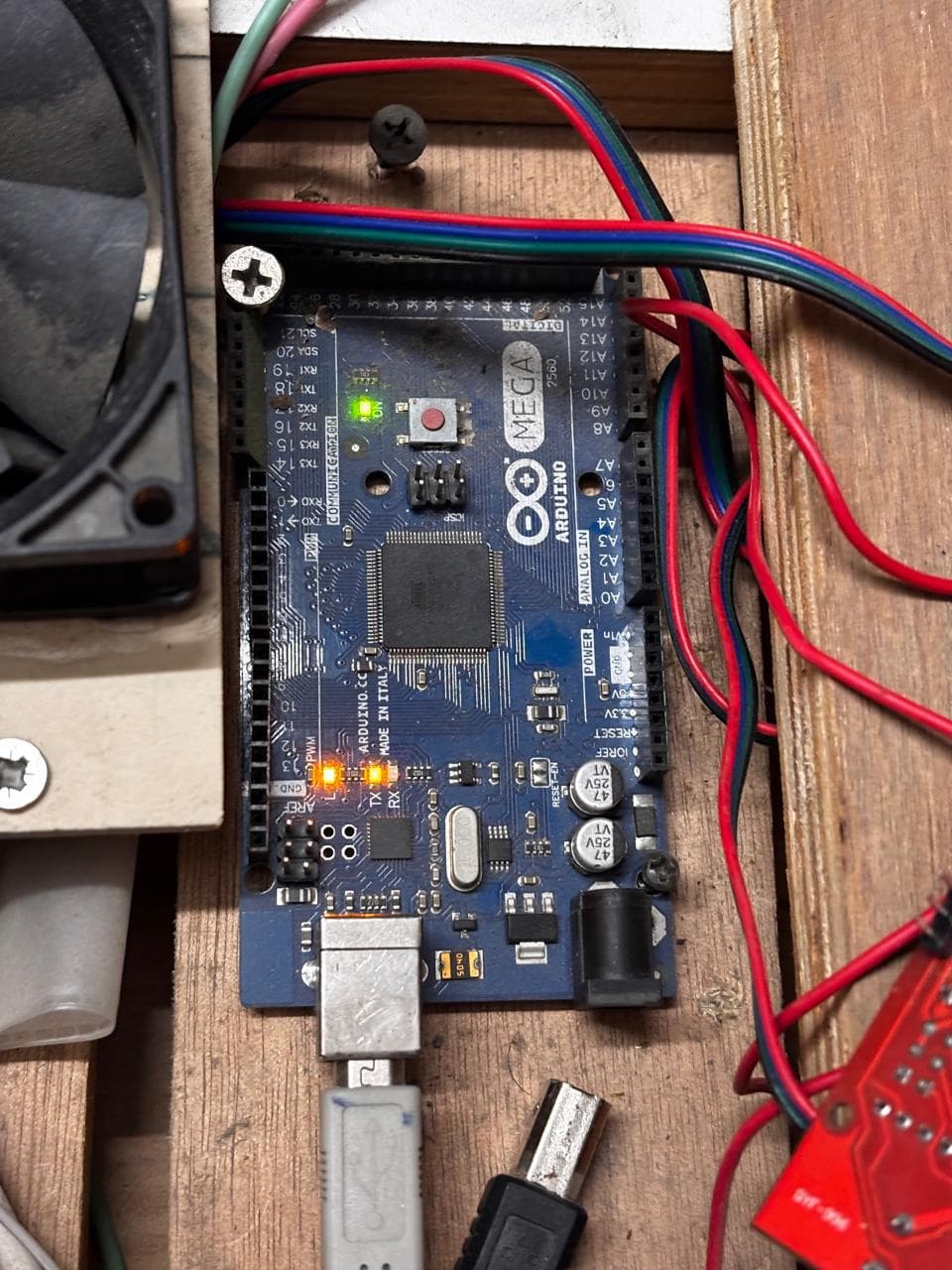
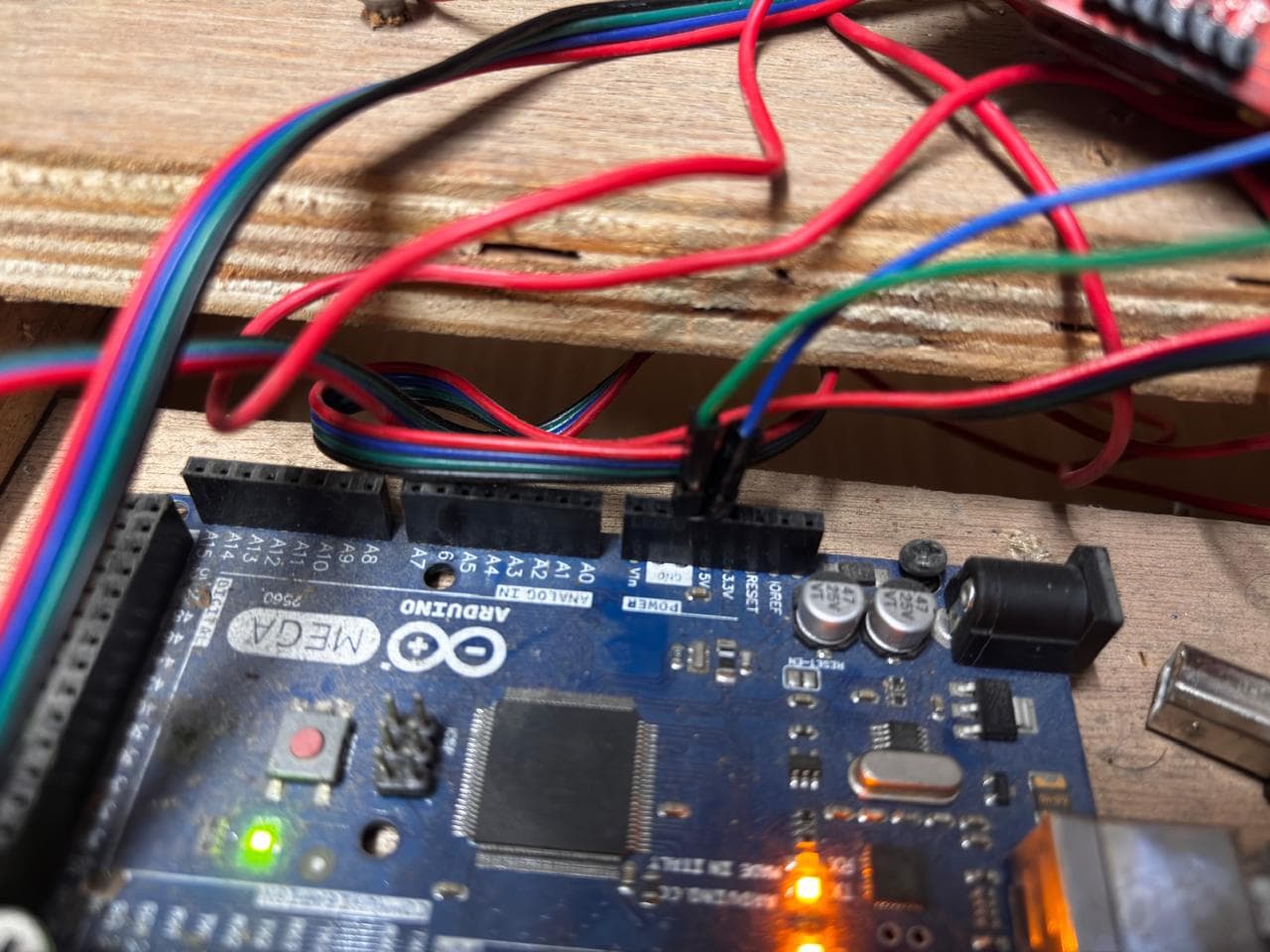
Board: Arduino Mega 2560 (Also tried with an Arduino Uno R3, both clones)
Connection: USB to:
Raspberry Pi (with official power adapter)
Laptop (tested both plugged in and on battery)
Multimeter: Verified with fresh batteries.
Wiring: Absolutely nothing connected to the Arduino except the USB cable
The Problem
I'm consistently measuring 10V to 16V across the adjacent 5V and GND pins of the Arduino — even when:
Only USB is connected
Nothing is connected to any other pins
Multiple USB cables and ports are used
Host device is changed (Raspberry Pi ↔ Laptop)
Board is swapped out (tried a Mega and an Uno)
The Weird Part
Despite the absurd voltages:
Everything works perfectly:
Sketches upload normally
Serial communication works
I/O is responsive
Nothing gets hot:
USB ports
Voltage regulators
Microcontroller
Voltage is real, not phantom:
Connected a 12V PC fan to 5V and GND — it spun up normally
Connected a 100Ω resistor — it heated up, voltage stayed at ~14V
Tests Performed
Test
Result
Changed host device (Pi → laptop)
No change
Changed Arduino boards
No change
Measured all 5V headers on board
Same ~14V
Loaded rail with fan + resistor
Still high voltage
Checked for heating anywhere
None observed
What could be causing this?
Rogue boost converter or backfed VIN path?
Faulty or floating voltage regulator?
Some insane USB PD negotiation bug (especially via USB-C)?
Ground reference weirdness?
Straight-up cursed hardware?
I'm genuinely confused — I've tried every sanity check I can think of. If I hadn't seen it with a load (and multiple boards), I'd dismiss it as multimeter error or phantom voltage. But here we are.
Should I Ignore It?
Functionally, everything is working fine
No signs of hardware stress or damage
But the electrical behavior is... physically impossible
Has anyone ever seen this before? I’d rather not ignore a potential silent failure or hidden electrical gremlin down the line.
Any advice, insights, or similar experiences would be greatly appreciated.
Just not possible!
I'd say your meter is broken.
Do you have a different meter or a 9V battery or AA battery you could measure in order to test the meter?
Tried ChatGPT to help figure out what went wrong to see if maybe I was missing something. I didn't want to type the whole story again so asked it to summarise. I have thoroughly examined the post and corrected errors, dw.
Either a faulty meter or a faulty procedure. The boards do NOT ever create more than 3.3VDC or 5VDC, depending on the board and USB, regardless of whether C and/or PD are present, will not produce more than 5.1VDC without PD hardware.
You were right. When I tried to probe across a 1.5V AA cell, the meter read 3.72V.
I didn't think the meter was faulty earlier because the 12V fan started up effortlessly when connected it. Maybe the fan starts up at voltage much lower than 12v. Anyways, thanks
Just goes to show that reading real volts requires a real Fluke....
Seriously though, it might just be dirty tracks on the rotary control. I think a faulty MOV would cause a low reading rather than high. Occasionally a capacitor can spill its guts (electrolyte) which damages or shorts adjacent tracks. The meter might still be salvageable.
Fans can indeed start spinning at much lower than the rated voltage and often spin quietly although it should reach max designed speed and airflow at the rated voltage.
The meter had undergone a battery leak recently and I'd cleaned out the contacts using a hard-water-stain-removing solvent which had worked remarkably well. Maybe I underestimated the extent of corrosion.
Besides, when I tried to measure the resistance of a 100 Ohm resistor, I get a reading of 115-120 Ohm. I am certain that my resistor has a tolerance of not more than 10%. I was thinking that maybe some part of the circuitry that deals with the AnalogReference voltage might have had a failure.
The fact that the failure was sudden and not gradual is noteworthy. I took some measurements 12 hours before this and it was all absolutely fine. That's another reason why I didn't suspect it was a meter-issue initially.
A leaking battery in a toy can be fixed, but not in a precision instrument.
I have been a consumer electronics tech for more than half a century an never owned/needed a Fluke. If you spend at least US$50 on a DMM then you can't go wrong.
Currently I wouldn't spend any money on an American business anyway.
Leo..
There is nothing wrong with the alternative cheaper brands of meters. Even the humble DT830 does an adequate job for low voltage applications and hobby work. However, for something a bit more long term and serious as a replacement I would probably spend a little more as suggested by Wawa. On the other hand, a Fluke would be overkill just for working with Arduinos and low voltage projects, so please don't feel that you need to go spending that kind of money. I was only having a bit of a joke due to the lookalike appearance of the meter shown in the picture.
Its just unfortunate about the battery leak. The corrosion caused by the gunge that leaks from batteries can have unpredictable consequences as if it leaks inside it can cause damage to tracks on the PCB and to components. It could of course also be that the meter has co-incidentally suffered another fault.
 Should I Ignore It?