Hi! I was just curious about something.
I have a digital multimeter, specifically this one: https://www.amazon.co.uk/Multimeter-Auto-ranging-Electrical-Transistor-Continuity/dp/B01MXGOCOF/ref=sr_1_2_sspa?keywords=digital+multimeter+tacklife+DM02a&qid=1561995768&s=gateway&smid=A171SCMIBPG4KV&sr=8-2-spons&psc=1
One of it's capabilities is to read the resistance of components.
If I had a basic circuit, and I wanted to know the overall resistance of it, would it be safe to just measure the resistance from the 5V Arduino source to the Arduino's GND?
I know that connecting 5V to GND is dangerous to the board, so I was wondering if it was safe using a multimeter.
(and similarly would it be safe to go from 5V directly to the GND for voltages and current?)
Thank you
First in order to check circuit resistance for a simple circuit it may be possible to remove the power and check from VCC to Ground for overall resistance. For instance... if your circuit is a bunch of resistors... it may work.
Possible issues - certain component will not conduct or turn on without the proper voltage/current so what you measure will not be accurate based on the components you have.
What are you trying to measure?
You can connect your meter from Vcc to ground to measure voltage. Connecting the meter in the same way to measure current will result in a dead short. If your meter is so equiped, the fuse in the meter will blow, otherwise expect smoke.
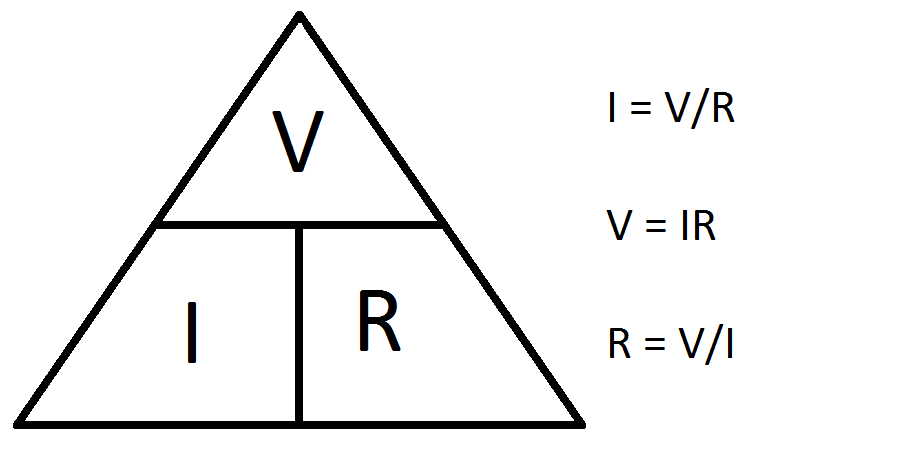
Using the
you can measure the voltage and the current to get resistance.
wolframore:
First in order to check circuit resistance for a simple circuit it may be possible to remove the power and check from VCC to Ground for overall resistance. For instance... if your circuit is a bunch of resistors... it may work.
Possible issues - certain component will not conduct or turn on without the proper voltage/current so what you measure will not be accurate based on the components you have.
What are you trying to measure?
Ah yes - I didn't think of that.
I'm not trying to measure anything in particular, I suppose I was just wondering the limitations of measuring the resistance from VCC to GND in one go.
Thank you for your response!
I know that connecting 5V to GND is dangerous to the board, so I was wondering if it was safe using a multimeter.
It's safe. If you have a new board that's never been powered-up yet, or if you're troubleshooting, it's a common way of checking for power-to-ground shorts. You won't get an accurate reading if the board is powered-up but you won't hurt the meter or the board.
And as wolframore says, you won't get an "accurate" reading anyway because the effective resistance will change when you apply the "real" voltage and it the resistance will drop if you turn-on LEDs or motors, etc. But, it still can be useful if you have a ballpark idea of what you expect.
The meter ONLY presents a "short" in the current-reading mode. That makes current measurements a little "dangerous" and it's "difficult" because you have to break the circuit and insert the meter in series. Like a lot of meters, your meter has a separate probe connection for measuring current. That way, you don't accidently switch to the current mode and fry something. (Usually, the fuse inside the meter will blow if do something wrong when measuring current.)
I measure voltage & resistance every day at work but I can't remember the last time I used a multimeter to measure current. (My bench power supplies have built-in voltage & current meters which is super handy & safe.)