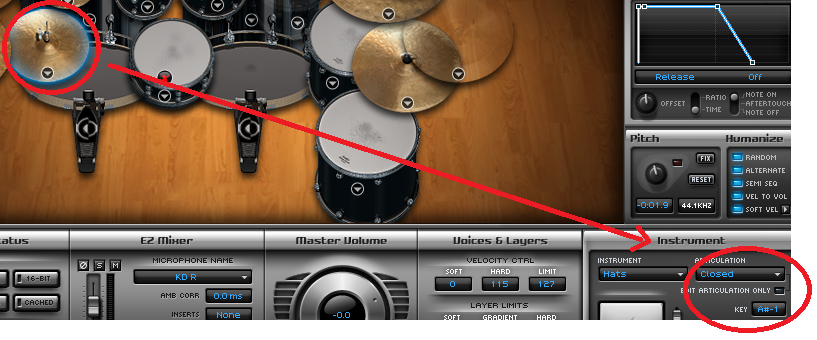
I am new to arduino, wirings and codes, but luckily I was able to make my own USB MIDIdrums using piezos connected to my laptop running superior drummer on my MAGIX: Music Maker MX via HAIRLESS MIDI + MIDI YOKE. I was able to make it work just by following the guides I've found at http://www.instructables.com/id/Arduino-Xylophone/ I made a slight changes on its codes since my setup was a little different. It is working fine, but I'm planning to buy a sustain pedal momentary/on/off type https://www.amazon.com/Stage-KSP100-Universal-Sustain-Pedal/dp/B001ELP5WM to be able to control the hi hat by stepping the pedal to close the hi hat and vice versa. If someone could give me some advice with the wirings on how to connect a 1/4 mono to be able to connect the pedal to arduino and if I need additional stuff like resistors etc, and to add a code for it I would really appriciate it.
By the way, this is the code I'm using with Hairless MIDI:
int pinRead;
char pinAssignments[16] ={
 'A0','A1','A2','A3','A4','A5','A6','A7','A8','A9','A10','A11'};
byte PadNote[16] = {
 57,58,59,60,61,62,63,64,65,66,67,68,69,70,71,72};         // MIDI notes from 0 to 127 (Mid C = 60)
int PadCutOff[16] =
{
 400,400,200,800,400,400,400,400,400,400,400,400,400,400,400,400};           // Minimum Analog value to cause a drum hit
int MaxPlayTime[16] = {
 90,90,90,90,90,90,90,90,90,90,90,90,90,90,90,90};               // Cycles before a 2nd hit is allowed
#define  midichannel 1;                              // MIDI channel from 0 to 15 (+1 in "real world")
boolean VelocityFlag  = true;                           // Velocity ON (true) or OFF (false)

//*******************************************************************************************************************
// Internal Use Variables
//*******************************************************************************************************************
boolean activePad[16] = {
 0,0,0,0,0,0,0,0,0,0,0,0,0,0,0,0};                   // Array of flags of pad currently playing
int PinPlayTime[16] = {
 0,0,0,0,0,0,0,0,0,0,0,0,0,0,0,0};                     // Counter since pad started to play
byte status1;

int pin = 0;
int hitavg = 0;
//*******************************************************************************************************************
// Setup
//*******************************************************************************************************************
void setup()
{
 Serial.begin(57600);                                  // SET HAIRLESS TO THE SAME BAUD RATE IN THE SETTINGS

}
//*******************************************************************************************************************
// Main Program
//*******************************************************************************************************************
void loop()
{
 for(int pin=0; pin < 16; pin++)                          //
 {
   //int pin = 3;
   //   for (pinRead=0; pinRead < 16, pin++){
   hitavg = analogRead(pinAssignments[pin]);
   //Serial.println(hitavg);
   // read the input pin

   if((hitavg > PadCutOff[pin]))
   {
     if((activePad[pin] == false))
     {
       if(VelocityFlag == true)
       {
         //          hitavg = 127 / ((1023 - PadCutOff[pin]) / (hitavg - PadCutOff[pin]));    // With full range (Too sensitive ?)
         hitavg = (hitavg / 8) -1 ;                                                 // Upper range
       }
       else
       {
         hitavg = 127;
       }
       MIDI_TX(144,PadNote[pin],hitavg); //note on

       PinPlayTime[pin] = 0;
       activePad[pin] = true;
     }
     else
     {
       PinPlayTime[pin] = PinPlayTime[pin] + 1;
     }
   }
   else if((activePad[pin] == true))
   {
     PinPlayTime[pin] = PinPlayTime[pin] + 1;
     if(PinPlayTime[pin] > MaxPlayTime[pin])
     {
       activePad[pin] = false;
       MIDI_TX(144,PadNote[pin],0);
     }
   }
 }
}

//*******************************************************************************************************************
// Transmit MIDI Message
//*******************************************************************************************************************
void MIDI_TX(byte MESSAGE, byte PITCH, byte VELOCITY)
{
 status1 = MESSAGE + midichannel;
 Serial.write(status1);
 Serial.write(PITCH);
 Serial.write(VELOCITY);

}