where the reading was on and off and on and off, repetitive like this. When is off I get all 0's, when is on I get some random numbers - I was expecting them to stop at a certain value, whatever that value is, and not fluctutate too much from it. If its a small deviation, its fine, but what I got is pure randomness.
This is the first time Im working with these chips that look like a TO-92 transistor.
I have no idea what to expect from them. Is this a normal behaviour and I dont know something important to add to this circuit or code?
These were actually the first thermic sensors I tested. Then I jumped to thermocouple sensors that I discussed here. Also my first time with those too.
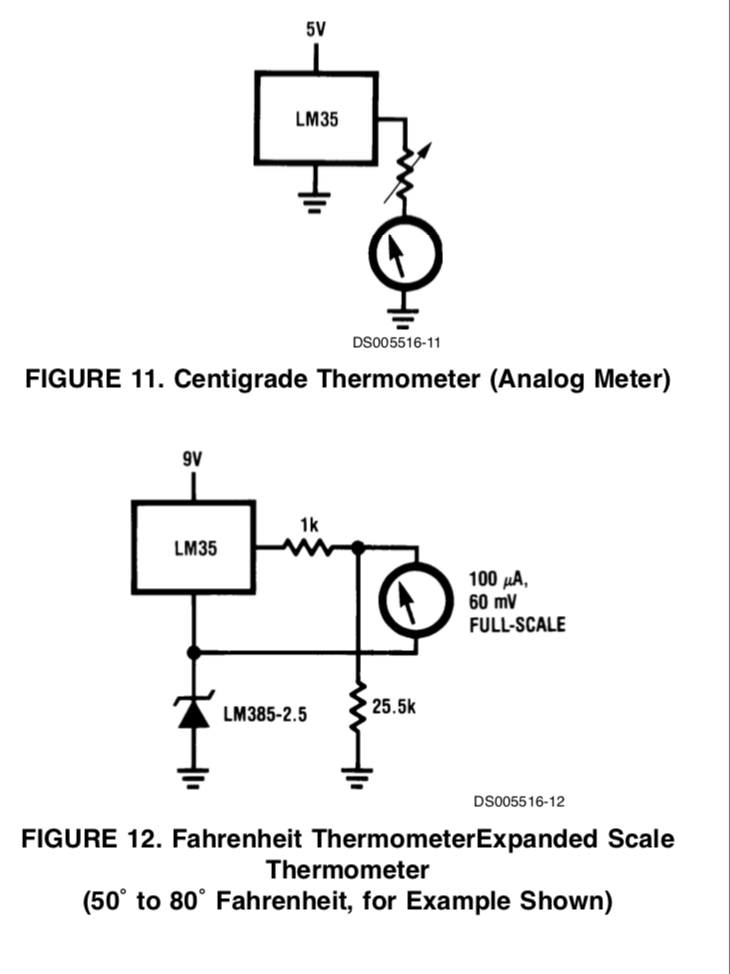
I looked on some videos on YouTube and it appears that these LM35 sensors are quite linear and they actually output a direct temperature value, without too much conversion, or probably a minimal one. If I understood it right. In its datasheet also shows a direct connection to a LED driver LM3914 a classic logic IC :
After a couple of days of testing and many-many-MANY hours of trying to understand why I got those successive results, I concluded these LM35 chips are severely damaged. I tested like 5 of them from 10pcs package I receive and they all give me the same result in test.
Now, I still dont believe 100% they are damaged. So I turn to you. Im betting on a mistake I made in code or on the circuit breadboard that I dont see it and I am not aware of. You are definetly more experienced with these components and you know exactly what are their behaviour and what to expect from them. Is my result here due to a wrong code or circuit? or they are truly burned/damaged?
I also tested them with my osciloscope. If you put a POT on the osciloscope probe, and twist it, you will see a voltage ramping up or down. So that was my reference image to have in my mind while I was testing these LM35's. I did not see any ramping whatsoever on their outputs. I used my fingers to heat them slowly = nothing; then my hot iron at 333*C and again nothing, no ramping, no response. I only seen some voltage spikes but Im uncertain if those spikes are from general interference on the probe or from the actual output.
On my arduino program here, it gives signs it is working for a few seconds then dies for another couple of seconds then alive again and so on... very strange !
To be certain it is not a wire or A0 port creating an erroneous reading, I link A0 to a 10k test potentiometer
and the values were maintaining constant very close to the dialed resistance division! The change was 400-405 (for ex). So very small reading instability, compared with the LM35 output which is total random. Thank you !
Im always careful on every component pins.
Its a life and general rule I respect and Im careful all the time.
So its definitely not that ! (unless they inversed the pins in the factory) but we ca nnot know that. But remains a possibility - haha.
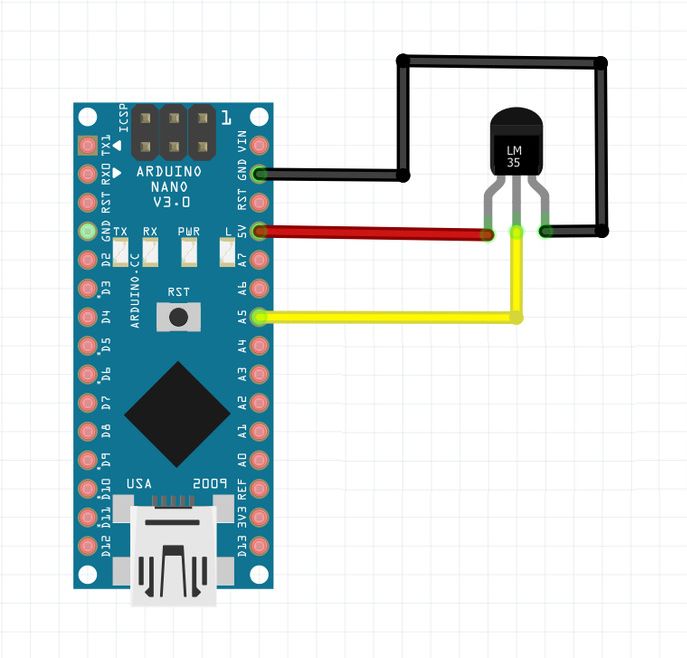
Most show as you have in your "copied photo" in original post but........as simple as it it, do you have the device actually connected the same way. Show photo and include any power connections.
I dont know ! They seem legit to me They have the LM35 laser marking on them !
What Im most interested here is their behaviour to compare it with mine.
But I get the feeling they are busted or completly fake to begin with. Aaah. What a waste of time.
Although its a lot of time passed from then, I will still ask my money back and make noise toward that unscrupulous chinese. I dont expect money back but they will get a piece of my mind for this treachery !
Thank you again @jim-p !
Truly looks ok to me !
Left ones are all tested and also the plastic a bit burned from my hot iron tests I mentioned earlier. If you zoom into the image you can see the burn marks.
Right ones are untouched.
It is indeed smoothing and I get a constant reading, apparently !!! - why? because in reality if I waited and look on the serial monitor output, the apparent constant numbering were actually moving down but very-very slowly !!! and after some longer time, in 10's of minutes, like 30, or 40 mins they were starting to raise up, still very slow. So that capacitor dampening it is really working, but the behaviour is the same, only greatly slowed down. I told you, I tested them many-many-MANY hours ! a few days.
My biggest regret now, is that I didnt make these tests sooner when I got them. To fit in return money back time. Aaah...my money! down on the river !





 ; it's an Ampmeter or a Thermometer ?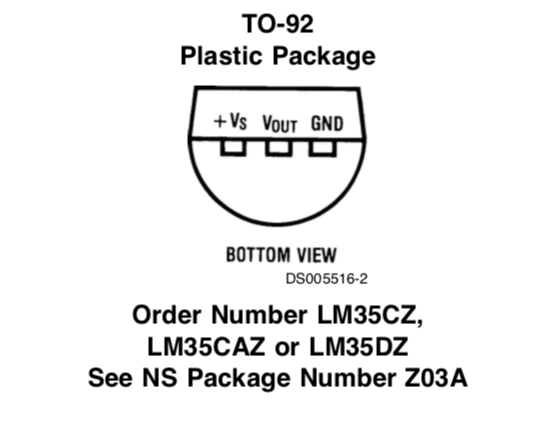
 They have the LM35 laser marking on them !


