Can i directly connect an 500mAh 3.7V lithium polymer lipo rechargeable battery to the GND and VIN of my Arduino nano rp2040 connect or should I use something (ex. a level shifter) to connect it safely?
this is my battery https://www.amazon.it/dp/B09DPNX4KP?ref=ppx_pop_mob_ap_share
I tried to connect the lipo to the VIN and GND of the arduino nano rp2040 and the power worked. The arduino is connected to two force sensitive resistors and an fsr sensor, it communicates through BLE with another arduino nano rp2040 connect.
I don't know if I should buy another lipo with an higher voltage or since it's working now keep using this one.
this is the datasheet of the arduino nano I'm using
Perfect. I don't know Your controller.... Can it be fed power to the 3,3 volt pin? What's the maximum voltage then?
As You see, that battery voltage is too low for Vin.
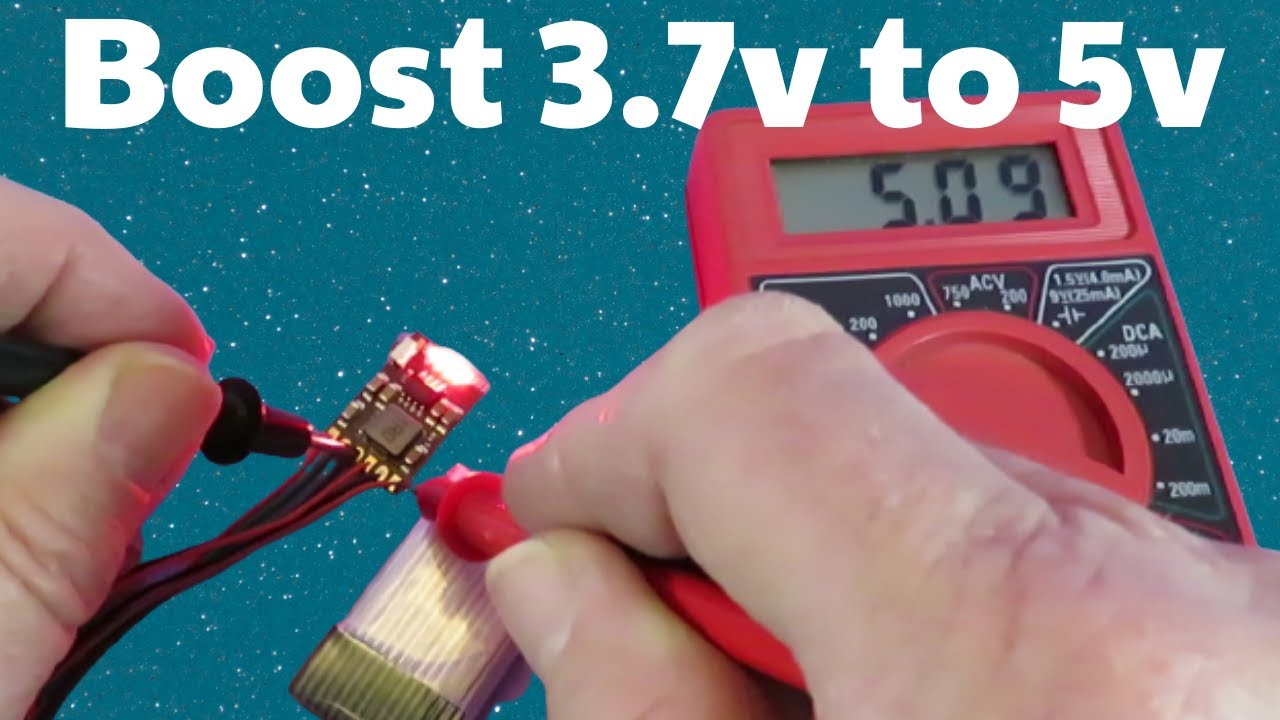
Ok. If I want to use this lipo anyway do you think that this voltage booster could transform my 3.3v into an higher voltage? It the title of the product it says that can accept an Input of 3V~32V and transform the output 5V~40V, but in the description there's written
Yes it can fed power to the 3,3 volt pin by cutting an exposed trace which can be cut to bypass the step down converter, and enable powering the board directly with a 3.3 V external power source. But by doing this I can no longer use a USB connection to power the board and I can no longer use a USB connection to upload sketches. So I think it's not the best idea
I personally have not used that boost/charger but I have seen other forum members use it without a problem.
Only thing is if the nano rp2040 goes to sleep he boost will turn off and you need to manually turn it back on
According to the schematic for the Nano RP2040, it uses the MP2322 buck regulator. Its datasheet doesn't give much information about dropout voltage, but apparently it does well enough at whatever charge state your battery was at when you did this test. If you have a multimeter, you could try running your software and following the battery voltage and the voltage on the 3.3V pin of your Nano. The point at which the 3.3V pin voltage starts to drop during radio transmission will be as low as you will want to go. As others have said, it's unlikely this will work much below a fully charged battery, but you could give it a try.
For now I don't use any sleep mode in my project so I don't think I'll have this problem. Anyway do you recommend me to use it since it is connected to the lipo? Maybe to save some power?
Do you mean two batteries with 3,7V? Is it possible? My project is to create a wearable object that has to be as smallest as possible, so I was looking for a solution that could make me save space.
But you don't know that for sure unless you try it out. The question is how long your device continues to operate properly on a battery charge. That's something you can test.