So I am connecting a bunch of sensors to Arduino Mega 2560, after searching each one and how to connect them to arduino individually, I notice that all of them share a similarity and that is they all need to be connected to 5V and/or GND, atleast 4 sensors need to be connected to 5V and GND, is that ever possible? Ive seen two sensors connected to GND with the use of breadboard but i am not sure about more than two. I am also not sure how to make a schematic of it
edit: always forgot to mention, we will also connect the arduino to solar panel, which i have searched on how to connect solar panel to arduino mega 2560
It can provide a few mA for sensors while consuming very little current.
The ideal way to power multiple sensors is to use an external 5V power supply with a capacity at least 30% higher than the required one, and connect the GND of this power supply to the GND of the modules and the Arduino.
There are sensors that draw lot of current and other that draw next to nothing.
Also, it depends on how arduino is powered.
So maybe none, maybe 20. Better approach is not to pass power through arduino at all.
You need solar controller with battery management for that.
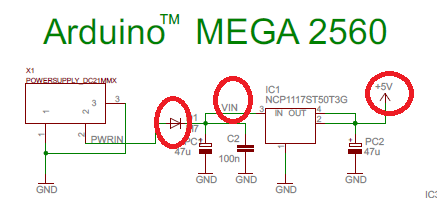
Be very careful when powering it via +5V Pin, as the +5V and Vin input doesn't have a reverse polarity protection diode, and if you reverse + with - you could burn out your Arduino.
At your own risk!
Always read the documentation for your board
5V. This pin outputs a regulated 5V from the regulator on the board. The board can be supplied with power either from the DC power jack (7 - 12V), the USB connector (5V), or the VIN pin of the board (7-12V). Supplying voltage via the 5V or 3.3V pins bypasses the regulator, and can damage your board. We don't advise it.
Ive seen this issue somewhere in which someone made a shcematic and two wires were connecting to GND, looks exactly as it sounds, now I know in real life thats not possible to do with arduino, so I want to see what a schematic looks like with 2 or more connections to GND
What issue? Doing what? And why you think isn't possible?
[quote="anon62403211, post:10, topic:1396266"]
so I want to see what a schematic looks like with 2 or more connections to GND[/quote]
Sorry, I don't understand the purpose of your questions, it is very possible to connect multiple wires to GND.
And please be aware you wrote other two posts asking almost the same "issue":
I apologize if I did something wrong or against this website's rules, I just need help with a school project, I am not educated in any electrical stuff, we were not taught, I was very blessed to have found this space seeing all the similar situations and problems and answers. Thats all there is to it but I apologize if I did anything wrong
Most Arduinos have multiple ground pins; have a look at their pinouts.
As you mentioned you can use a breadboard just for GND and power connections; maybe not wat you want. You can solder a wire to strip board (connect that to the Arduino GND) and next solder multiple wires to that for devices.
And @LarryD has somewhere an article how to create Y-wires; you might even be able to buy them of-the-shelf (not sure).
// Edit
Ah, I see that @UKHeliBob already posted an image.
Thank you! So it is possible, all I have read is that it is done with breadboard, I will try finding that kind of wire and connect two sensors to GND. Thank you as well @sterretje !

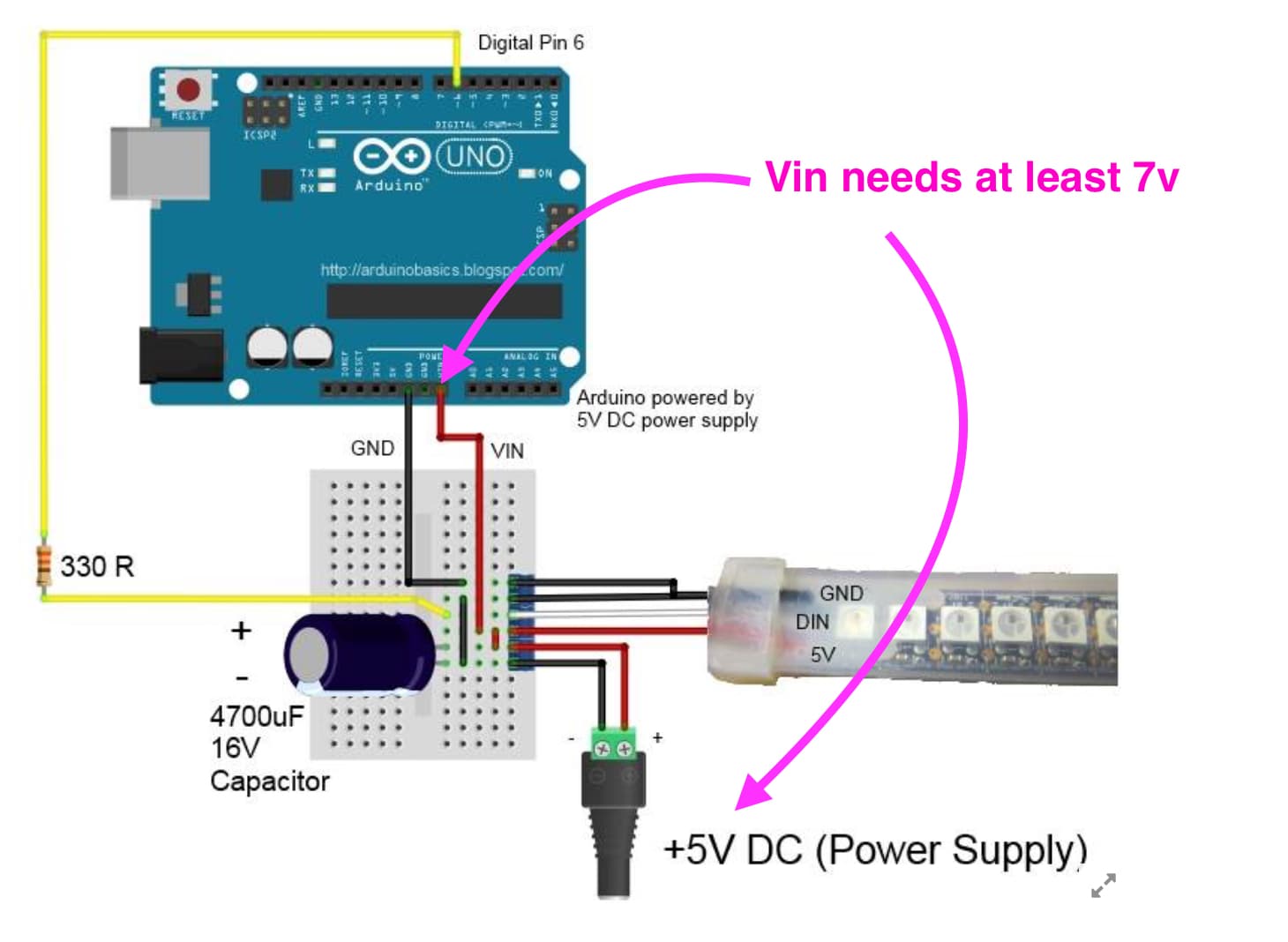
 I will try to find a real life picture of it to see
 but I apologize if I did anything wrong