I am new in this forum as well as in building drones (i have little/basic knowledge about parts).
As the title, i want to make a budget drone with nrf2401l (as transmitter and receiver), 2 arduino nano on both side (remote and on copter) for data processing and one MPU 6050 (for stabilization).
before asking for the help here, i've seen dozens of tutorials on youtube and other platforms, but i didn't find any tutorials on my above requirement. there are tutorials of arduino quadcopters but without MPU 6050 (without stabilization) and/or ready made transmitters (not with nrf2401l)
basically i want circuit diagram and program for my need.
That is not the way that this forum generally works. Usually users try things for themselves and come here to get help with problems
There is a special forum category where you can ask someone to do the work for you, but you will generally be expected to pay for such help. Would you like your topic moved to that category ?
Thank you for responding.
Actually i am already out of budget due to my expenses, so i am unable to pay. so i am kindly requesting you to close/delete this thread.
Link please. It would be nearly impossible to fly a quadcopter without stabilization.
At least a 3D gyroscope IMU.
Also, why are you required to use two Arduino boards when it has been done with but one? If you are new to both aspects of this undertaking, you may have somehow developed the idea that using two boards would be simpler than getting one board going.
if you create a list about remote controlled devices sorted by difficulty to build and write the software for them then this list looks like this:
the difficulty is increasing top-down
rc-switch
rc-train
rc-car
rc-boat
rc-fixed-wing-plane
rc-quadcopter without stabilisation
rc-quadcopter WITH stabilisation
This list applies in the same order for required calculation-power of the microcontroller.
There is a reason why professional companies don't use an AtMega382P for stabilising quadrocopters
The reason is: an Atmega328P has only 8 bit and a CPU-clock of 16 MHz
building a remotecontrol for a fixed wing plane with a self-stabilising design will be ten times easier than a quadrocopter.
Of course you can buy supersmall quadrocopters for a low price and the PCB inside is tiny.
But the effort for developping such a PCB and the software was pretty big.
Well if you want to fly a quadrocopter cheap you could buy a ready to fly product.
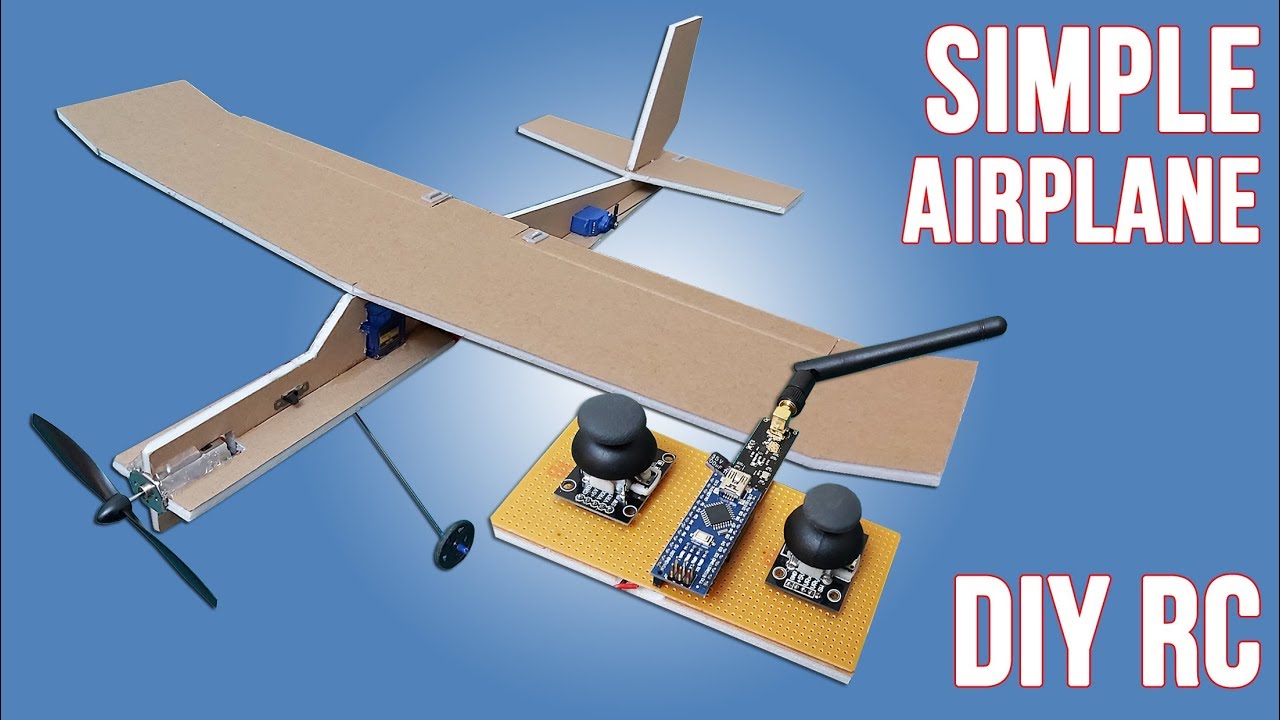
If you want to have fun with building a flying vehicle within a limited developping time I recommend building a fixed wing RC-plane with self-stabilising design. = V-wings.
Because in most of the tutorials, two boards are used, so i thought it was needed for data processing from both sides.
I dont know if it is possible with only one board.
if you have any reference/tutorial that uses one arduino board and nrf2401l+MPU, sharing would be so helpful to me.
i never knew that Atmega328P is not so powerful. thanks for providing the specifications
The reason i chose quad instead of wing plane is I thought it would be easier to control the stable hovering quadcopter than the rapid flying RC plane (without FPV it will be so difficult). and i also have some specific requirement of using drone.
and it's not that i want a full program from someone. almost full of it is readily available on the internet, i just need some direction to modify it to implement MPU.
I think that Joop Brokking on Youtube does everything that you are asking for. He starts with an Arduino with stabilisation (MPU6050) and remote control and then moves up to an STM32 that is able to hold position. The components he uses are the cheapest available for the job and he also shares all his code and designs.
On top of that you will not find many people that give such an extensive and clear explanation of how the code and designs work.
Tell that to my quadcopter that has stabilisation if I choose to turn it on, but spends most of its time flying with it turned off as that is the best way to fly freestyle aerobatics
What does happen between the sticks and the motors?
Ppl fly acro or rate mode alla time, there is no stabilization of orientation, but the gyro is still mediating and allows control for rotation rates.
If you are flying by directly controlling the speed of the four motors, you can color me very impressed!
For a noob flyer, there is no (zero) chance of flying without at least a gyro, and she would be better advised to start with a gyro and accelerometer for fully stabilized flight.
To be clear, I am not, but one man's acro mode is another man's control nightmare.
Which rotation rates do you have in mind ?
I suspect that what most people are aiming for is the sort of stability provided by DJI camera drones and I have dabbled in that area too. GPS, RTH and waypoints is a very different kettle of fish
Yes, sry. I accept that to say stabilized means flying in so-called stability mode, that is fully stable hands off DJI style operation of a quadcopter.
I say "operation" because I refuse to call that flying.
In rate (acro) mode, the control system enforces the flyer's control inputs to maintain the desired rate of rotation about the aircraft's three axes, i.e. pitch, roll and yaw.
If it were further the responsibility of the pilot to be in the feedback loop controlling those rates, I submit that flying would be impossible extremely challenging.
There is no hands off flying in acro mode that does not very soon lead to a crash. As orientation is not the control output, it is inevitable that the vehicle would begin to deviate from the steady state, no matter the rates being held constant, zero rotation all three axes. Sticks at neutral, save throttle.
Crashing in acro mode happens enough even with hands on. At least in the beginning of a pilot's experience with it.
These days simulators are good enough so that the expense of learning how to fly rate mode can be very significantly reduced.
But
basically, he is using ready-made market controller which i don't want to (i want to use nrf2401l for transmitter and receiver as per my requirement)
which should only mean you have to understand his software to the level of being able to substitute some numbers to come from your NRF24L02 instead of the Flysky.
Which level of understanding it would behoove you to have even if you were slavishly duplicating his entire design.
very carefully tweaked parameters of the stabilisation algorithm
a lot of knowledge about how PID-stabilisation works.
@UKHeliBob who seems to have experience with quadcopters.
(Me myself I'm only flying fixed wing and a Safe-stabilised quadrocopter from Horizon)
my expectation / assumptions are:
On the way to become such an expert and having tweaked the parameters
you will crash your quadcopter mimimum 10 times.
And I wouldn't be astonished if you would crash it 50 or 100 times.
Is this realistic or will it be easier?
To come back on fixed wig flying:
depending on the model-design and the modelsize a fixed-wing airplane can fly slow
and have flight.properties that are very forgiving.
A quadrocopter becomes only "forgiving" IF the stabilisation works first class!
Without a carefully tweaked stabilisation it is very very challenging.
The design of your quadcopter should include a cage that protects all propellers in all directions and be stable enough so the quadcopter could crash out of the sky in any attitude from any height.
A small fixed wing plane with a size of 20 to 30 inch with V-shaped wings is self-stabilising
and rather slow. As long as wind is slow it will fly great.
But it is a completely different kind of how to move the sticks for flying.
You will have to make some very fundamental decisions:
investing a lot of time (more than 100 hours) to learn programming, specialised software-developping flight-stabilisation, coping with the not so very well performance of a NRF24-tranceiver
and
spending a good amout of extra money for replacing components of a crashed quadrocopter
.
or
.
spending money on some components for a fixed wing airplaine
building the plane and software maybe in 50 hours
.
or
spending money on buying a ready to fly quadrocopter
Actually I have already bought NRF modules when I went to market and also it supports some other projects that i want to perform, so need to stick to it.
Sure, why not? Many toys use that radio set. Sometimes a cheap knockoff, but it gets the job done. Though I am not aware of any "real" quadcopters that use it, there is nothing that would keep it from working.
Flysky uses the A7105 radio set. FrSky uses the CC2500. At a far enough remove, they function identically.
My point if you missed it is that the radio part is entirely a separate problem from what is the PID loop that the transmitted values are used.
So you should be able, in a well-designed program, find and transplant the communication link and make it use your own transmitter and receiver in favor of the Flysky commercial unit.
It looked like several of the videos you linked for me were concerned mostly with getting that part (remote control) working.
In all cases, it is good to verify separate parts to be sure they are working plausibly before combining those parts.