Microchip has some interesting new AVRs in DIP28 packages - the sort of thing that theoretically you can prototype with in an Uno-like board, and then remove and put into a standalone project. Or that you can build an entire Arduino-like project on a protoboard, or with wirewrap. Like the ATmega328p on an Arduino Uno.
However, DIP packages are larger, have fewer pins, and are more expensive than their more modern SMT equivalents.
A board with a (removable) DIP microcontroller is important.
+1. Don't get stuck in the past.
You only need a few tools to make working with SMD a lot easier.
A hotplate and rework station could cost you less than $200.
Leo..
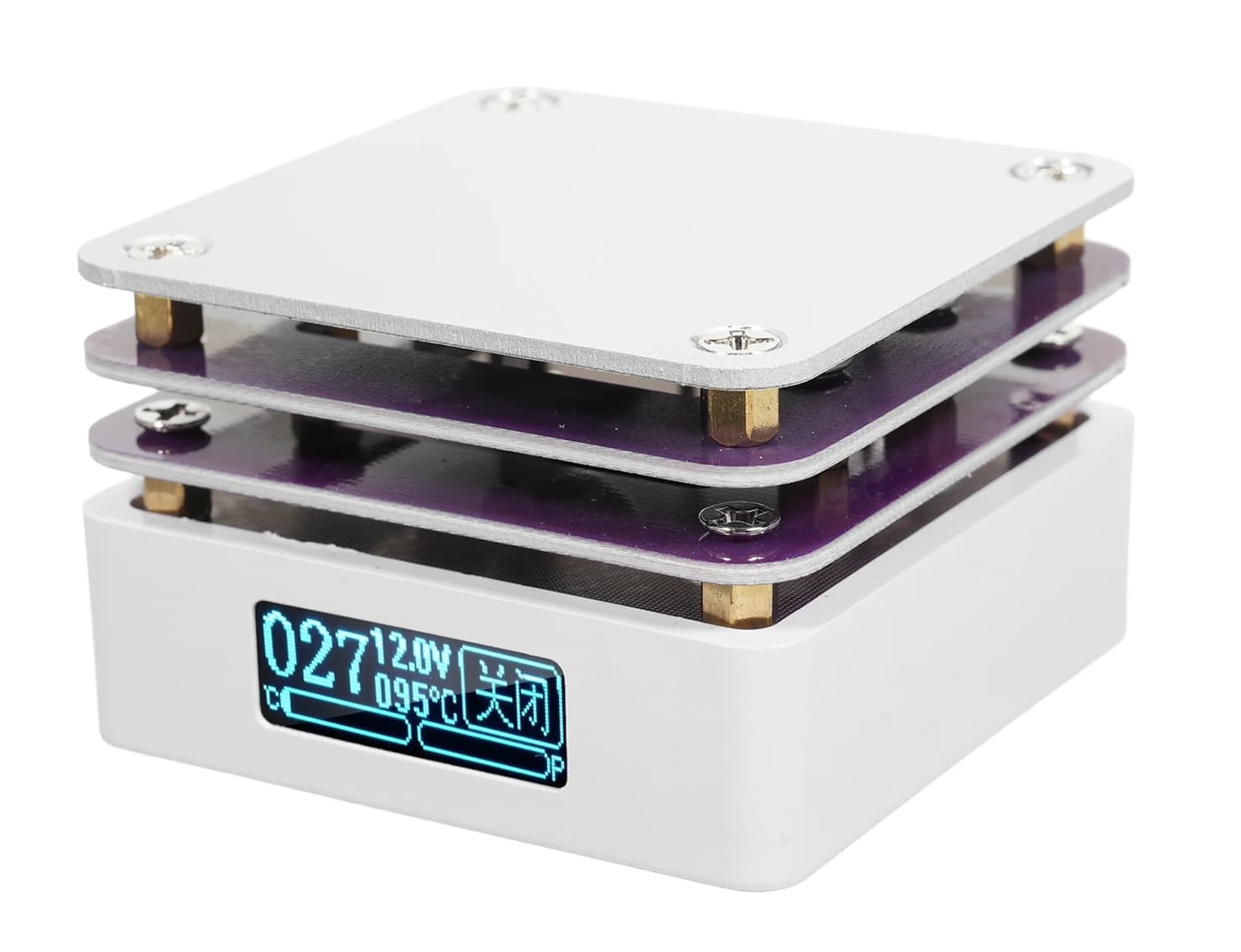
After purchasing a cheap hotplate ($3 on Aliexpress) I loved soldering SMD elements, even small ones like resistors and capacitors 0603 & 0805.
I simply put them onto the solder paste and place board on the heater; precise positioning and holding are not needed - they themselves fall into place under the influence of the surface tension when the solder melts.
Isn't the future just throwing your design into a simulator then sending the board layout, schematic and bill of materials to an JLCPCB or similar board/assembly house ? Maybe some AI could do a better job of the board design than anyone here and maybe also create the schematic from a short text description of the application and why not also write the code?
In the short term, I'm quite happy to work with hand solderable SMD components ( ICs if the pitch size > 0.5mm or >= 0805 passive components). I don't always breadboard a design, especially if I am familiar with the chips or convinced I understand the data sheet, and PCBs are so cheap that you can make the first edition easly hackable say with solder jumpers to isolate sections and no tracks under soldered packages.
Just been looking at some youtube videos on hot plate soldering when I saw this discussion. That plate that @b707 linked to is about 70mm square which looks a good size for what I might do at around 100mm square.
There's another one on aliexpress that is only 55mm square (ish) for around 10 GBP which although looking slightly more user friendly, but may be more of a toy due to the smaller plate size:
I'm at the same stage as @6v6gt - happy to hand solder 0805s (sometimes 0603s) and ICs with >0.5mm pitch. I'm circling the SMD tools world and my hobby could go either way.
Having started out with DIP in 1980s I was firmly in the DIP camp until a colleague designed an SMD board for a project we were doing. Having to do some rework on it, I had to venture into SMD techniques. I learnt not to fear SMD, and with the right tools, is actually quite easy - although there are levels of difficulty.
Having bitten the bullet, for a decade or two I have been SMD. For "easy" SMD devices I found the only tool I really need is a long working distance binocular microscope, which works for 0805, 0603, SOIC devices. I still use soldering irons and solder. At a pinch I can do TSSOP, LQFP. QFN are a little challenging. I have not attempted very fine pitch or BGA.
Ironically with failing eyesight I need magnification even for 0.1 pitch PTH parts, so if I am using the microscope for those it is actually more convenient to do SMD.
I have never really done breadboard stage anyway, so that is not a factor for me. I also learnt Kicad to do DIP boards, so transition to SMD boards was quite easy.
I've learned to use SMD as a result of reading about techniques on this forum and watching videos. To anyone who's not tried: it's a lot easier than you might think.
I ought to buy an oven, in the mean time I have successfully used a frying pan. Put the board in the pan, heat slowly until the solder melts, turn the heat off and cover the pan, leave to cool down slowly.


 But I didn't designed a PCB yet