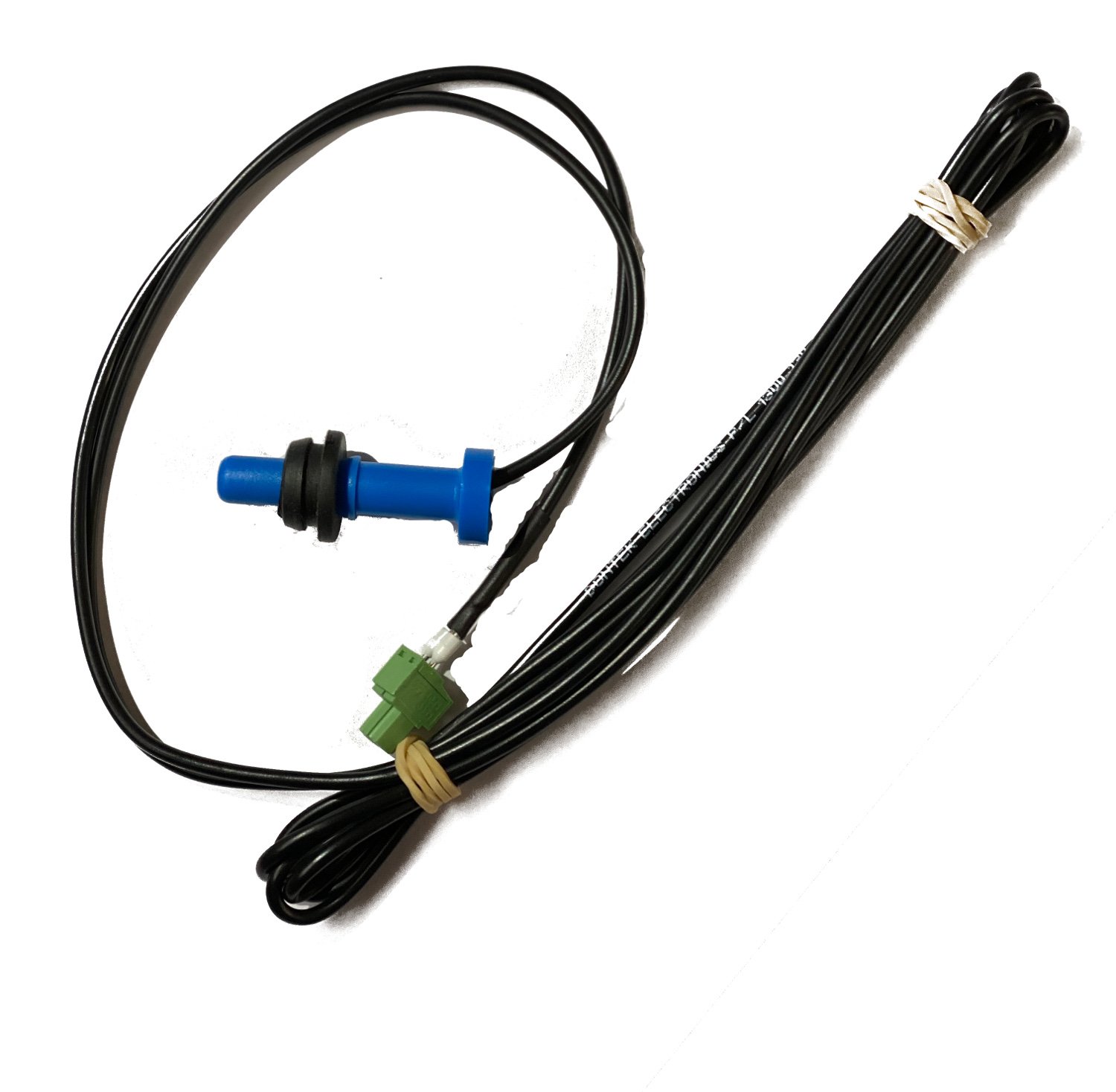
To the poster above worrying about me electrocuting myself, I assure you I am appropriately fearful of 240v systems and don't do anything which would have risk of harm to me or anyone else.
jremington:
Since the probe is advertised to be digital it may well contain something like a DS18B20 sensor, operating on "parasitic power", which requires only two wires: (power/signal and ground). The ~6K resistance you determined is consistent with that possibility. To be sure, connect an oscilloscope across the two leads when the controller is in action, and you will see the bits.
If so, you need a microprocessor like an Arduino Uno to read it out, and it can't be used in parallel with the original controller. Lots of material on line if you google "arduino ds18b20".
First up thanks for your help, thoughts and comments so far, it really is appreciated! I don't think I can get my hands on an oscilloscope but I will cast the net amongst friends.
My current platform is a Wemos D1 mini (ESP8266) which is working well for me as it has a reasonably mature ecosystem of configurations, codebases, etc
The possibility that it is a DS18B20 sensor is something that I was looking into but hadn't figured out the 3 wire -vs- 2 wire thing so it is interesting that you have suggested that it could be one running parasitic power. This is quite helpful as it gives me another avenue to explore and attempt to understand.
To streamline trial and error a bit more, I wired in some jumper leads so they are parallel to the existing connector so I can leave it in it's original configuration as possible.
I did some more tinkering this morning and:
-
checked to see if there was any voltage coming from the sensor socket on the pool controller and it showed .07v with the multimeter set to 20v, I'm not sure what this means but it is more info I guess.
-
I flashed the tasmota-sensor firmware and plugged the sensor/thermistor (tba) into the wemos d1 mini gnd and gpio14 but couldn't get it to work in a variety of configurations. There is mixed info as to whether a pull-up is needed, but regardless I couldn't get a reading out of it after 20-30 minutes of trying.
Save the Earth One Resistor at a Time – External pull-up resistor no longer needed for DS18B20 temp sensor | josh.com
In regards to 'can't be used in parallel' that is good info, I didn't think of that. Once I know if it is a ds18b20 or not I will know my next steps. I guess if it is, my options are to install another sensor or consider putting it in a serial configuration - which could be too ambitious...
I'm off to the over-priced electronics store this afternoon to get a 'real' ds18b20 sensor and a breadboard. They unfortunately only have 3 wire version of the sensor and it is not for water but will help me get closer to having a valid-working configuration to help work through the unknown configuration.