Hi people,
i have made a drone, but using an Arduino as a flight controller. Whatever, I like to control my Drone using the PC and 2 nrf24l01, one connected to an Arduino (connected to PC) and the other one in Drone.
searching for it I found a tutorial to make you own transmitter and receiver in this video:
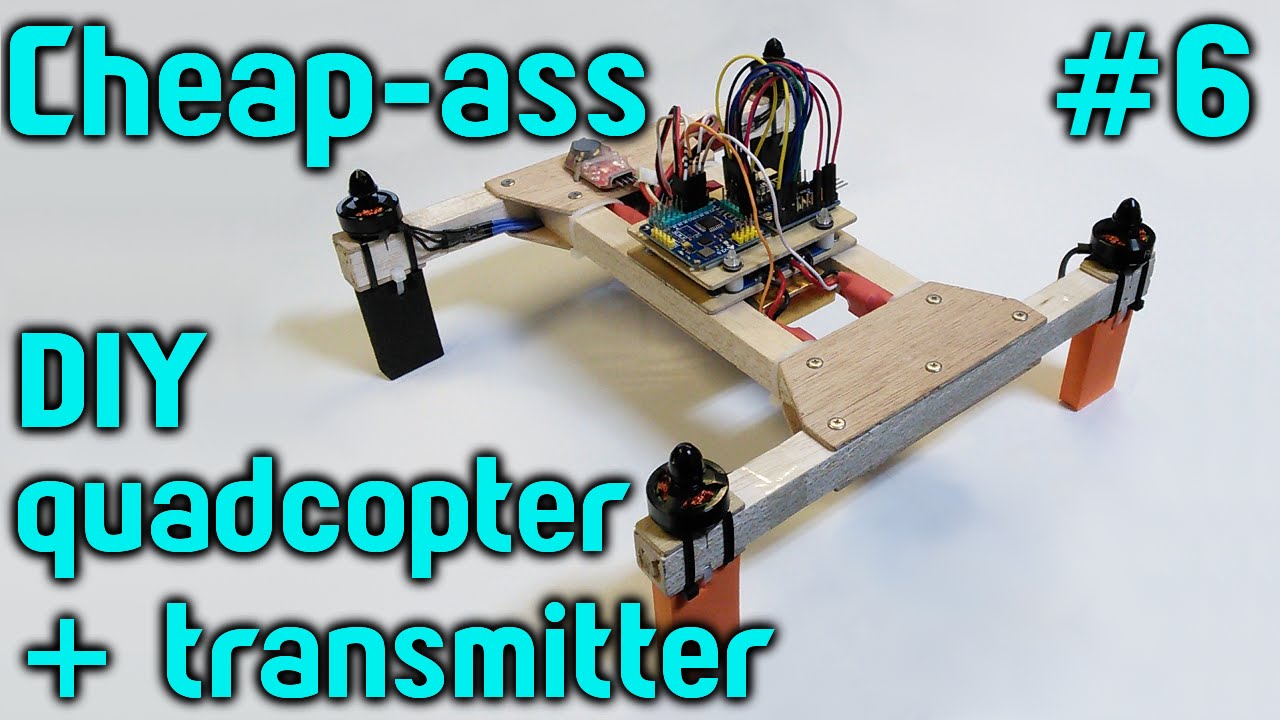
Then I take it as bases of my project.
I can send the information from the Arduino (transmitter) to the Arduino in drone, but I don't know how I can read the information and transform it into an output PPM signal.
I do something, but it doesn't work.
This is my transmitting code, that should read the values from each of the 4 channels and transmitting to the other nrf:
/*
A basic 4 channel transmitter using the nRF24L01 module.
*/

#include <SPI.h>
#include <nRF24L01.h>
#include <RF24.h>

const uint64_t pipeOut = 0xE8E8F0F0E1LL;

String inString = "";    // string to hold input
int cd,num,pcd,rpw,vall=0;
int val01,val2,val3,val4;

String ch ="";
RF24 radio(9, 10);

// The sizeof this struct should not exceed 32 bytes
struct MyData {
  byte throttle;
  byte yaw;
  byte pitch;
  byte roll;
};

MyData data;

void resetData()
{
  data.throttle = 0;
  data.yaw = 127;
  data.pitch = 127;
  data.roll = 127;
}

void setup()
{
  radio.begin();
  radio.setAutoAck(false);
  radio.setDataRate(RF24_250KBPS);

  radio.openWritingPipe(pipeOut);

  resetData();

Serial.begin(115200);
   while (!Serial) {
    ; // wait for serial port to connect. Needed for native USB port only
  }
  // send an intro:
  Serial.println("Ready");
}


void loop()
{
 readint();
calcRPY();
cal();
}


void readint() {
  // Read serial input:
  while (Serial.available() > 0) {
    int inChar = Serial.read();

    if (isDigit(inChar)) {    inString += (char)inChar;   }

    if (inChar == '\n') {   cd=inString.toInt();
      inString = "";
    }}}


void calcRPY()
{
  if (cd!=pcd)

  if(cd>0 && cd<5)              { rpw=cd; }
  else if (cd>5 && cd<1025)     { vall=cd; }
pcd=cd;
  }


void cal()
{

switch (cd)
{
 case 1:
  val01=vall;
 data.throttle = map( val01, 0, 1023, 1000, 2000 );Serial.print("throttle=" ); Serial.print(val01);Serial.print(" yaw=" ); Serial.print(val2);Serial.print(" pitch=" );Serial.print(val3); Serial.print(" roll=" );Serial.println(val4);
 break;

case 2:
 val2=vall;
data.yaw      = map( val2,  0, 1023, 1000, 2000);Serial.print("throttle=" ); Serial.print(val01);Serial.print(" yaw=" ); Serial.print(val2);Serial.print(" pitch=" );Serial.print(val3); Serial.print(" roll=" );Serial.println(val4);
 break;

case 3:
 val3=vall;
 data.pitch    = map( val3, 0, 1023, 1000, 2000);Serial.print("throttle=" ); Serial.print(val01);Serial.print(" yaw=" ); Serial.print(val2);Serial.print(" pitch=" );Serial.print(val3); Serial.print(" roll=" );Serial.println(val4);
   break;

case 4:
val4=vall;
  data.roll     = map( val4, 0, 1023, 1000, 2000 );Serial.print("throttle=" ); Serial.print(val01);Serial.print(" yaw=" ); Serial.print(val2);Serial.print(" pitch=" );Serial.print(val3); Serial.print(" roll=" );Serial.println(val4);
    break;


  }

  radio.write(&data, sizeof(MyData));

  }
And this is my Receiver code, but it doesn't work, actually, i want to know what should I do to white the
PPM information on PINS 5,4, 7 and 8 that I need to contro my drone.
/*
A basic receiver using the nRF24L01 module to receive 4 channels and convert them to PPM.
 */

#include <SPI.h>
#include <nRF24L01.h>
#include <RF24.h>

////////////////////// PPM CONFIGURATION//////////////////////////
#define channel_number 4  //set the number of channels
#define PPM_FrLen 27000  //set the PPM frame length in microseconds (1ms = 1000µs)
#define PPM_PulseLen 400  //set the pulse length
//////////////////////////////////////////////////////////////////

int ppm[channel_number];

const uint64_t pipeIn =  0xE8E8F0F0E1LL;

RF24 radio(9, 10);

// The size of this struct should not exceed 32 bytes
struct MyData {
  byte throttle;
  byte yaw;
  byte pitch;
  byte roll;
};

MyData data;

void setPPMValuesFromData()
{
  ppm[0] = map(data.throttle, 0, 255, 1000, 2000);
  ppm[1] = map(data.yaw,      0, 255, 1000, 2000);
  ppm[2] = map(data.pitch,    0, 255, 1000, 2000);
  ppm[3] = map(data.roll,     0, 255, 1000, 2000);
  ppm[4] = 1000;
  ppm[5] = 1000;
}

void resetData()
{
  // 'safe' values to use when no radio input is detected
  data.throttle = 0;
  data.yaw = 127;
  data.pitch = 127;
  data.roll = 127;

  setPPMValuesFromData();
}


/**************************************************/


void setup()
{
  resetData();


  // Set up radio module
  radio.begin();
  radio.setDataRate(RF24_250KBPS); // Both endpoints must have this set the same
  radio.setAutoAck(false);

  radio.openReadingPipe(1,pipeIn);
  radio.startListening();
}

/**************************************************/

unsigned long lastRecvTime = 0;

void recvData()
{
  while ( radio.available() ) {
    radio.read(&data, sizeof(MyData));

    CH1=data.throttle
    CH2=data.yaw
    CH3=data.pitch
    CH4=data.roll

    lastRecvTime = millis();
  }
}

/**************************************************/

void loop()
{
  recvData();

  Serial.print("CH1:"); Serial.print(rc_values[RC_CH1]); Serial.print("\t");
  Serial.print("CH2:"); Serial.print(rc_values[RC_CH2]); Serial.print("\t");
  Serial.print("CH3:"); Serial.print(rc_values[RC_CH3]); Serial.print("\t");
  Serial.print("CH4:"); Serial.println(rc_values[RC_CH4]);
  unsigned long now = millis();
  if ( now - lastRecvTime > 1000 ) {
    // signal lost?
    resetData();
  }

  setPPMValuesFromData();
}

/**************************************************/

//#error This line is here to intentionally cause a compile error. Please make sure you set clockMultiplier below as appropriate, then delete this line.
#define clockMultiplier 1 // set this to 2 if you are using a 16MHz Arduino, leave as 1 for an 8MHz arduino
thanks, everyone.
I pretend poste here the project when it's finished.
