I am thinking what if these sensors (the chip itself) are bad. Today it is quite humid (88%), they get somehow saturated from the environment and start failing. These are from AliExpress. Chinese are capable of all sorts of scams. Maybe these sensors are a batch that did not pass a QA and got thrown out - idk.
SHT should be from Sensirion - a Swiss company. I am confident they wold make a proper sensor. Chinese on the other hand are capable of all sorts of naughtiness, even faking such sensors - although this one does not seem fake (at least not visually under close-up).
The sensors being fake is definitely a possibility or even likely. That this would result in the kind of problems you witness, I'm not so sure about. Generally Chinese counterfeits are functional, but their performance is quite far below the genuine product.
It doesn't look very good to me, sorry.
This explains a lot. That's lead free solder. Very noble/responsible, but unfortunately also quite tricky to work with. You're better off with a regular Sn/Pb solder. Velleman makes a good 0.8mm diameter rosin core solder. It's 60/40 tin/lead. Give it a try.
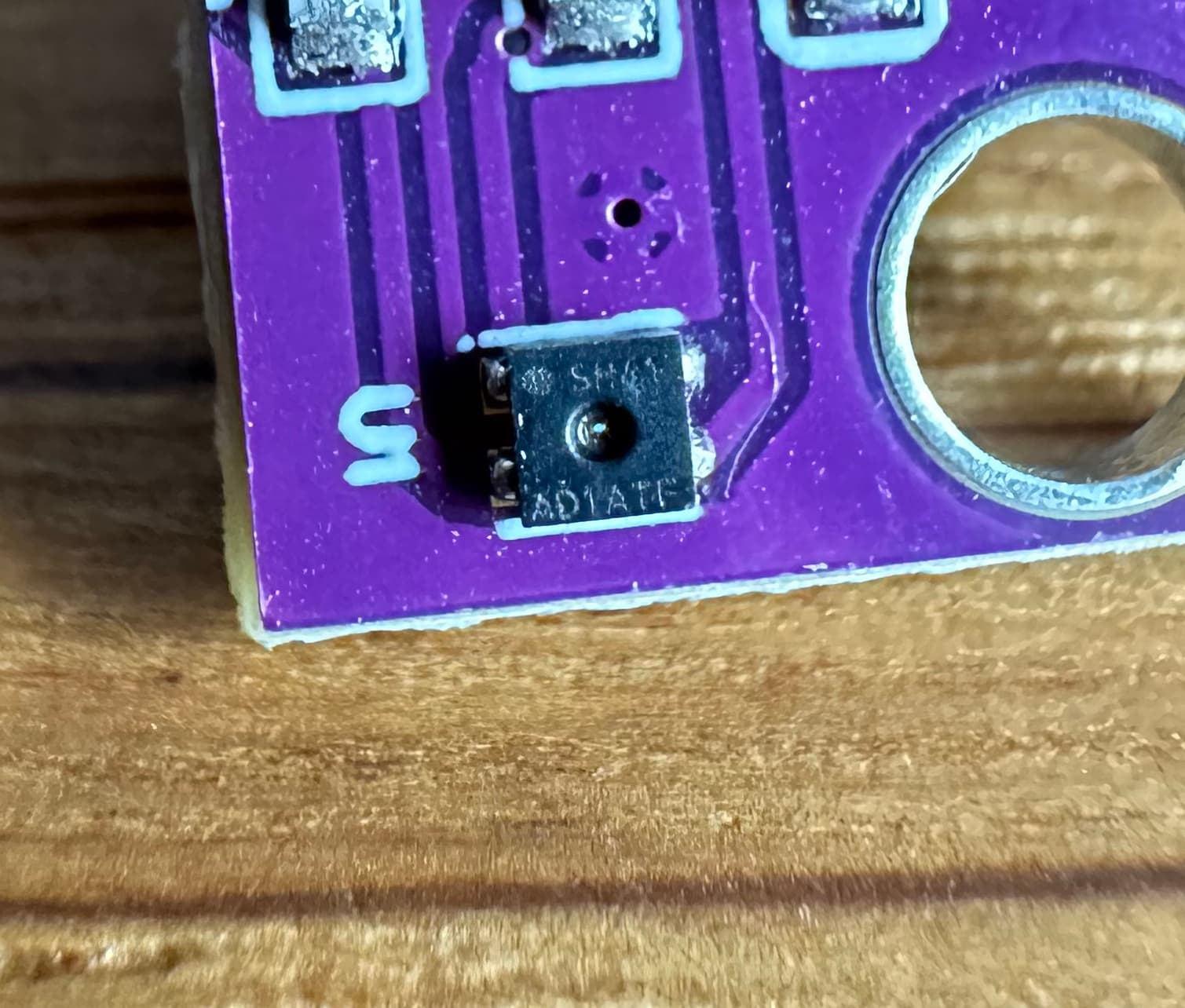
I made some closeups of sensors:
"Bad" one:
"God" one:
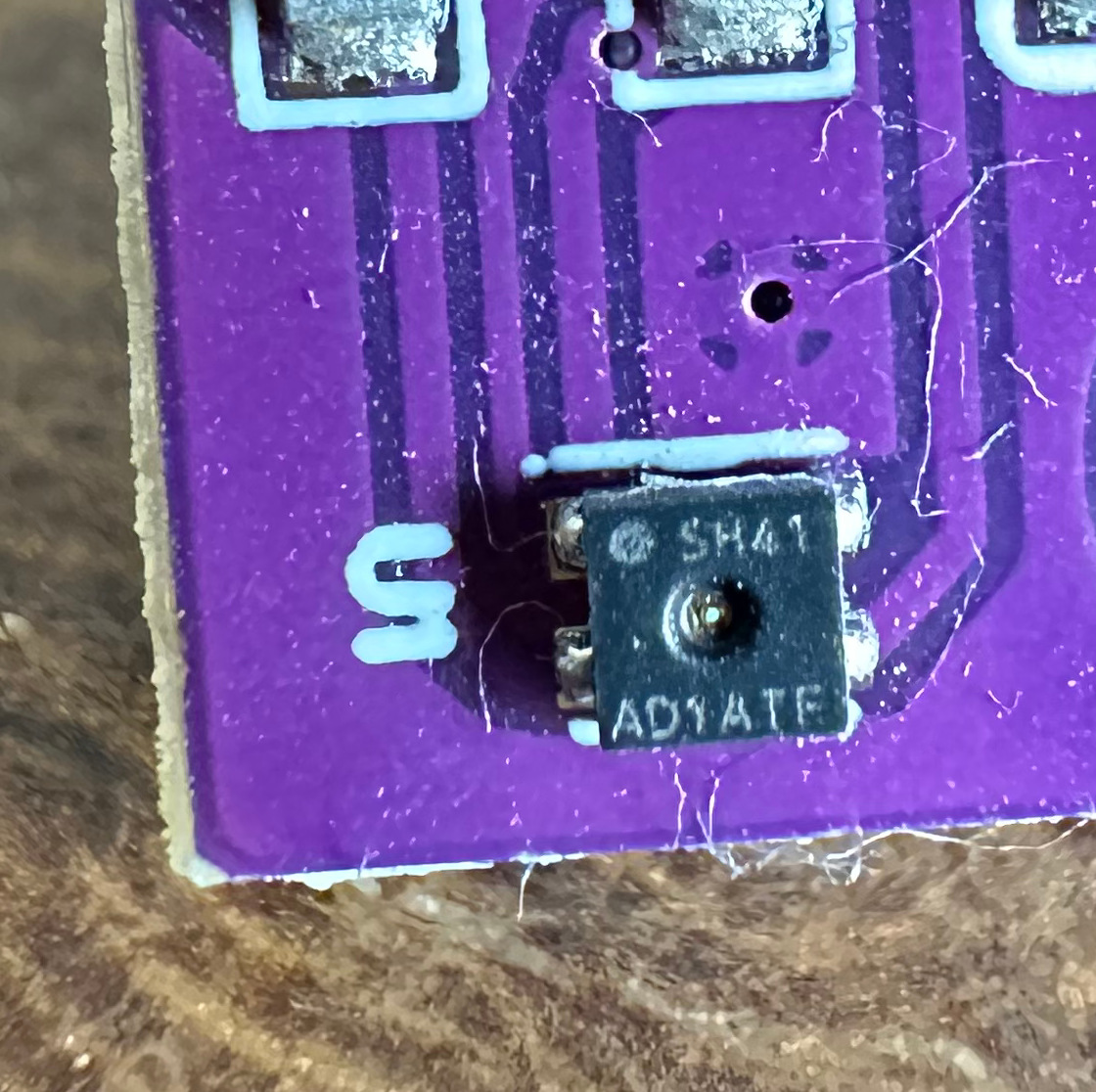
The "bad" one seems to be like squished a bit on the top right.
Sensor spec:
Do you know any good source for buying such sensor boards?
I went for SHT, because, I have received bad BME280 before i bought SHT. One was showing 55% humidity, second one 75% and the third one 100%  . I read in the BME280 spec, that this happens if it was overheated or long time in humid, and you need to recondition it in oven. Pages and pages of this issue: bme280 stuck at 100% - Google Search
I want to avoid that, as my sensor will be in high humid environment occasionally, that is why I went with SHT, as it should self correct if exposed to high humidity.
Take your choice
They look identical to me.
So far, everything I've bought from any supplier has worked just fine, with the exception of 5 pcs. of MCP23017 bare chips (not modules) that somehow didn't do anything at all. Based on that experience, my answer would be "anywhere".
Humidity sensing is fickle by definition.
Having said that, between the DTH20's and BMP280's I've got running here at home (approx. 2 years uninterrupted), I'm quite surprised at how closely the readings seem to correlate.

The top trace is on the ground floor, the center traces are adjacent spaces on the first floor and the bottom two traces are on the second floor of our home. For a "put them there and forget about it" device, I'm amazed at how well they've been holding up.
All Chinese modules bought through AliExpress. They're likely "counterfeit" if you ask people on the forums.
My experience with DS18B20 temperature sensors (which I know for a fact that mine are counterfeit) is similar: they work quite well, apart from an evidently and demonstrably lower accuracy - which for my application doesn't make hone hoot of difference anyway.
So what can I say - I'm a poor reference for the kind of problem you're apparently trying to solve. I'd be inclined to follow @jim-p's advice and just buy from a reputable vendor, with Adafruit being an obvious choice.
The bad news is that any low-end humidity sensor will go belly-up under these conditions sooner or later (usually sooner). The best you can do is stockpile them and swap them out once they become dodgy. If your project relies measuring humidity levels >90% for extended periods of time, then the only real option is to look into other sensing systems that are robust under such conditions. You're looking at one or two orders of magnitude higher prices in that case.
Note in the problem descriptions how many of these use cases boil down to some kind of weather station application where the sensor lives in an outdoor environment. This exposes them (in many climates at least) to extended periods of 100% RH, which destroys these sensors. Note what the BME280 datasheet says on stability:

Note the 10-90% RH range for which this stability is given, which also implies that beyond this range, all bets are off.
In general, sensors of this type (MEMS devices) are inherently sensitive to prolonged exposure to high RH environments due to problems of corrosion, deposition of pollutants etc. that all degrade sensing performance.
It's just a very sensitive kind of device, and most people don't realize this.