Arduino pro min 3.3V, photo machen und über Wlan auf Onedrive hochladen

Hallo.
Kann mir vielleicht irgend jemand helfen um mit einer 18650 Lithium Zelle, einen Arduino zu benutzen, um ein paar Fotos zu machen, und diese über Wlan zu Onedrive hochzuladen?

Ich denke dazu wäre ein Arduino pro min mit 3.3V perfekt geeignet, dann bräuchte es keinen Step Up Wandler, so wie ich das sehe. Denn es sollte am Schluss auch sehr Energiesparsam sein, also im Sleep Zustand nicht gross mehr als 1mA verbrauchen.

Aber welche Kamera, und vorallem welches Wlan Shield nehme ich am besten, das mit 3.3V läuft? Gibt es da überhaupt ein einzelnes Shield zu einer einzelnen Kamera? Oder bleibt sowieso nichts anderes übrig als ein ESP32-Cam mit dem Arduino zu kombinieren? Geht das wenigstens?
Und wie würde man dann ein Foto machen, und zu Onedrive hochladen? Und ist es auch möglich, ein Foto mit niedrigerer Auflösung zu machen (zwecks Datenersparnis und Vereinfachung von ->), und irgendwie an die RGB Werte zu kommen, für jeden Pixel des Bildes?
Soweit ich gesehen habe wäre das ein raw Format, kann man daraus die RGB Werte herausfinden, und in Variablen speichern? Oder kann man es allenfalls in ein .bit Format umwandeln, denn dort sollte es ja funktionieren?

Wäre nett wenn mir jemand helfen könnte bei dem, denn das ist für mich ein sehr grosses Projekt, da ich noch nie so etwas auf einem Arduino gemacht habe, und auch sonst nicht viel auf einem Arduino kann...

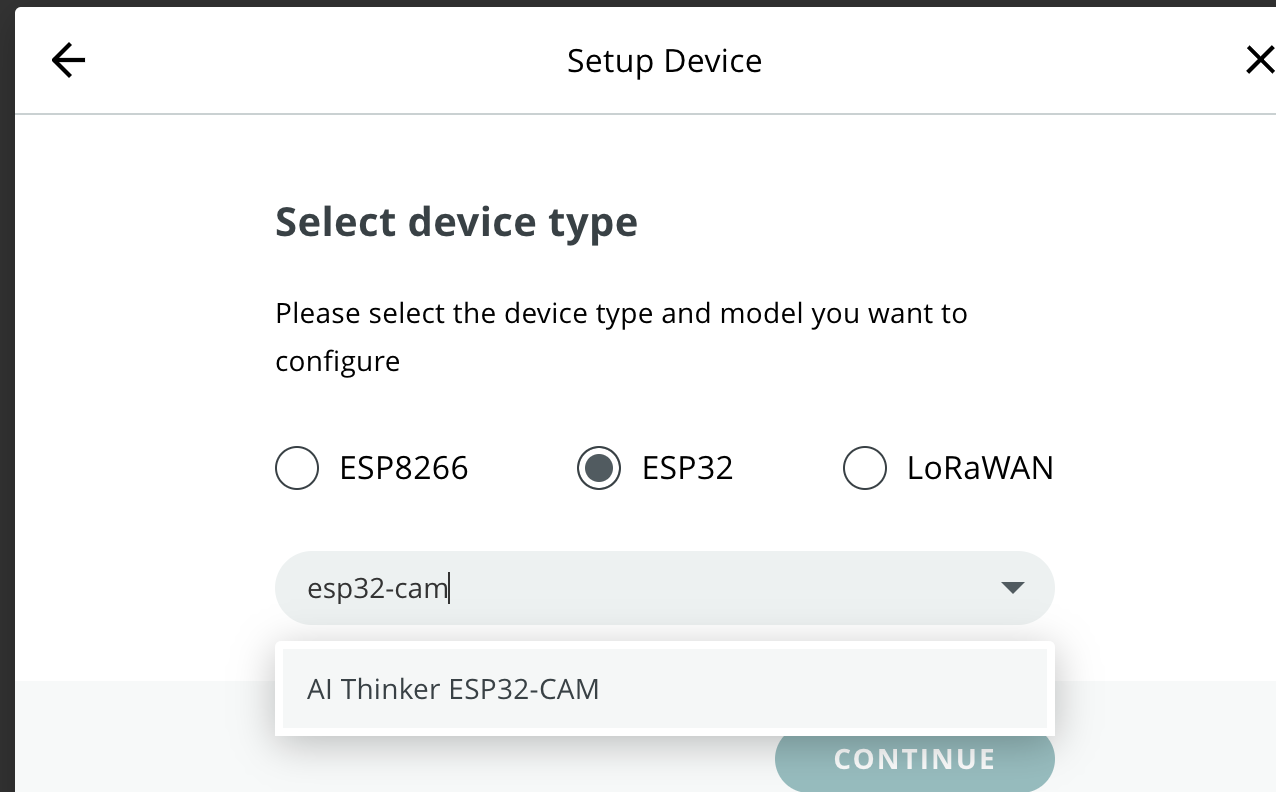
Why do you need an Arduino, the esp32-cam can take pictures, and it has WiFi. Make sure to get the MB version, or you will hate it. This is a challenging project, and I am not even considering all the other comments re RBG and bits. Maybe look into the randomnerdstutorial (just google that) under esp32-cam. I attached a screen grab of some of their content.

Hello, thank you for the first hint with the MB board for the esp32-cam, that's a good option.
I want to use it with an Arduiono, because i want also to control a few servos, use multiplexor and maybe other sensors, and i read the esp32 has strange analog inputs, that are not so precise as on the Arduino, or need special attention, and in generally the esp32 should be not so easy and user friendly as the Arduino, and i am already not so good with the Arduino, so a more troublesome Arduino is not what i want... I would actually prefer an Arduino with Camera and Wifi Shield, if that is possible and not much harder to do. But it doesn't even look good for a 3.3V wifi shield...

And i can see about the randomnerdstutorial tomorrow, thank you for the hint.

Some Arduinos come with WiFi builtin, sono need to add another WiFi. Cameras for Arduinos are pretty much limited to the Arducam lineup of SPI cameras.

So after much googling and thinking, i come to the conclusion, that the arduino nano 33 iot would be the best solution. And then use a 3.3V step up / down converter, to run it over the 3.3V pin. And then the arduino should be possible to deep sleep around 5mA or less, has wifi and can upload a file ore picture to the arduino cloud, from where i can download it to my computer. Can somebody confirm that this is all correct, and should work so?

And with the camera, it seems to be also not so easy. It seems that if even a camera exist and work with the nano 33 iot, the nano could only make photos in the range around 180X240 Pixel or a little bit less or more, because it has not much memory. Am i right about that? So it could not even save it on a sdcard, and still take a picture in less than 1s?
So it seems that i would use at best such a esp32-cam, this should make good photos in fast time (something around 720p and 12fp/s). Right?
But what is then with the power consumption, when the arduino nano 33 iot is in deep sleep mode? Is then the esp32-cam of? Can i power it through the nano with 3.3V?
I read everywhere the esp32 is buggy, can not sleep properly...

And how would i then make a photo, with the arduino and the esp32 on top of it? how would i upload it to the cloud? The esp would have to send it to the nano, and the nano would upload it. But that makes also not so much sense, if the esp32cam has already wifi and the photo on itself, so what should i do, if i want as much a normal arduino as i can?
Should i better use a arduino pro mini with 3.3v and it's raw 3.3V input, on that you can aplay a voltage between 3.4 and 12V with the esp32cam for wifi and camera? That would also make sense... But how do i combine an arduino with esp32cam only as subordinated unit? Do i have to use this two boards as they would be two arduinos? Programming both, to work together? But what is then with the not properly working sleep mode of an esp32cam, the esp32 sounds so strange and not properly working...

Meinst du nicht wir sind im Deutschem Teil des Forum?
Wenn du jedoch weiter Englisch schreiben willst las das in International verschieben.
Danke.

I will try to reply in no particular order to your confusing post.
The NANO 33 IoT is most easily powered via it's USB plug.
The NANO does not have enough memory for pictures. Just connect the esp32cam to the cloud directly.
esp32 isn't buggy and sleeps well.
Ok, I stopped reading. I have no idea why you think you need two MCUs. I have attached a screen grab of how you would connect the esp32-cam to the Arduino cloud.

Blockquote
Meinst du nicht wir sind im Deutschem Teil des Forum?
Wenn du jedoch weiter Englisch schreiben willst las das in International verschieben.
Danke.

Ja, aber es schreibt ja niemand sonst auf Deutsch, ich kann ja nicht mit sonofcy auf Deutsch schreiben wenn er Englisch redet...

@sonofcy
Ok, so if i need photos, i need an esp32 with cam.
Is it possible to use the Arduino Nano Esp32, with a OV2640 Cam? I can nothing find about this configuration, because i always find only the Esp32-Cam, nothing about the Nano-Esp with a cam. Can i connect such a cam with it's tiny cable band to the Esp on the Arduino? Or do i need a OV2640 cam with pins, and connect it in that way?
Also, what does this Arduino have for analog inputs? Are they the normal Arduino analog inputs, or are that the special analog inputs from the Esp32?

On step 5 and 6, it is said about the not working sleep mode.
And on this thread:

Also the Nano-Esp32 sounds not properly working, everything i read about the Esp32 sounds strange and not properly working, or needs special attention.
But i realized, there are many different Esp32 Boards, i do not know what board is the original or the one all do talking about.
But i would like to use in anyway the Arduino Nano Esp32, with a OV2640 Cam. Is that possible, or is the capability to make photos with such an Nano Esp lower, than with a Esp32-Cam?

The NANO ESP32 is a special purpose board. It is NOT a camera. There are other camera boards, you can find them by going into the Add Device dialogue on the Arduino Cloud to see what is available. All analogue inputs are basically the same. As far as your thinking the esp32 (sold in the millions) is somehow broken, you need to read more carefully. The very low sleep numbers are for the ESP32 CHIP, the dev board has a lot of power hungry things like LEDs and WiFi. Those parts are EXTRA. NO it is not possible to add a OV2640 Cam, the Nano ESP does not have the needed connector.
I have said more than once that picking the hardware first is ALWAYS a mistake. Start over, define your project in words that are almost pseudo code, then somebody with decades of experience can tell you what hardware might work. I am now muting this conversation, I don;t think you will change your ways.

What? I want to test code with such a hardware combination, i know for sure that i want to make a photo, and upload it to a cloud, maybe the Arduino cloud is the best for that. But i don't know how i have to program it, if i would have the right hardware. But if i not even know, what for a camera, what for a wifi board, and what for a board itself, how can i then know, what i want to do with it? I simply want to make photos and upload it to a cloud, with an Arduino at best, but as it seems i need at minimum a combo of Arduino and ESP32.

So i hope i understand you right, the Arduino Nano Esp32 has the exact same analog inputs as a normal Arduino Nano, right? Not the inacurated analog inputs from the Esp32, that need special attention how to use and what pins you can use? (That is written again and again over the full internet).

And the Arduino Nano Esp32 has no such tiny connection band, ok. But can i then use the more expensive OV2640 cam with the pin-board?
Or exist a better cam for the Arduino Nano Esp32, that works similar to a ESP-Cam?

Vielleicht weiss ja sonst jemand ein paar Sachen zu den Fragen: Kann ich einen Nano Esp32 mit irgend einer Kamera nutzen wie ein Esp32-Cam?
Und ich hoffe ich habe das richtig verstanden, dass die Analog Inputs genau gleich sind wie bei einem normalen Arduino, und nicht die selben wie beim Esp32...

Falsch es sind ESP32 analog pins.
Nano bedeutet nur die Bauform und Pin Belegung, also normalern 3,3V ESP

Hi,
bei mir arbeiten die ESP32-S3 wroom n16r8 boards am zuverlässigsten. Bei den ESP32-CAM Boards habe ich ein paar mal in's Klo gegriffen, bzw bin mit den Pins und deren Belegung nicht klar gekommen.
Weil ich mit 2,4V Zellen arbeite, muss ich eh einen Step up verwenden und gehe auf 5V.
Die Kombi 3,7V Zelle (mit Zellschutzplatine) step up auf 5V und über 5V Solarmodul zum nachladen des Akkus funktioniert in einer Temperaturmessanwendung jetzt schon ein paar Jahre.

Ach ja: für das oben verlinkte Modul findest Du einige brauchbare Beispiele bei Freeenove, - die Module selbst auch.

Edit: Beispiele für "hochladen auf was auch immer" findest Du hier jeden Menge: https://randomnerdtutorials.com/projects-esp32-cam/

Blockquote
Falsch es sind ESP32 analog pins.

Aha, ok, gut zu wissen, danke. Dann gibt es nähmlich keinen Grund für mich, einen Arduino Nano Esp32 zu verwenden.

Blockquote
bei mir arbeiten die ESP32-S3 wroom n16r8 boards am zuverlässigsten. Bei den ESP32-CAM Boards habe ich ein paar mal in's Klo gegriffen, bzw bin mit den Pins und deren Belegung nicht klar gekommen.
Weil ich mit 2,4V Zellen arbeite, muss ich eh einen Step up verwenden und gehe auf 5V.
Die Kombi 3,7V Zelle (mit Zellschutzplatine) step up auf 5V und über 5V Solarmodul zum nachladen des Akkus funktioniert in einer Temperaturmessanwendung jetzt schon ein paar Jahre.

Ja ich dachte jetzt, ich nehme doch einen Arduino pro mini 3.3V und einen normale Esp32-Cam. Weil dann kann ich mir vielleicht den Step Up / Down Wandler sparen, und den Arduino mini gleich an die 18650 Lithium Zelle anschliessen (von Panasonic, die jegliche Schutzelektronik haben sollte), über den raw Pin, der Spannung von 3.4V - 12V nutzen kann. Vielleicht funktioniert es ja auch etwas unter 3.4V noch, ich glaube ab 3V hat so eine Zelle sowieso nicht mehr so viel Leistung übrig.
Und wenn es doch nicht so gut funktioniert nehme ich halt noch einen Step Up / Down converter auf 3.3V.
Zum Arduino pro mini 3.3V wird auch immer wieder beschrieben dass er im deep sleep modus einen Stromverbrauch von um 1mA haben sollte (evtl. mit leichten Modifikationen, wie LED weg löten), das wäre sehr passend.

Und ich dachte jetzt ich nehme mal eine normale Esp32-Cam, und nutze sie einfach nur für Fotos und Hochladen, und kommuniziere über Serial mit dem Arduino mini. Das ist glaube ich am einfachsten für den Anfang, und wenn ich dann sehen würde, ich kann alles auch mit dem Esp32 alleine machen, dann ist ja super und ich kann den Arduino mini vielleicht für irgend etwas anderes verwenden, und wenn nicht kann ich alles was beim Esp32 nicht geht mit dem Aruino mini machen.

Der Esp32 sieht für mich eben schon auch ziemlich komisch aus, auch von der Pinbelegung her...
Und ich wollte am besten auch etwas verwenden das es möglichst auch noch in 10 Jahren gibt, somit denke ich werde ich mal mit der standard Esp32-Cam anfangen. Aber danke für den Tipp mit dem anderen Esp32, vielleicht schaue ich später nochmals danach.

Musst aufpassen die Pro Mini gibt's in 5 und 3,3V.
Die 3,3V Variante ist geeignet zu zusammen Arbeit mit ESP, mit dem 5V Teil geht der ESP kaputt

Ja, danke für den Tipp... Das dachte ich eigentlich auch, aber jetzt sehe ich, dass das ESP32-Cam Board mit 5V betrieben wird??? Und der Arduino pro mini 3.3V sowieso wahrscheinlich nur 50mA Output hat, wenn es wie bei den anderen Arduinos ist??? Das ist ja extrem wenig Output, ich habe gar nicht gewusst dass der 3.3V Output nur so wenig Leistung hat... Somit wäre es ja nicht mal geeignet um eine ESP32-Cam mit irgendwie 300mA Vebrauch zu betreiben.
Dann brauche ich doch wieder einen Converter, und dann kann ich ja auch grad einen 5V nehmen. Aber dann frage ich mich langsam wozu ich dann noch eine ESP32-Cam an den 5V Converter anschliesse, und nicht grad direkt einen Raspberry Pi, bei dem kann ich schon Fotos machen und zu Onedrive hochladen, und auch ganz einfach die RGB Pixelfarben auslesen...

Irgendwie scheint es doch fast so, als ob ein Raspberry Pi besser geeignet ist, wenn es um Fotos und weitere Handhabung damit geht... Ich könnte fast wetten ein Pi 5 hat immer noch viel mehr Leistung um irgendwelche Fotos zu handhaben, umzuwandeln, Qualität verändern, und evtl. noch mit ein paar RGB Werten irgendwelche Rechnungen machen...

Und wenn ich einen Pi 5 habe, der eine RTC hat und auch extrem sparsam Tiefschlafen kann, dann brauche ich eigentlich auch nicht mehr unbedingt einen extrem sparsamen Arduino mit 3.3V, dann kann ich auch grad so gut ein Arduino mit 5V nehmen, es ist wahrscheinlich sowieso etwas besser, zwecks Sensor Kompatibilität.

Somit überlege ich wieder eher an der Kombination Raspberry Pi 5 und Arduino Mega, der mit einem 5V Converter mit Enable Pin ein und ausgeschalten wird.

Alternativ Könnte ich auch einen Arduino pro mini 3.3V nehmen, und allerhöchstens mit einer ESP32-Cam ein Foto machen und hochladen, aber wahrscheinlich eher nicht so gut das Foto noch gross handhaben und verändern. Und falls der Arduino pro mini 3.3V zu wenig Pins hat, noch einen Arduino Mega dazu nehmen, und auch über einen Step Up Converter mit dem Enabel Pin ein und ausschalten.

Ich muss mal noch etwas darüber nachdenken...

Das Board ja, der Controller nicht. Der wird mit 3,3V betrieben und damit können die Pins auch nur 3,3V liefern und vertragen.

An welchem Pin ?
Die GPIO können max. 40mA liefern, besser dauernd nur 20mA.
Wenn du also größeren Strom damit schalten möchtest, brauchst du Transistoren dazu.

Das Board ja, der Controller nicht. Der wird mit 3,3V betrieben und damit können die Pins auch nur 3,3V liefern und vertragen.

Aha, aber dann muss ich das ganze mit 5V betreiben, und ich dachte das kann man direkt an den 3.3V Output des Arduino pro min 3.3V anschliessen

An welchem Pin ?

Am 3.3V Output Pin (VCC)

Du kannst den Pro mini auch mit 3,3Volt betreiben, das geht auch.
Wenn du ihn mit 5Volt betreibst, dann liefert der 3,3Volt Ausgang aber nicht genug Strom für den ESP32. Das schafft der kleine Regler nicht.
Ich versorge alle meine "ESP-Projekte" mit 3,3Volt über einen passenden Stepdown-Regler. Dann kann ich alle notwendigen Module auch an diese Versorgung anschließen und habe keine Probleme mit weiteren Spannungsunterschieden.

Was für Sensor?

Musst dran denken das der Mega braucht ein wenig bis der betriebsbereit ist.

Und ich frage mich da, oder besser @ka111 , wieso einen Mega ?
Bei fehlenden Pins geht das deutlich eleganter an allen Controllern.