It is sadly common for people to be misled into "powering" an Arduino by the "barrel jack" or "Vin" - in fact the antique "tutorials" on this website actually appear to encourage this. 
The on-board regulator on the "classic" boards - UNO, Nano, Pro Mini, Leonardo, Pro Micro, Mega 2560 - is barely able to supply power to the microcontroller itself and a few LEDs powered with up to 20 mA each either by the "5V" pin or output pins; it does depend on what voltage you are supplying. If that is how you are powering it, then it most certainly is folly to attempt to power LED strips of any form from the "5V" pin.
A USB source will generally be able to supply at least 500 mA - noting that the UNO has a "polyswitch" rated at 500 mA so drawing more current will eventually cause it to shut down. For testing/ experimental purposes you can power a few RGB LEDs from the "5V" pin.
It is however wrong to consider the "5V" pin a power output. If you have a (regulated) 5 V supply to power things, then this pin is the preferred power input to the Arduino. There is a slight concern that if a UNO (or Mega) is connected to the USB port of a laptop, it may "back-feed" 5 V into the USB port and damage it. I do point out however, that the vast majority of "powered" USB hubs would do exactly that and there seems to be negligible criticism of them. 
The diode in a Nano prevents this from happening.
kelaifu:
I bought the neopixels by mistake looking for a standard RGB led ring....
But a "standard RGB led ring" would not allow for animation. 
kelaifu:
as for using the teensy, If its a better option, then of course I will try it but again, searching via google brings up problems due to the voltage differences and numerous references to an Arduino being a better option.
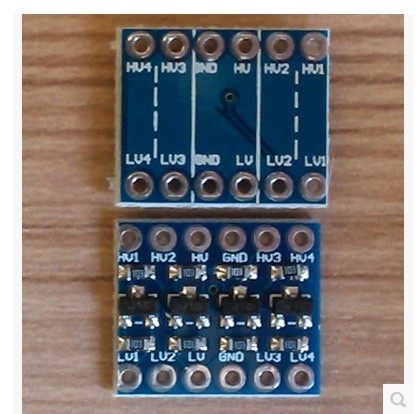
Immediately fixed by using two cascaded gates of a cheap 74HCT14 or 74HC04 as a level shifting buffer.
There may be troubles using an ESP8266 as its WiFi functionality may interrupt the data burst required by the NeoPixels, but this will not be the case with a Teensy, so there should be no trouble implementing these bursts to update the NeoPixels interspersed any time your device is not sending serial data. In fact, sending serial MIDI data should not be too time-critical, receiving might be more of a problem. And you will not be updating very many LEDs in any case so the bursts will not be very long.