I'm running a 15m cable from the GPIO of the arduino to the camera I'm controlling. Sticking the wires on to the bread board clearly won't cut it. Any suggestion on what would be a good connector to use so I can plug and unplug the GPIO cable from the case that I put the arduino in? The most obvious one would be RCA connectors. But I wonder if I'm overlooking better alternatives. (I also considered whacky choice like use an RJ11 jack, or molex cable-to-cable connector, etc).
How many wires?
I have 3 pairs, each needs to be connected/disconnected separately (3 GPIO pins, and common ground)
My first choice would be those small RCA like jacks, I think they are called 2.1mm, just search Amazon. Another choice would be something in the JST lineup.
If you have $$ to throw around, look into Hirose circular connectors.
Ideally I want something where the female side can be mounted in a hole in the case, so the cable is not yanking on the board. May be RCA is my best bet.
15m is on the long side. What's the voltage level?
around 5V, but anything from 3V-5V will work. The cameras are pretty tolerant.
Study the connector documentation and see if they specify the number of time the connector can be used to connect/disconnect. Does it fit your project? Sliding connections are always better than just pressing two metal contacts together.
- RJ11 connectors might work.
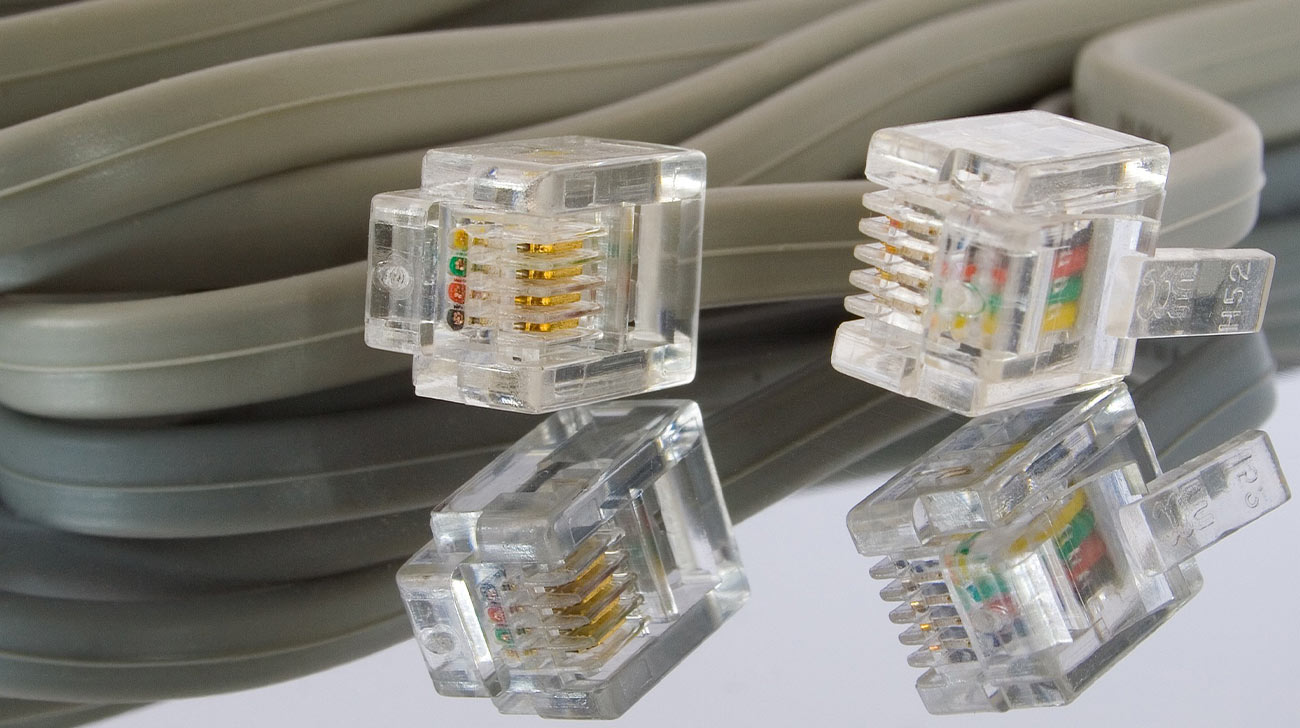

- 45 feet is too long without SWC protection.
Suggest you include some kind of isolation.
A separate I/O power supply might be a good idea to use too.
I should have also asked how fast the signals are.
Low frequency 5V-level control signaling is probably OK in a home/office environment. But if you're trying to download images at 20MHz right next to electrical machinery, you're going to have a problem.
It's used for camera control, so it's less than 100Hz, and it's in a lab environment, so not too much noise.
What is the active state ? LOW ?
If it’s ann anctive low input, you may be better using an open collector ‘switch’ with a modest pull-up located at the far end to increase reliability.
15m is too far to be safe at 5V
Otherwise, some more robust signalling is needed.
It's going to be a steady square wave, anything from 1Hz to 100Hz. The key thing is that high must be 3.3-5V, with a sharp enough edge for triggering.
I have cheated and used CAN drivers, configure one for transmit and the other for receive. one pair for each signal each direction. This will work for several thousand feet. Just be sure to terminate the ends with 120 Ohm resistors. You can run this through cat xxx cable for maybe a few hundred feet. If you do that change the termination to 100 Ohms if the drivers will work.
1 Like
This topic was automatically closed 180 days after the last reply. New replies are no longer allowed.