Hello,
I'm very new in electronic and I made a little circuit where the goal is to take a wire (a) in the left and another one (b) in the right hand to swich on a led with electricity through the body. To make it I used a BC547B transitor.
Even if the led is shiny enough, which transistor could deliver more intensity?
How to know the major difference between all the transistors ?
Thanks!
Hi,
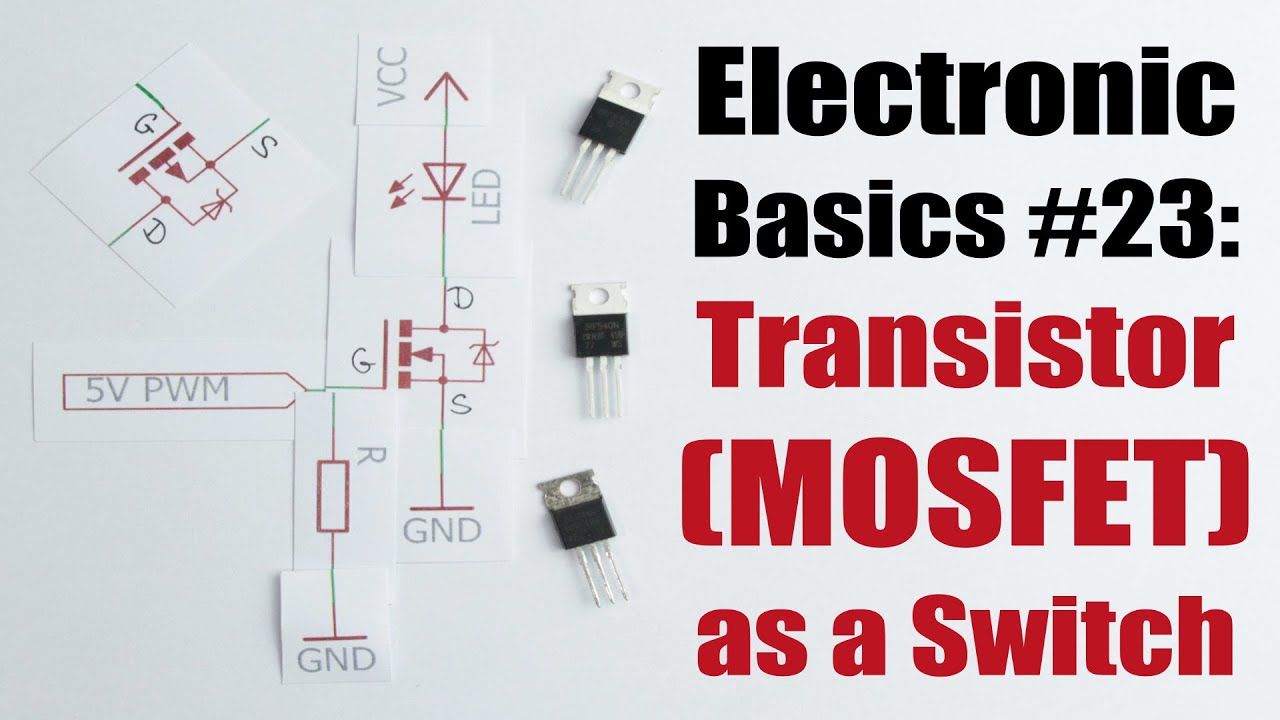
If the voltage is 5 to 12 volts or so (you need a resistor in series with the LED by the way): A power Field Effect Transistor should work well. Example: THIS:
The voltage source is some separate safe supply like a battery, right???
A resistor (maybe 100K to 10K) from the transistor gate to source (-) and "b" in your sketch, will be needed to keep the transistor OFF until you really touch point B.
3V is probably not enough - you'll need a darlington for higher gain, but darlington's lose over a volt.
You'll need to use a red LED whic have lower on voltages I think.
Or perhaps use a logic-level N-FET with a 1M resistor between gate and source, but 3V is still
a bit too small.
I wonder if gain is a problem here at all. Depending on the LED, 3V might just not enough voltage for the LED. Whatever gain will not change that.
How does the LED look without the transistor? What is the forward voltage at your desired current and what is that current?
Also shouldn't there be some current limiting at the base? This circuit basically shorts the source over base and emitter ...
Oh lots of gain is needed with dry skin. A 1k resistor would indeed protect the base from over current
on shorting out the probes - a 150 ohm resistor to protect the LED from overcurrent might be sensible
too.
Ohhhhhhhh, I overread body. Somehoe I thought he wanted to connect a wire and was a little surprised about the ansers
Sure. Of course. Then there is no shortcut. With dry skin and DC, the resistance will probably be in the high kOhm to MOhm range.
Thank you for your help !
Well, I tried with a Mosfet transitor (without using body conductivity) just trying switch on a red led but it doesn't work (3v or 5v), nothing happen, any idea ?
Remove all links and follow the below instructions. It should then work!
Connect the Source (S) directly to ground (with no resistor).
Connect the LED resistor to + voltage, then the other end of the reisitor to the LED+. The other side of the LED goes to the Drain (D) on the mosfet.
Put one end of the 10k resistor to the gate and then the other end to + or ground to switch on/off the mosfet. (This also could go to the arduino digital output pin for control).
Thanks for your very clear explanations. It works perfectly!
For my project I "cut" in two the wire between the 10k resistor and + then I took the two wires in my fingers to swith on the led. But... When I don't touch the wires anymore the led still alight. Maybe this type of resistor is not adapted for what I need. Maybe my first circuit was more oriented? I thought a BC547C with a gain between 420 and 800 (instead of 220-450 for BC547B) would be better, no?
You're right! I didn't know about Darlington but I quickly read that the total of gain is gain1*gain2 ! So, if I use two BC547B I could have a gain between 48 400 and 202 500, which is certainly enough!
Wally06:
But... When I don't touch the wires anymore the led still alight.
So the fix is easy.
Simply add another 10k resistor to the point the gate connects to the other 10k resistor but this time connect the other end to ground. So the gate has 2 resistor connected to it, one to ground and one for the switching! - easy!
This will have the effect of grounding the gate when no input is present on the (already existing) gate resistor.
It occured to me that you might need to keep increasing the value of the gate-to-ground resistor to get the desired result. A variable resistor (potentiometer) could be used to adjust to your required settings and left inplace or you can read the value on the pot and replace with nearest fixed resistor value.
Wiring looks fine Wally. Just try bigger resistances as I and Mark have suggested (remember that resistors connected in series add to each other, so you can 'daisy-chain' them if you don't have a big enough value).