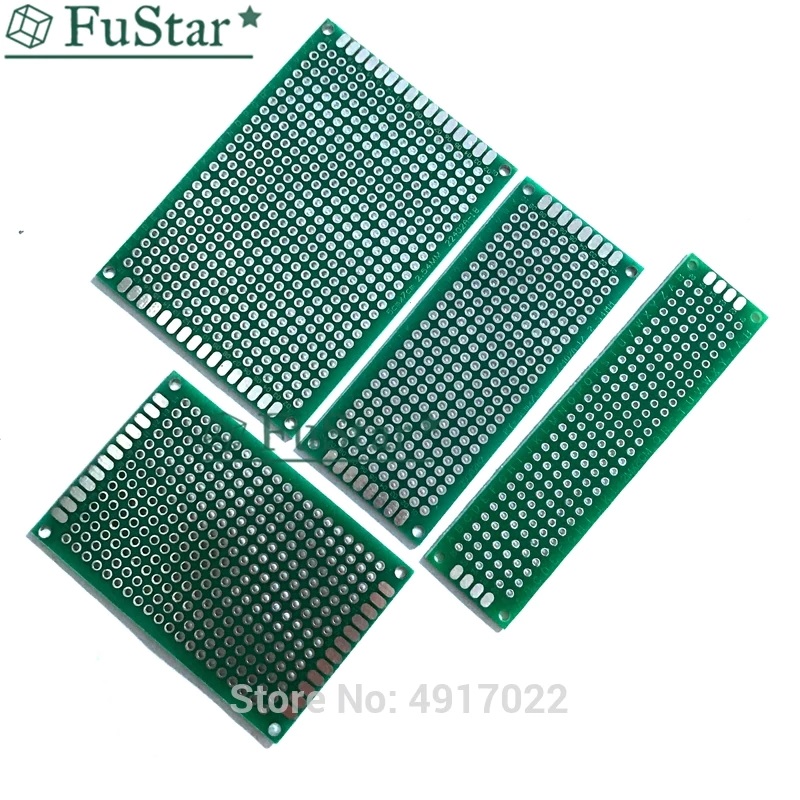
Where I came to a halt is when I asked myself, how am I going to connect 240V AC to a relay that is welded to a protoboard.
Relay has +5mm clearance between the pins, but protoboard has much less. It has one more connection (tin plated hole) between pins, which is reducing the clearance between them.
My question (finally) is: Is it OK if I drill out that plated contact on the protoboard between the pins of an relay to increase the clearance or is there another way that I must do?
Is custom made PCB a must?
sljivan:
Where I came to a halt is when I asked myself, how am I going to connect 240V AC to a relay that is welded to a protoboard.
I would try soldering, less chance of melting the relay or burning down the house
Relay has +5mm clearance between the pins,
5,08mm or 200mil to be exact
but protoboard has much less.
2,54mm or 100mil to be exact
But yeah, on proto boards with mains voltage I drill out and remove copper from pads next to mains pins. So not only between pins but all around. That way I know for sure it will stay away from the low voltage side.
septillion:
I would try soldering, less chance of melting the relay or burning down the house
good point! soldering is what I meant.
septillion:
2,54mm or 100mil to be exact
thats right. but that is from center line to center line. minimum clearance (metal contact to metal contact) is even less.
septillion:
But yeah, on proto boards with mains voltage I drill out and remove copper from pads next to mains pins. So not only between pins but all around. That way I know for sure it will stay away from the low voltage side.
OK. Just to close the matter I have drilled the plated contacts around 240V pins, and it works like charm. No problem whatsoever.
Thanks to the forum for the help.
It works now... but does it still work in a few months, when it's springtime and humidity goes to 100%?
There are standards for minimum PCB distance between traces to stop creeping; and standards for minimum air gaps to prevent arcing. The first is a several times greater than the second, and that's not just because.
It's mcuh safer to use a relay module that comes on its own PCB with appropriate clearance and/or milled slots for good isolation, and has screw terminals for the high voltage side.