My dad built a model ship and wants some lights - kind of like the attached photo.
His request: Small, the led must fit in a 1/2 inch space. The led must be dim and amber in color. Flicker if possible and be powered by a nine volt battery. I would like eight of these set ups but not wired in series, also that would like them to turn off and on remotely. Finally the wires must be long, two feet and very thin but flexible.
I'm still a newbie. If you wouldn't mind just giving me some ideas on where to begin. I was thinking of using a Nano. Plus I used 9V batteries on Arduino projects before and they really don't work very well. Unless I'm doing something wrong.
Maybe I could modify something like this? It looks like its wired in parallel. Can I simply shorten the length of the string? I'm sure it can't be that easy. Will I need dropping resistors? If so, how do I compute?
tperry724:
Plus I used 9V batteries on Arduino projects before and they really don't work very well. Unless I'm doing something wrong.
You sure are!
Using 9 V batteries. Particularly if you mean these:
Arduinos do not run on 9 V, they run on 5 V, so you want something close to 5 V. And LEDs do not run on 9V either unless you put a few in series as you say is not appropriate for your design either.
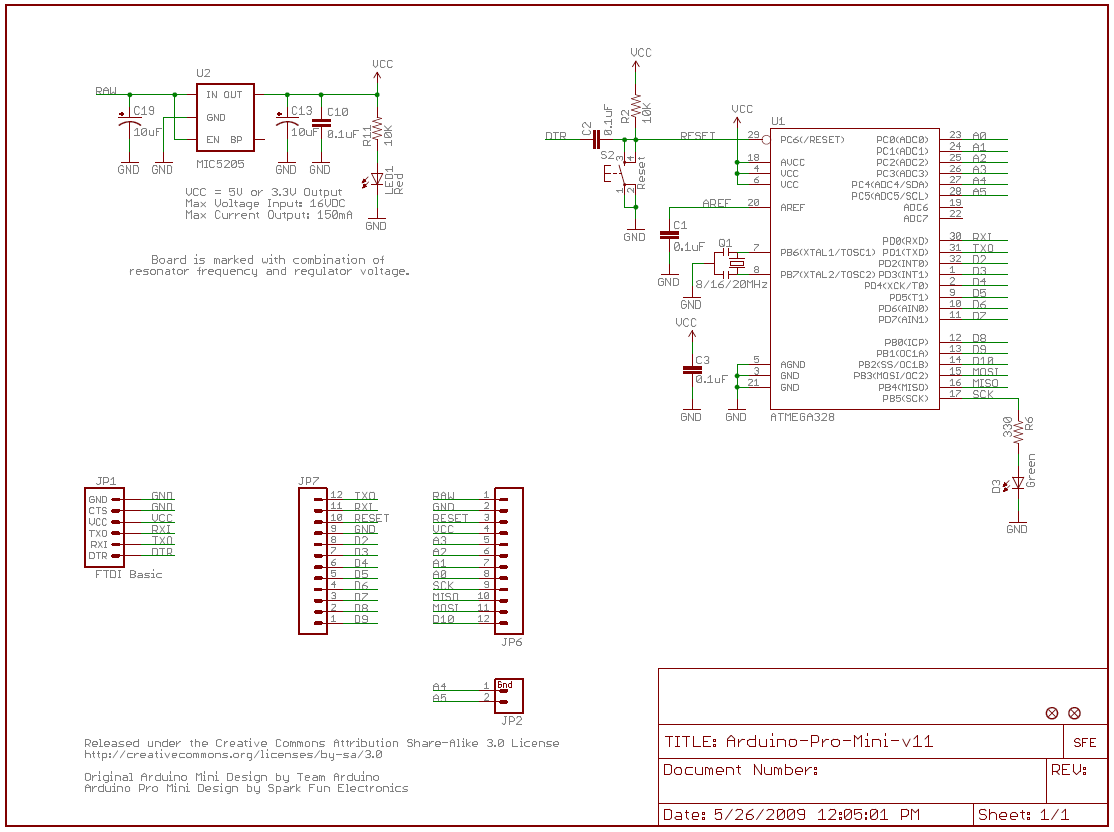
A Pro Mini - when you do not need the USB interface once you have programmed it - will run nicely on 4.5 V from three "AA" cells, and so will LEDs.
For 5 V, a rechargeable "power bank" is a good source.
There will be a total of 8 LEDs. The color will be just something close to orange/amber - no RGB needed. The LED's need to be at the end of about 24 inches of thin wire. I'm going to use 30GA transformer wire.
Some of those premades look interesting. Have to look further.
I was thinking of using a Nano on a PCB, with 8 arms/legs coming from screw down terminals. I've got a good flicker sketch going right now. Not sure I can provide a remote - things get complicated for a newbie at that point - because I'm sure my Dad is thinking he'll just turn it on with the remote but I'm not even sure that's possible to do with a Nano. And I've never used any IR or RF gear before. Am I saying all of this correctly?
That's the only pic I have. He's an amazing talent. I got none of it.
The Pro Mini, I assume an Arduino, that programs the same way. Sounds like a good option.
I'm just spitballing things at this point. Any thoughts are welcome.
We usually 30 guage wire wrap wire for such applications.
An arduino UNO draws 55mA . If you add anoother 30mA for leds that's 80mA (0.080A)
A 9V PP3 smoke alarm battery is rated for about
300mAh so it would power an 80mA load for about 3.75 hours.
My dad made a ship. He has spots in the ship for 8 lanterns. He'd like the lantern light to flicker. I'm planning on using a Nano and 8 individual LEDs. However, the Nano I have only has 6 pwm pins. Is there a compact board that has 8 pwm pins?
I think you might need to clarify what you mean by "flicker".
You mention PWM so I'm wondering if you are wanting the perceived brightness of the LEDs to change - as in off through increasing levels of brightness to full on.
Another "digital" option to create the illusion of flicker is by having the LED on (or off) for most of the time with briefly changing its state. You can do this using ordinary digital i/o pins without the need for any PWM capability.
Check out the tinyPico...18mm x 32mm (or tinyPico Nano). Driven by an ESP32, which reportedly has 16 PWM "channels" but only 8 timers, so probably only 8 individual frequencies.
tperry724:
Paul,
You said: A Pro Mini - when you do not need the USB interface once you have programmed it - will run nicely on 4.5 V from three "AA" cells, and so will LEDs.
Can you send me a couple links to the Pro Mini you were talking about? Just want to make sure I'm looking at the right one.
Thank you - and sorry to bother you at home.
Best,
Tony