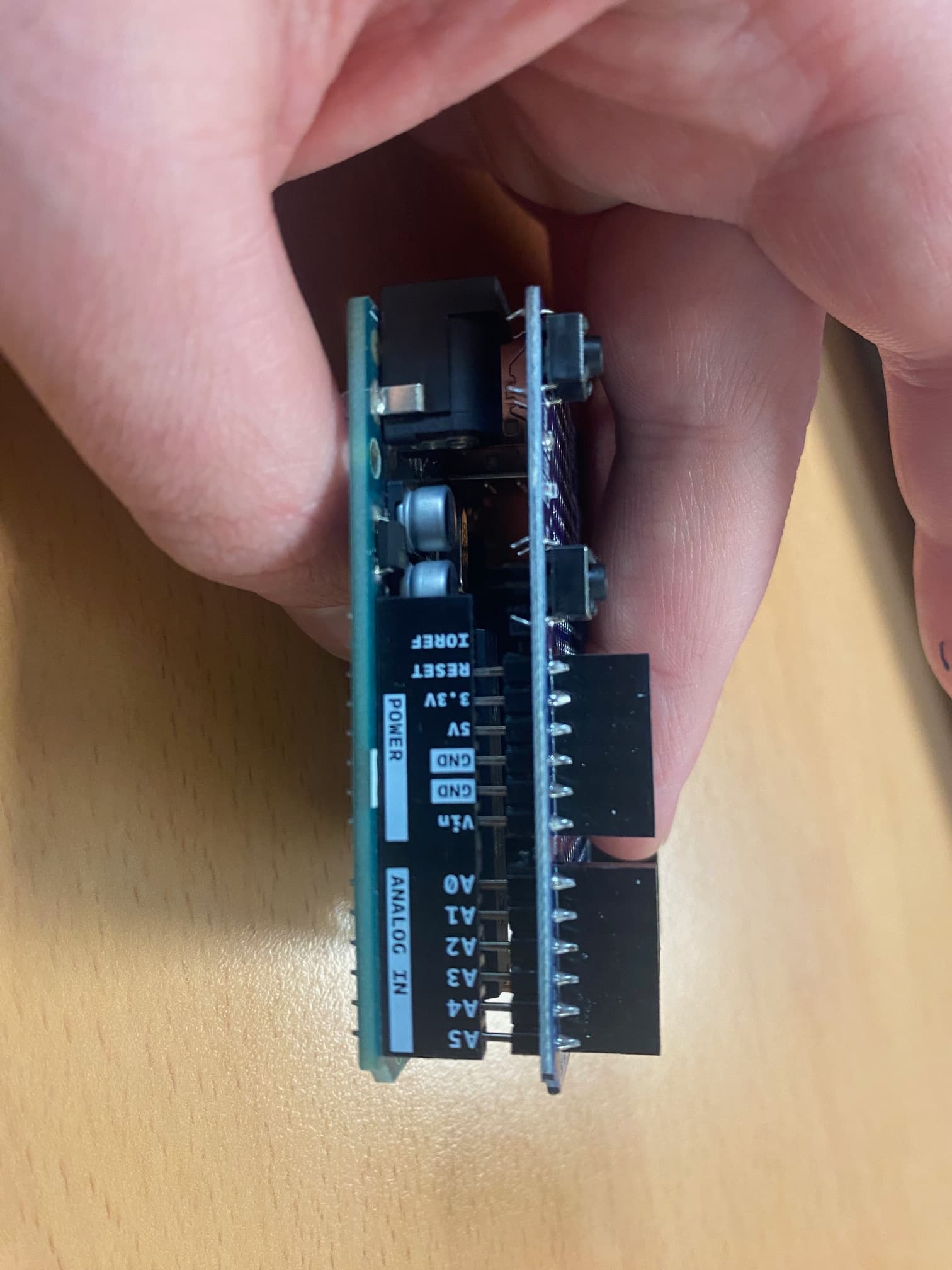
As we now stock a range of Arduino boards and modules, we’re planning to expand our online store with a range of Arduino-related accessories, and we’d love to get your input!
When it comes to modules, regulators, sensors, or any other peripherals, what do you often find yourself searching for? Are there specific components you wish were easier to get hold of? Maybe a type of breakout board, power supply, or even something niche you’ve been wanting for a project?
Our goal is to stock what you actually need (and not just guess), so any suggestions—big or small—are more than welcome.
Drop your ideas below or feel free to DM if you prefer. Looking forward to hearing your thoughts!
Cheers,
Joe at Switch Electronics
P.S. Bonus points for explaining why you like a particular item—it’ll help us understand what matters most to you.
Thanks for taking the time to read, I know you're an active member of the forum and it's nice to get such a prompt reply.
"Bonus points" was more of a friendly way to get more context from responses ( and as you know, the more context in the forums - the better we can help each other ).
For a genuine answer that is feasible for us to action, I'd be happy to add a module/sensor/etc to an order ( or work something else out to show appreciation ).
We stock some Arduino boards and a very large range of electrical components and Arduino compatible products, so we've got a lot to offer the community already. It's 'filling the gaps' in our range so that we can best serve our customers that I'm trying to do at the moment.
We are about to invest in lots more modules and sensors ( with documentation ), but the years of knowledge with microcontrollers and their use in the field will be invaluable to help us 'get it right', which is why I'm very open to suggestions from the community here.
There's a fair bit of traffic on the forum regarding RS485 and Modbus - usually the iffy NPK soil sensor - but also recently the use of RS485 in small networks (model railway etc).
I'm toying with the idea of an Arduino UNO shield that uses an RS485 line driver (MAX485) and a dual LAN RJ45 connector with built-in LEDs to show Tx & Rx activity. I'd use the AltSoftSerial library so the Tx & Rx pins are fixed on pins 8 & 9, with a choice of several pins to control the direction - RE & DE joined together.
I struggled to find a RS485 line driver with the specs that you mentioned, is that a product you've seen elsewhere?
For the time-being we will be using our existing suppliers ( OKYstar and Sunfounder ), but with enhanced documentation for the goods - their current documentation isn't full and not always the most straight-forward.
Thanks again for your time, a lot of our existing customers are hobbyists and we have a lot of model railway groups that drop by, so I'll ask them about/suggest the RS485 too.
Thanks for taking the time to reply and for providing the images, very helpful indeed.
Forgive me if I'm coming across as naïve, are the first two incompatible due to the straight pins?
Are breakout boards with no soldering and with right-angle pins the preferred? Obviously it's more convenient but I expect the soldered ones to have an advantage with physical space/footprint.
Sorry to be picky, but I'm not keen on the type that has hundreds of individual, unconnected pads, that need wire links adding to make the connections.
I prefer the pads to be connected in rows.
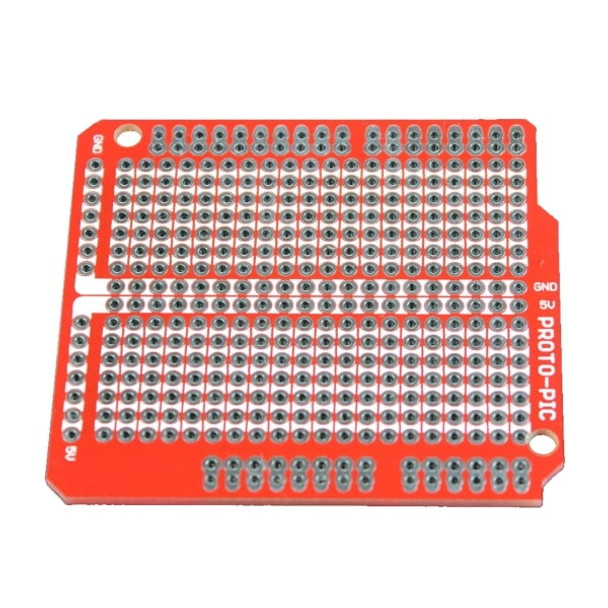
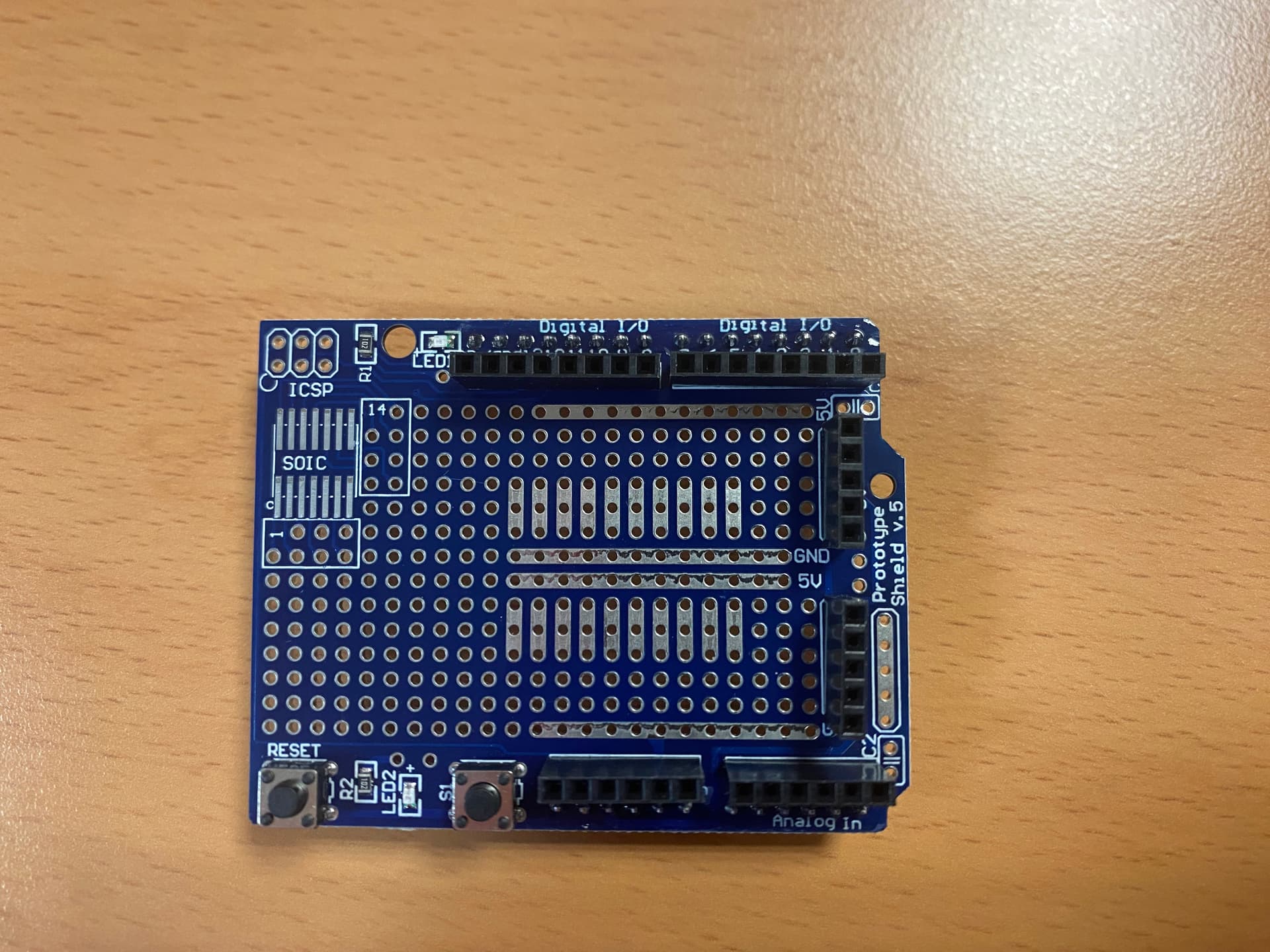
I particularly like the layout of the board in the first picture in post #8, which has the 5V and GND running along the centre line. Ideal for fitting DIL ICs
No. Think about how you would plug them into breadboard or solder them to stripboard. Would you be able to get all the pins into the breadboard? Would some of the pins be shorted to each other by the breadboard/stripboard?
No. Although I'm not sure what you meant by "boards with no soldering". No soldering has been done, or no soldering needs to be done?
Personally, I would prefer to avoid having to solder small surface mount components to the boards myself. I'm ok with soldering PCB pins.
For who?
How does soldering increase the footprint?
I think we must be communicating on different frequencies?
Here's an example of a breakout board that is 100% breadboard compatible:
All it's pins would plug into the breadboard and none would be shorted to others. (Ok, it does have some pads on the PCB for setting addresses, but I'm ok with that because I doubt I would ever need to connect those pads to anywhere else in the circuit.)
You know what Arduino needs? A kit but not the all in one 50 sensor kits like Elegoo that have been done to death, a kit that packages a board of your choice with a power stage and quality DuPont and other wires to set it all up.
A good quality (high current capability) wall supply, some terminal strip/block connectors, a ground lug for chassis grounding and a couple of buck converters. Good for fixed projects.
Another kit would have the same sort of thing, except with a 4 * AA battery tray of maybe even an 8.4V stick NiMh battery pack or similar with recharger and add in a 1/10 scale servo.
I see where you're coming from now in terms of compatibility with breadboards.
Just for clarity, I meant boards that don't require any soldering and exclusively use pre-installed pins, which would be more convenient for some users that prefer not to solder. The physical size comment was relating to soldering wires to holes or pads, with the lack of a header reducing the overall depth.
Thanks again for your input, and for the clarification. really appreciated.
We stock almost all of those items ( missing the battery pack and the ground lug ), I'll see if I can generate some bundles with our existing stock.
Some good insight there, I've been sceptical about the module mega-bundles as I think they probably seem like a great gift idea but not what the actual Arduino/electrical hobbyist would want.
As you can see, it's not fully stripboard, but it does have 5V and GND running along the outer edges and down the centre. The headers are soldered into place, and it seems that it was designed for previous versions of the UNO, as there are no headers for "IOREF", "SCL" or "SDA".
We sell these for £2.24, or lower if buying a larger quantity - £1.99ea when buying 10 for example.
I appreciate it's not exactly what you were looking for but I'm struggling to find any that match the images you sent.
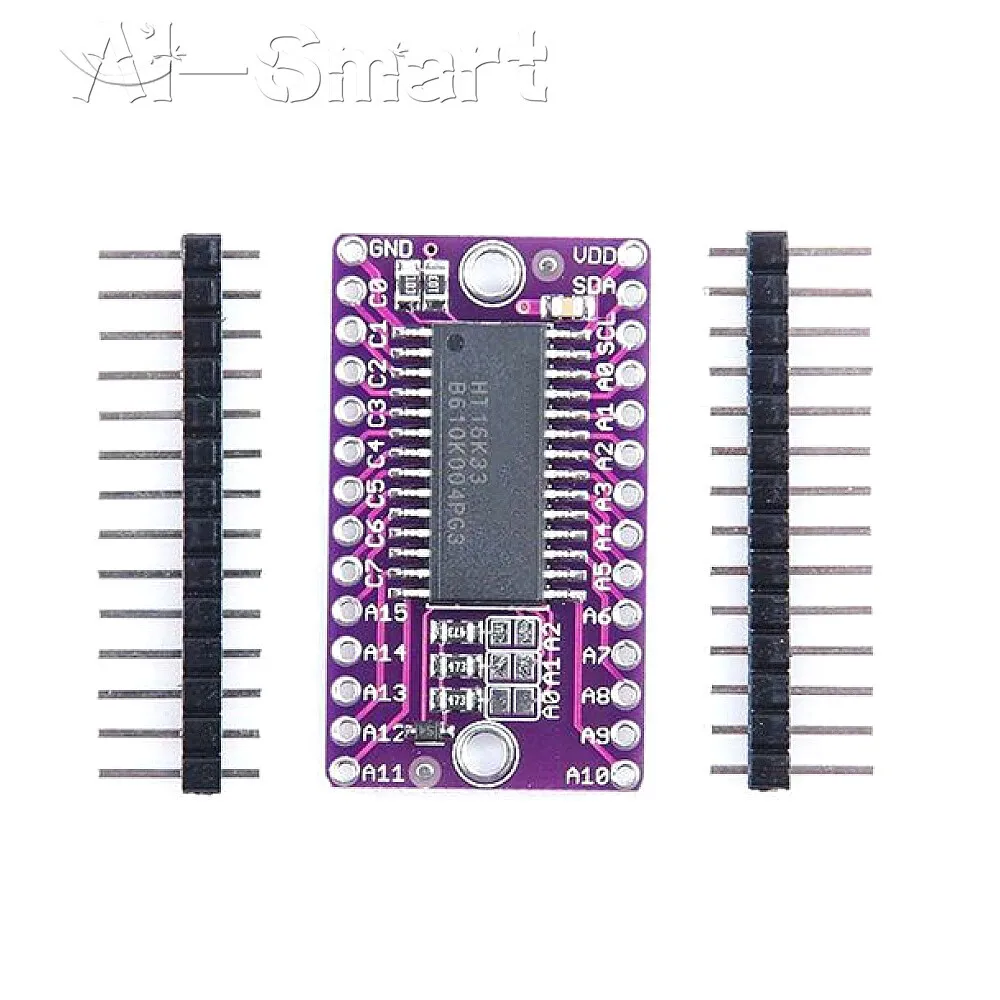
Another vote for more things that are breadboard-ready. To tie in some earlier comments, I've been doing a lot of RS485 work lately. This breakout board is my favorite:
But it doesn't fit on a standard breadboard at all, it's too long. It would be better if all eight pins were in a single row.
As a tangent, I've come to dislike the Uno form factor. My preferred way to experiment is to build up a prototype on a breadboard. If I end up creating something useful I design a PCB and send off to China to have it made. I prefer the Nano family with headers, they work better with breadboards. And when it's time to make a PCB I just put in two rows of sockets and the Nano plugs into my PCB. Sometimes I'll use breakout boards too and just put sockets on the PCB for them. Other times I'll recreate the breakout board circuit on my PCB, it depends on the application.
I was experimenting recently with a TP4056 breakout modules similar to the one that you sell
Annoyingly the input and output pins of the are not on .1 inch centres in either direction which precludes their use with a breadboard and even worse, with prototyping boards which is what I really wanted
If you are selling Arduino modules then it is good if there is sufficient documentation available including a schematic diagram and, maybe at least links to code samples and example circuits. Sunfounder, as a manufacturer/distributor, are usually quite good for this.
Sometimes it is very difficult to help users here who report issues dealing with a module and insufficient information is available. Even something as simple as a relay module where there may be an optocoupler (possibly with a LED in series with the optocoupler LED), an NPN transistor or a PNP transistor facing the Arduino and these all behave differently under various circumstances.