I'm quite new to electronics, so apologies if this is obvious!
I have some resistors that came in a little kit of components. The one I'm curious about I know is 1kΩ, since it said so on the tape label, and I've measure it with my multimeter.
But I am not sure how I would work out the resistor value if I didn't have a multimeter or the label: see attached pic.
As I understand, this can be read as brown, brown, black, black brown: giving 110Ω with 1% tolerance. Or it can be read as brown, black, black, brown, brown: giving 1kΩ also with 1% tolerance.
Is there something obvious I am missing to tell me which way round I should read this?
Can't help with your query, but as an observation - this illustrates quite well the problem I - and probably a few others - have with resistors.
Being partly colour blind, even holding the things under a magnifying glass I often can't tell what colour they are, and have to rely on labelling and my multimeter!
I find with other components - especially IC's- the printing is so faint that I find it difficult to read.
Do you have a harbor freight near you? They have coupons for a free multimeter with any purchase. Search online. There are many times these little meters have come in handy. Don’t ever stick them into the house mains.
Typical problem with resistors indeed is to know which order to read them in. I don't have the colour blindness issue luckily, that'd make it even harder for sure.
IC printing often becomes clearly readable (under a magnifying glass) when you have the light fall on it just right. Not easy to find that "just right" orientation, though...
I don't think I have any colorblindness but I still have such trouble trying to tell one color from the other on the resistors, especially the ones with the blue background.
The thing I don't like about the Harbor Freight multimeter is the lack of a buzzer. You can get the "DT-830D", which is about the same thing except with a buzzer, on eBay for <$4 USD w/ free shipping from China. Although I don't have much money to spend on my electronics hobby, I think the buzzer is worth $4. I actually have a higher quality meter but I always use my China cheapo instead since it has the buzzer and the other doesn't.
One clue can be that there are a standard range of values - so when you read the value and it is non standard* , try reading from the other end !
That set you have got is not the best I’ve seen -As a newbie I guess you’ve fallen into the trap of a “cheap set”. -the labelling is not good . Resistors are cheap , look for a set better labelled and bin those .
And ..I’m not a great fan of cheap multimeters , they die quickly . Buy a good one, it will be accurate, safe and last many years.
Buying cheap stuff can cause a lot of frustration to new starters, in a similar vein a new starter ought to buy a genuine UNO - supports the cause, high quality and just work out the box ( you get a free sticker too)
For $20 you can get meters that work better than my fluke. Those freebies are nice to have. But they have no bells and whistles. No backlight or buzzer or autorange. Peak hold and maybe more importantly decent fuses and PTC. But for checking resistance, diodes and dc voltage. They are handy to have.
From the photo one may distinguish 2 different colors: black and brown.
The color that looks like brown could also be red. It is hard to distinguish especially with resistors with blue background. But let's do some "forensics"
 figure   multiplyer  tolerance     Resistance   E series
 1  2  3
----------------------------------------------------------
brown and black, left to right:
 1  1  0      1          1%             110        E24...

brown and black, right to left:
 1  0  0     10          1%            1000        E3...

red and black, left to right:
 2  2  0      1          2%             220        E3...

red and black, right to left:
 2  0  0     10          2%            2000        E96...
So there are 4 possibilities.
2000 Ohms is not too likely because it is only in E series 96 and up.
110 Ohms is only in E 24 (and up). May be but not too likely also.
I would guess it's either 1000 Ohms or 220 Ohms.
This is when the multimeter comes in
By the way: the resistor chart of #1 is pretty nice and useful.
BUT take a look at the examples: 3.21kOhms and 521 Ohms ...
Theses two resistors you may never ever find in real life ...
None of them is in any E series.
This is what happens when graphic designers create technical charts.
Thanks all for the responses - good to know I'm not missing anything obvious!
I already have a multimeter, I bought a cheap Mastech one which had a lot of good reviews - the question was more related to whether I had misunderstood something with resistor coding.
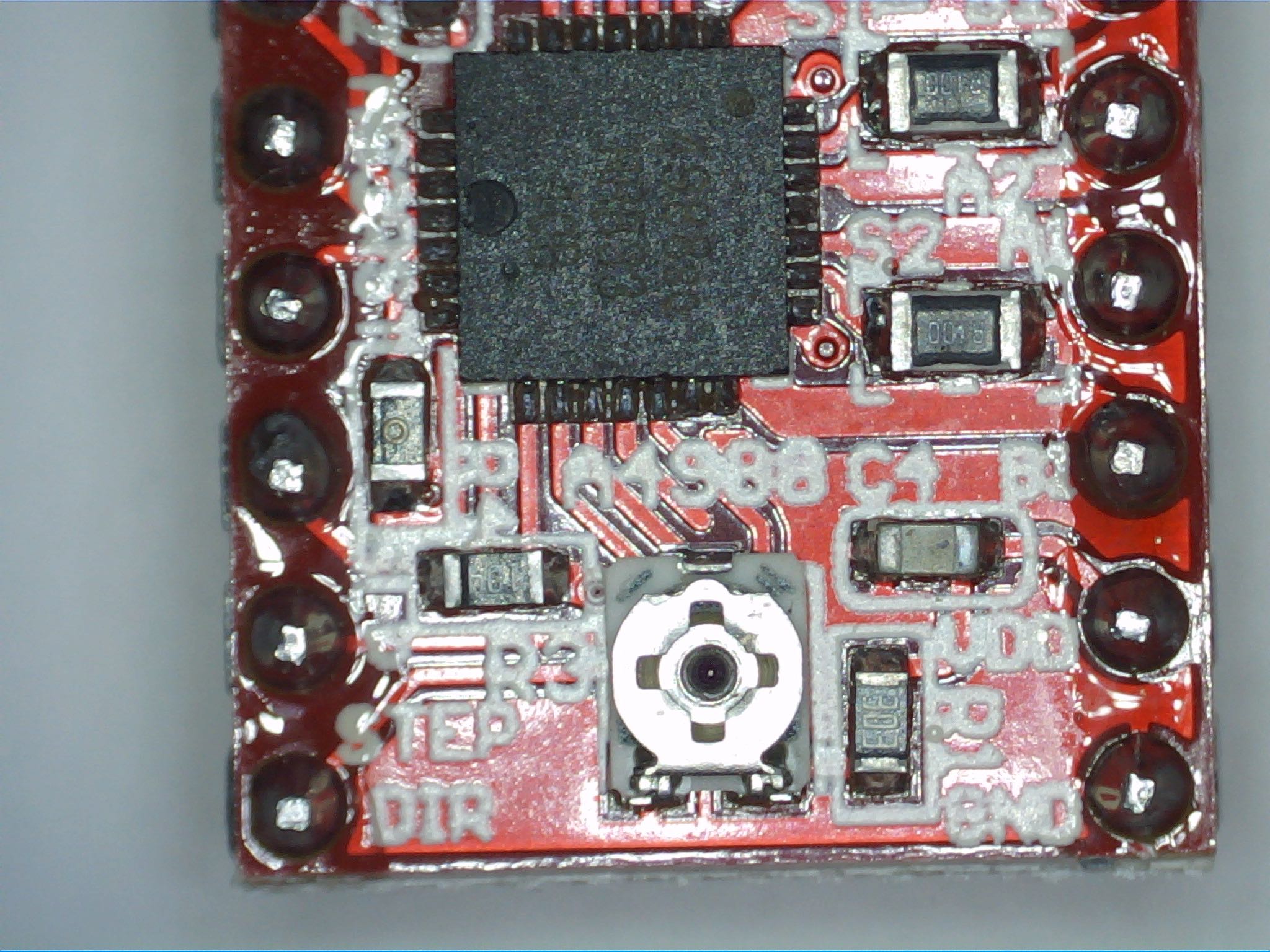
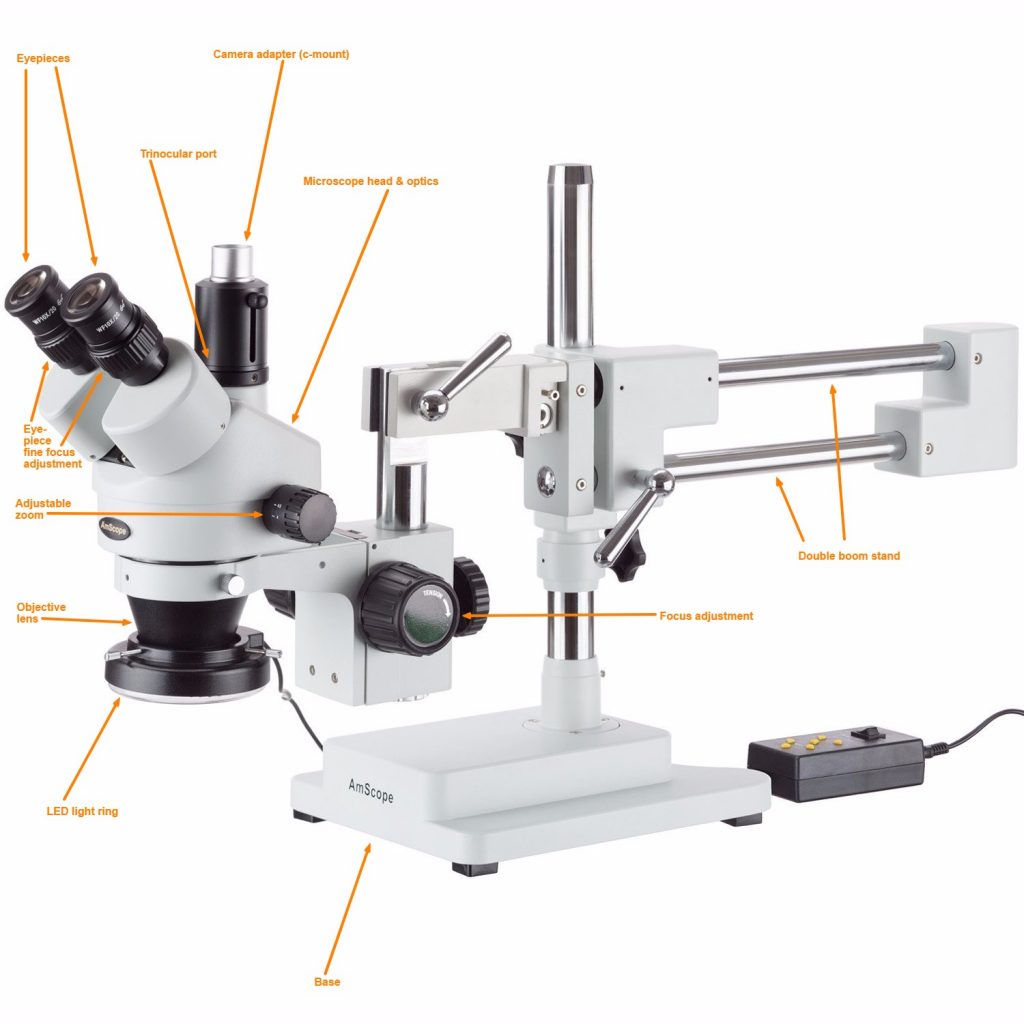
BTW, the picture is from a USB microscope, you can get these pretty cheaply, e.g. under £20 (I bought for other reasons a couple of years back), but may help those struggling to read ICs etc!
I have thought about buying one of those usb microscopes. But all the ones I have seen will focus only when the lens is millimeters away from the pcb. You can't get tweezers, soldering iron etc in there to work on the thing. Is yours the same?
Brutha:
BTW, the picture is from a USB microscope, you can get these pretty cheaply, e.g. under £20 (I bought for other reasons a couple of years back), but may help those struggling to read ICs etc!
Yes, the pictures are good in themselves, but the lighting is grossly inadequate, too concentrated and coming from the same direction as the camera is viewing, thus generating reflections that confuse the image and the brightness settings.
PaulRB:
I have thought about buying one of those usb microscopes. But all the ones I have seen will focus only when the lens is millimeters away from the pcb. You can't get tweezers, soldering iron etc in there to work on the thing. Is yours the same?
Well, the top pic above was taken when I had probably 4cm or so clearance between the plastic at the bottom of the scope and the pcb - the pcb is about 1.5cm wide, so the magnification is not that enormous. It was probably about 2cm clearance when the bottom pic was taken.
I'm not sure these things are great for actually working under though, there is a fair bit of latency in the image coming through, and as someone else has mentioned, the lighting might not be great (the LEDs are built into the scope, so you can't easily have light coming from a different angle).
But if you have it for some other reason as well, you might find it useful in some cases!
Never be without a multimeter - its very common for metal oxide resistor codes to be ambiguous like this
owing to poor band spacing and blue-bleed-through in the colour bands making it hard to tell black from
brown or red from orange.
Besides the meter will tell you what the resistance actually is, not what its supposed to be, which is
what you actually want to know...
PaulRB:
I have thought about buying one of those usb microscopes. But all the ones I have seen will focus only when the lens is millimeters away from the pcb. You can't get tweezers, soldering iron etc in there to work on the thing. Is yours the same?